1929 – Family move up north

Chuckie’s parents had spent over half their lives in the deep south of Mississippi before sometime in 1929 picking up and moving with their three adolescent children up north to Western Pennsylvania. What had changed for the Wilson family?

There are just three known images of Chuckie’s immediate family in the late 1920s that survive. The first is a group photo in an earlier post of a happy family picnic, a celebration of some sort outside the family farmhouse. Or, more likely perhaps, a going away party for the Wilson family moving up North for opportunity and a new life. The two other images have always haunted me because they are so strikingly different.

Darkness and cold – faces of grief

The first image is Chuckie’s mother Evie standing next to her mother Mary (Chuckie’s grandmother) with his little sister (also Mary, named after grandmother, of course) with her little hands in a muff. All three are dressed in black. No one is touching. From the background we can see it’s late Fall or early winter. What had happened that day to bring such great sadness to the Wilson family? They were not wealthy farmers or landowners, as far as we know, so the stock market crash of October 1929 was unlikely the reason. The Great Depression was yet to come.

Curiosity gave me some clues. A bit of research filled in some gaps. And soon it was not hard to arrive at an explanation. The unmistakable picture of a mother‘s grief for the loss of a child, and a sister for the loss of a sibling.

Chuckie’s mother had a very big family. She often told me about her “ten brothers and sisters” and how close they were. I went back to revisit our family tree. It was there I found an explanation for this photo. Two of her adult sisters, the daughters of Mary, died just one month apart. First Lucy in Dec 1928 and then Minnie in January 1929. Almost certainly this photo was taken on the day of one of those funerals.

That year, Chuckie’s grandmother Mary also left her home and moved up North at the age of 74 and lived with Chuckie’s family. She never returned again until years later when her body was returned to Mississippi in 1938 after her death.
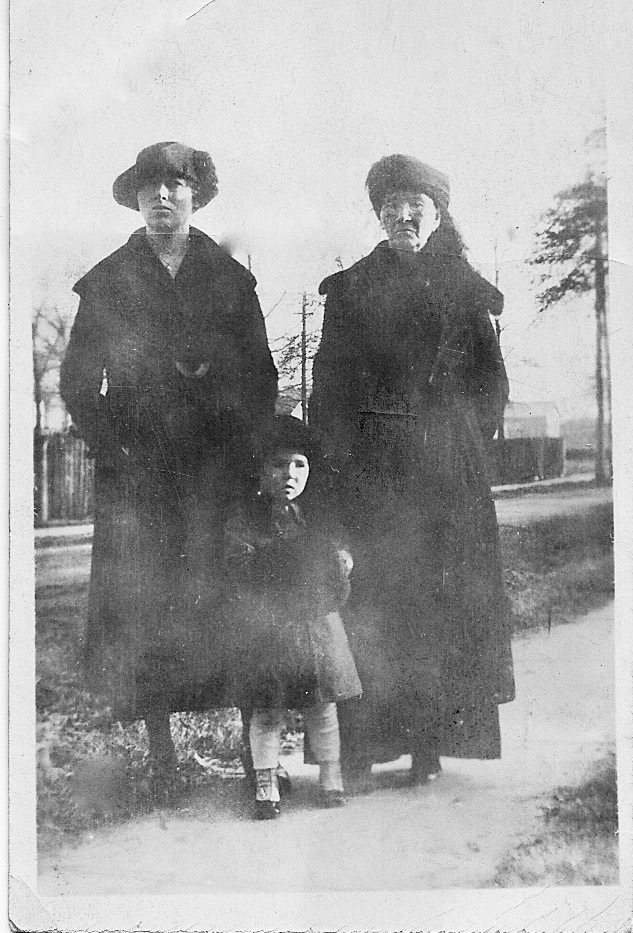
Chuckie’s grandmother Mary, his mother Evie and sister Mary around 1929

Lightness and air – faces of warmth

The second image is taken obviously some months later that year and it is summer – up North. Chuckie’s mother and sister are bathed in sunlight washing over them from behind them on a breezy porch. They’re wearing cool, bright clothing and showing warmth, love and affection.

Chuckie’s father was, by all accounts, a good mechanic and legendary handyman who could fix anything. Up North, he quickly got a job applying those talents in a bread bakery operation that supplied fresh bread to the grocery stores feeding the families in the region’s large and growing population of factory workers, steel workers and manufacturing plant workers.

Chuckie’s mother Evie and his little sister Mary.
Around the time of the family move up north to Western Pennsylvania in 1929.

Evie would years later herself experience what is captured on her mothers face so vividly, starkly on that cold dark day in 1929 – the enormous, unbearable grief felt by a parent who loses a child. In 1944, her son Chuckie would pay the ultimate price for freedom in a country far, far away from her, his father, his siblings and Wilson family roots in the deep American south.
19 January 1922 – Born in Mississippi

Charles Melvin Wilson was born in Meridian, Mississippi on 19 January 1922. His father, Jack, was 31 and his mother, Evie, was 30. He had one brother, John, my grandfather, who was 2 years older. His sister, Mary, was born when Chuckie was two.

Both of his parents came from very large Southern farming families, each had many brothers and sisters. They were always surrounded by family. They were living in Mississippi around the time the Great Mississippi River flooded in 1927 and forced hundreds of thousands to flee.

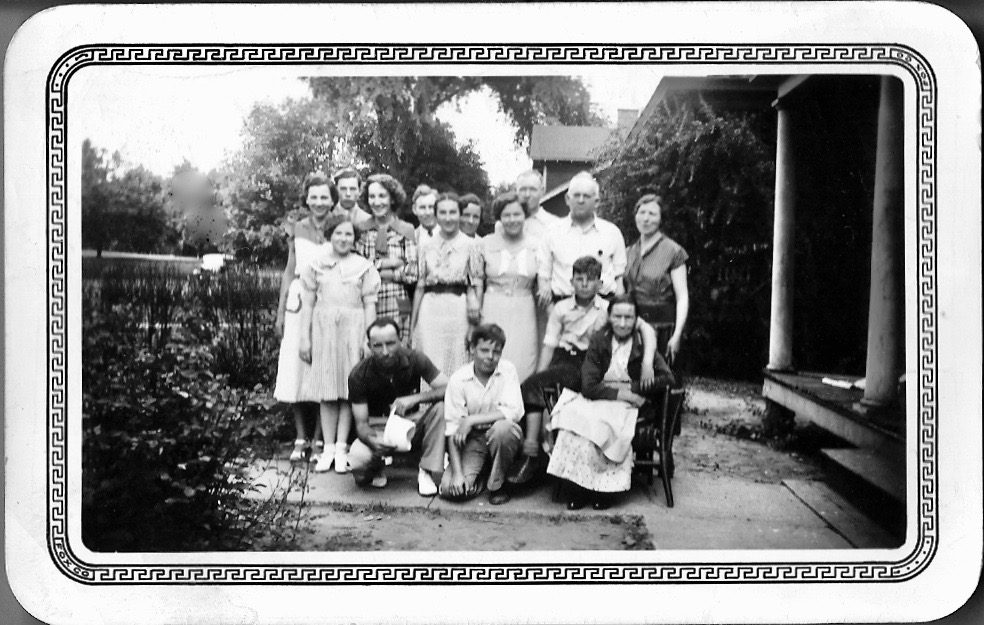
Wilson family gathering at their farm in Tupelo, Mississippi around 1933.
Chuckie on the right front row seated with his arm around his grandmother Mary.
His parents are behind him and his brother John is standing second from left in the top row.

While we don’t know with any certainty, the U.S. government programs started by the first “New Deal” in 1933 may have assisted Chuckie and his family to travel up North for new opportunities. They eventually settled in Beaver, Pennsylvania. US Census data show him residing there with his family by the age of 13.

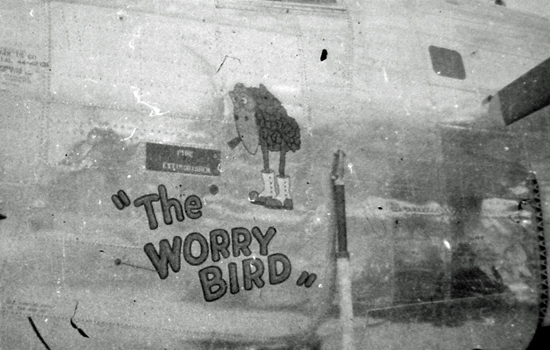
His B-24 Liberator – “The Worry Bird”

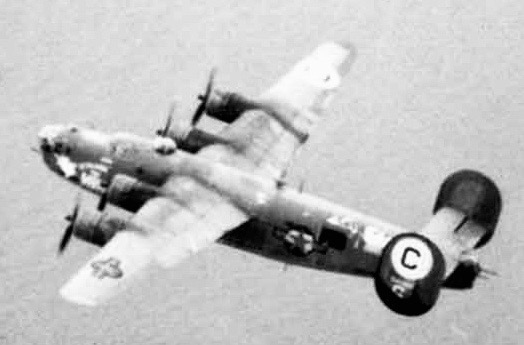
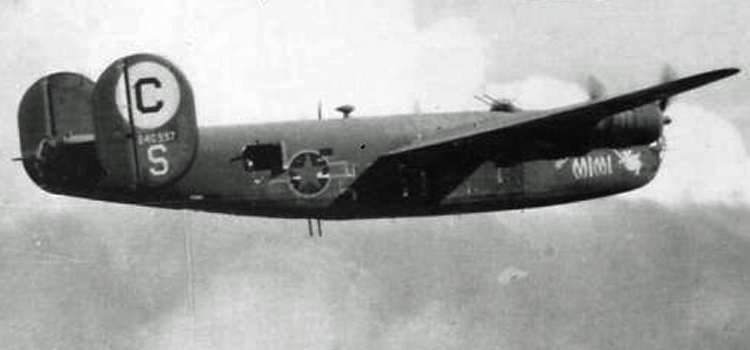
The B-24 Liberator Bomber that Chuckie and his fellow airman flew on their missions was renamed “The Worry Bird” in February 1944 when it became a Carpetbagger B-24. These aircraft were specially modified B-24s painted with a glossy black anti-searchlight paint to supply friendly underground forces throughout German occupied Europe. Flights were made at night and at low altitude levels making them particularly dangerous.

The serial number of the plane Chuckie was killed in was 42-40997 which I found along with pictures of the plane on a website dedicated to WWII B24 Liberator Bombers. This was an important fact to know because information about all missing WWII aircraft in the National Archives are filed under the plane serial number. With the serial number, I was able to locate an enormous amount of information about Chuckie, his fellow airman, their mission and its Missing Aircraft Report (MACR).

Photo Credit: Amy Combat Photographer Bernard A. Kotfila

Chuckie and the squadrons flew agents and supplies into southern France with B-24 Liberators that had all armament removed except in the top and tail turrets. In addition, the standard bomb shackles were removed from the bomb bay and British shackles were installed to accommodate special supply canisters. All unneeded radio gear was removed, as were the oxygen bottles.

Flash suppressors were installed on the guns, flame dampeners weren installed on the turbo-superchargers, and blackout curtains were installed over the waist gun windows. Light bulbs were painted red to spare night vision and special radio gear was added to assist in navigation and homing in on drop zones. The undersides of the aircraft were painted black to avoid detection by enemy searchlights. Combat with the enemy was avoided as it only endangered the success of the mission.

Drops were also made using radio-navigation equipment. Supplies were also released in containers designed to be dropped from the existing equipment in the bomb bay. Pilots often flew several miles farther into enemy territory after completing the drop to disguise the actual drop zone in case enemy observers were tracking the plane’s movement.

Between January and September 1944 the 801st / 492nd Bomb Group undertook 2263 separate missions. More information can be found on the Carpetbagger Aviation Museum website.

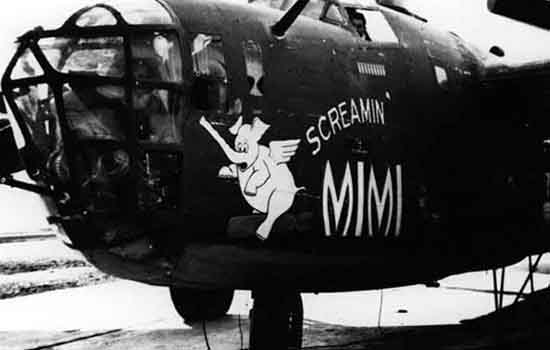
The plane was originally named the Screaming Mimi before its Carpetbagger missions

Of the 19,256 aircraft built, 13 complete examples survive today, two of which are airworthy. Eight of the thirteen aircraft reside in the United States.

Everyone leaves behind a legacy when they die.

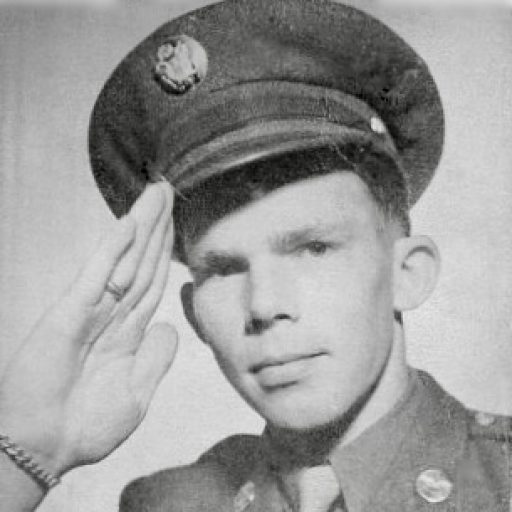
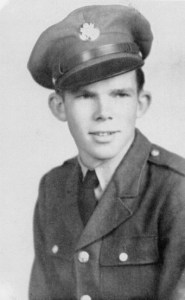
US Army Staff Sergeant Charles “Chuckie” Melvin Wilson, 36thBomb Squad, 801stBomb Group, was killed in action on 28 April 1944 along with four other American aviators when his B-24 ‘Liberator’ Bomber crashed in the French village of Saint-Cyr-de-Valorges. He is permanently interred in the military war grave cemetery Rhone American Cemetery and Memorial located in Draguignan, France. 

US Army Staff Sergeant Charles “Chuckie” Melvin Wilson
Born: January 19, 1922 – Died: April 28, 1944

These few details are all his family had about the fate of their son, their brother, their nephew, their cousin or the uncle they never knew.  The ‘good guys won’; Chuckie was ‘killed in action’ and he’s ‘buried over there’ were the only memories spoken of or shared as the years went on. Little information was known. No one from his family had visited his grave. They never had passports, knew anyone French or traveled abroad.

The journey begins.

I had always been curious to know more about Chuckie, other family members too. Surely there was more to know about Chuckie now available on the internet? The lives of those in the Allied Forces who fought and died in WWII are recorded in hundreds of thousands of films, photographs, letters and history books. Monuments recognize the victory they achieved to restore freedom and end tyranny around the globe.  These offer us a lasting record of their hopes, dreams, talents and ambitions, the countless lives they impacted, and the loved ones they left behind. But that record is incomplete and quickly disappearing for many. 

One of those is US Army Staff Sergeant Charles “Chuckie” M. Wilson.  When his mother (my great grandmother) died in the late 1970s, my family found a shoe box with a purple heart, a few undated photographs and just six official letters she received from the War Department over a 15 year period from the date of his death.  These were all the memories that remained of Chuckie. 

As the world commemorates the 75thanniversary of D-DAY this year, I felt a new sense of urgency and family duty to create a more complete digital record of Chuckie’s life so that his memory and contribution to freedom will not be forgotten.  With only a basic timeline of key events known from those six letters, I dove into the internet to see what more I could find. The internet has made it possible for anyone with a computer and curiosity to search hundreds of thousands of websites, indexed data bases and social media to uncover a wealth of facts, images and uncover the truth of personal human stories.  

The ultimate sacrifice, the unforgotten glory of their deeds.

What quickly emerged in my searches is a fascinating and remarkable story of heroism and bravery of a 22 year old man who enlisted in the Army to do his part in the fight for freedom for people in countries oceans away from his small town in Western Pennsylvania who soon found himself in England as part of the build up to the Allied invasion in France, details of his top secret air mission on that fateful day in advance of D-Day to supply the French resistance behind enemy lines, images of Chuckie and his fellow airman with their-24 ‘Liberator’ Bomber, a first-hand account of human tragedy as he and four fellow American airmen gave the ultimate sacrifice of their life for the liberation of France and the restoration of freedom, and a previously unknown monument to them erected with gratitude by the French villagers on the spot where they found his body under the plane wreckage after their fiery crash in Saint-Cyr-de-Valorges, France and the compassion they showed him as they quickly buried him in gratitude in a temporary grave so that his remains would be safe and could be returned with honor and dignity. 

It is my hope that by sharing some history, personal family stories and facts of Chuckie and his mission on this blog over the coming months, readers will gain an interesting snapshot into an important period in history. Together we honor those like Chuckie who fought and died for freedom. In late May, I will be the first family member to visit Chuckie’s grave in France and I will share that experience here too.  When I write my last post on this blog in a few months time there will finally be a more complete record of the life of Charles M. Wilson so that future generations can remember him, better understand the price of freedom and be inspired by what they learn.

Thank you for your interest. You can follow by signing up or liking UnforgottenGlory Facebook page.

For all of us, may it evoke a small comfort to know that once we are gone, we will not be erased from the memories of others.

Tim B.

Processing…
Success! You're on the list.

Timeline – Life story from the beginning

Unforgotten Glory readership and ‘likes’ to our Facebook page continues to grow. New readers have asked for a quick, easy way to catch up and read the story from the beginning. Here, indexed in chronological order, you will find current and previously published WordPress blog posts.

Thanks everyone for joining in commemorating the 75th anniversary of D-DAY by following this storytelling of the life of US Army Staff Sergeant Charles “Chuckie” Melvin Wilson and his fellow Operation Carpetbagger crew of the 36thBomb Squad, 801st Bomb Group so that their contribution to freedom will not be forgotten.

“Time will not dim the glory of their deeds”

General of the Armies John J. Pershing said of his generation of fighting Americans, “Time will not dim the glory of their deeds.” Our memories aren’t so fortunate. It’s important that we keep them alive including those at rest abroad like Chuckie.

The American Battle Monuments Commission administers, operates, and maintains permanent U.S. military cemeteries, memorials and monuments both inside and outside the United States.