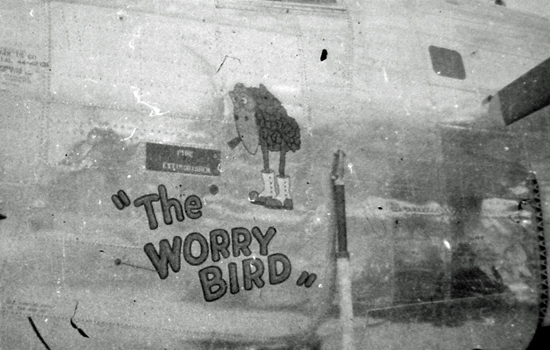
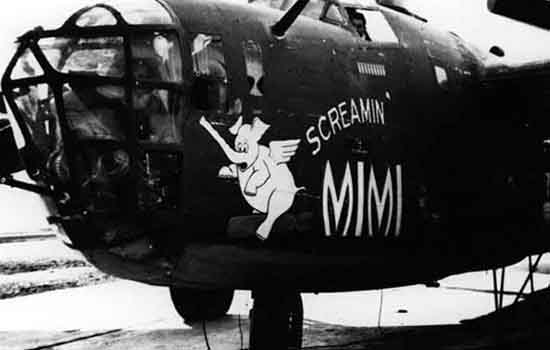
The B-24 Liberator Bomber that Chuckie and his fellow airman flew on their missions was renamed “The Worry Bird” in February 1944 when it became a Carpetbagger B-24. These aircraft were specially modified B-24s painted with a glossy black anti-searchlight paint to supply friendly underground forces throughout German occupied Europe. Flights were made at night and at low altitude levels making them particularly dangerous.
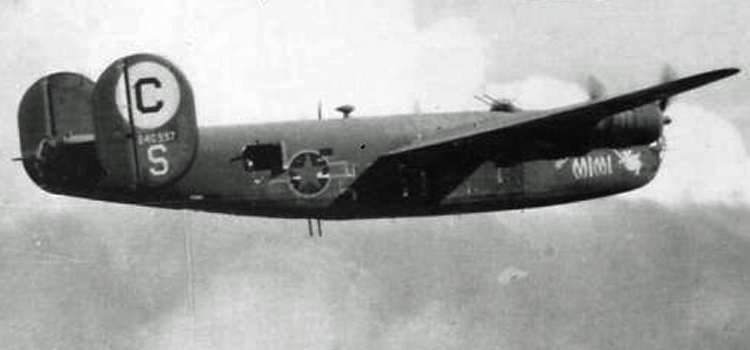
The serial number of the plane Chuckie was killed in was 42-40997 which I found along with pictures of the plane on a website dedicated to WWII B24 Liberator Bombers. This was an important fact to know because information about all missing WWII aircraft in the National Archives are filed under the plane serial number. With the serial number, I was able to locate an enormous amount of information about Chuckie, his fellow airman, their mission and its Missing Aircraft Report (MACR).
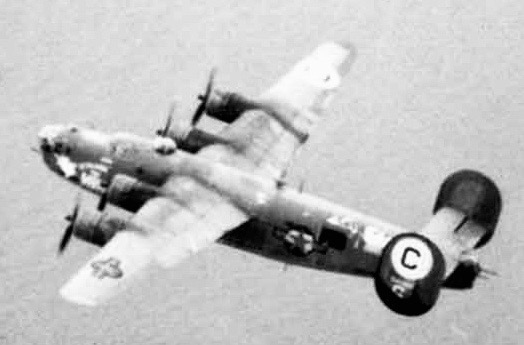
Chuckie and the squadrons flew agents and supplies into southern France with B-24 Liberators that had all armament removed except in the top and tail turrets. In addition, the standard bomb shackles were removed from the bomb bay and British shackles were installed to accommodate special supply canisters. All unneeded radio gear was removed, as were the oxygen bottles.
Flash suppressors were installed on the guns, flame dampeners weren installed on the turbo-superchargers, and blackout curtains were installed over the waist gun windows. Light bulbs were painted red to spare night vision and special radio gear was added to assist in navigation and homing in on drop zones. The undersides of the aircraft were painted black to avoid detection by enemy searchlights. Combat with the enemy was avoided as it only endangered the success of the mission.
Drops were also made using radio-navigation equipment. Supplies were also released in containers designed to be dropped from the existing equipment in the bomb bay. Pilots often flew several miles farther into enemy territory after completing the drop to disguise the actual drop zone in case enemy observers were tracking the plane’s movement.
Between January and September 1944 the 801st / 492nd Bomb Group undertook 2263 separate missions. More information can be found on the Carpetbagger Aviation Museum website.
Of the 19,256 aircraft built, 13 complete examples survive today, two of which are airworthy. Eight of the thirteen aircraft reside in the United States.
 Unforgotten Glory