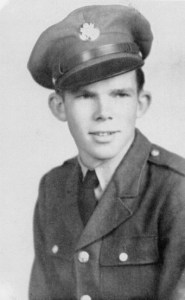
Not only was the B-24 demanding to fly, even for a fully-qualified pilot, it operated at such high weights that takeoffs became dicey even with full power on all engines. Flight stability was marginal, and escape from a stricken machine was extremely difficult once the pilot and copilot had let go of the controls. I imagine these were some of contributing factors on the night Chuckie’s plane crashed.
To better ensure accurate drops, pilots tried to get down to within 400 to 600 feet off the ground and to reduce their flying speed to 130 miles per hour or less. The low speed reduced the chances of damage to parachutes, as the shock of opening is much less at the slower speed. Personnel were normally dropped from a height of 600 ft with containers and packages being dropped from 300 – 500 ft.
Chuckie’s plane made two passes over the target and on the third pass, “we hit or clipped something”
Once again the flaps start down and the bomb-doors open and we are starting our approach. I can look out and see the hills, or mountains on our left side. Suddenly the plane shakes violently, apparently we hit or clipped something.”
The engines were racing and the plane was climbing, seemingly straight up. He yells for us to get out. . . .We no sooner cleared the plane when it starts down again, only this time it is too late, because it is burning when it crashes.”
Transcribed from copy of letter by crash survivor James Heddelson in the archives at the Air Force Academy June – 1998
At 02:10 hrs local Chuckie’s aircraft landed in a fiery crash in Saint-Cyr-de-Valorges, Loire, near Lyon France.
“He was killed. This is a definite.”
Chuckie was killed on impact. Individual Casualty Questionnaire‘s were completed by two of the three crash survivors when they eventually returned back to Harrington three months later after successfully evading the enemy with the help of the French resistance. Both confirm Staff Sgt Charles. M. Wilson was killed in action when his plane crashed. Copies of the actual questionnaires likely completely sometime in August 1944 were found in the MACR and posted below.
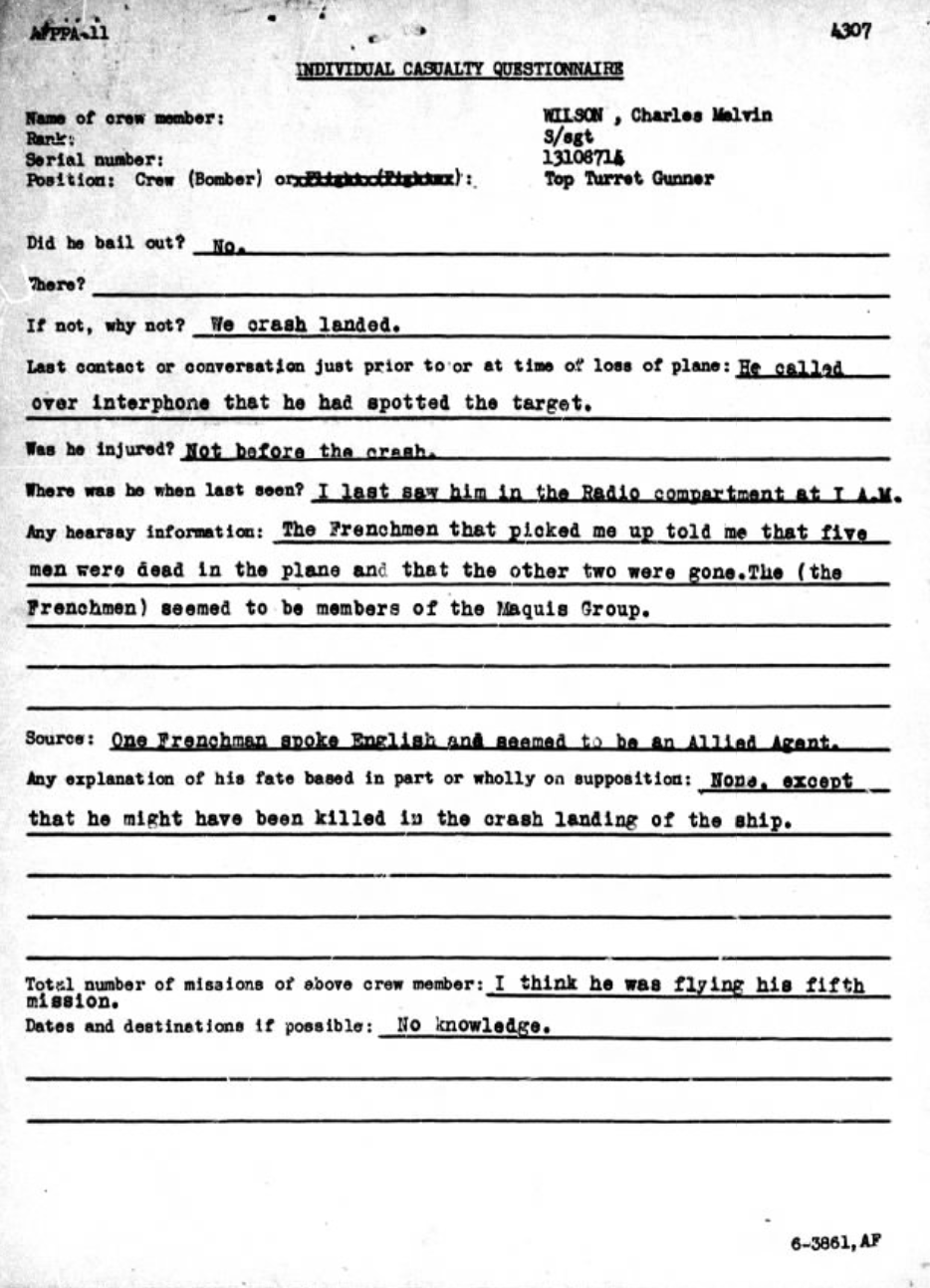
By survivor Sgt. George Henderson 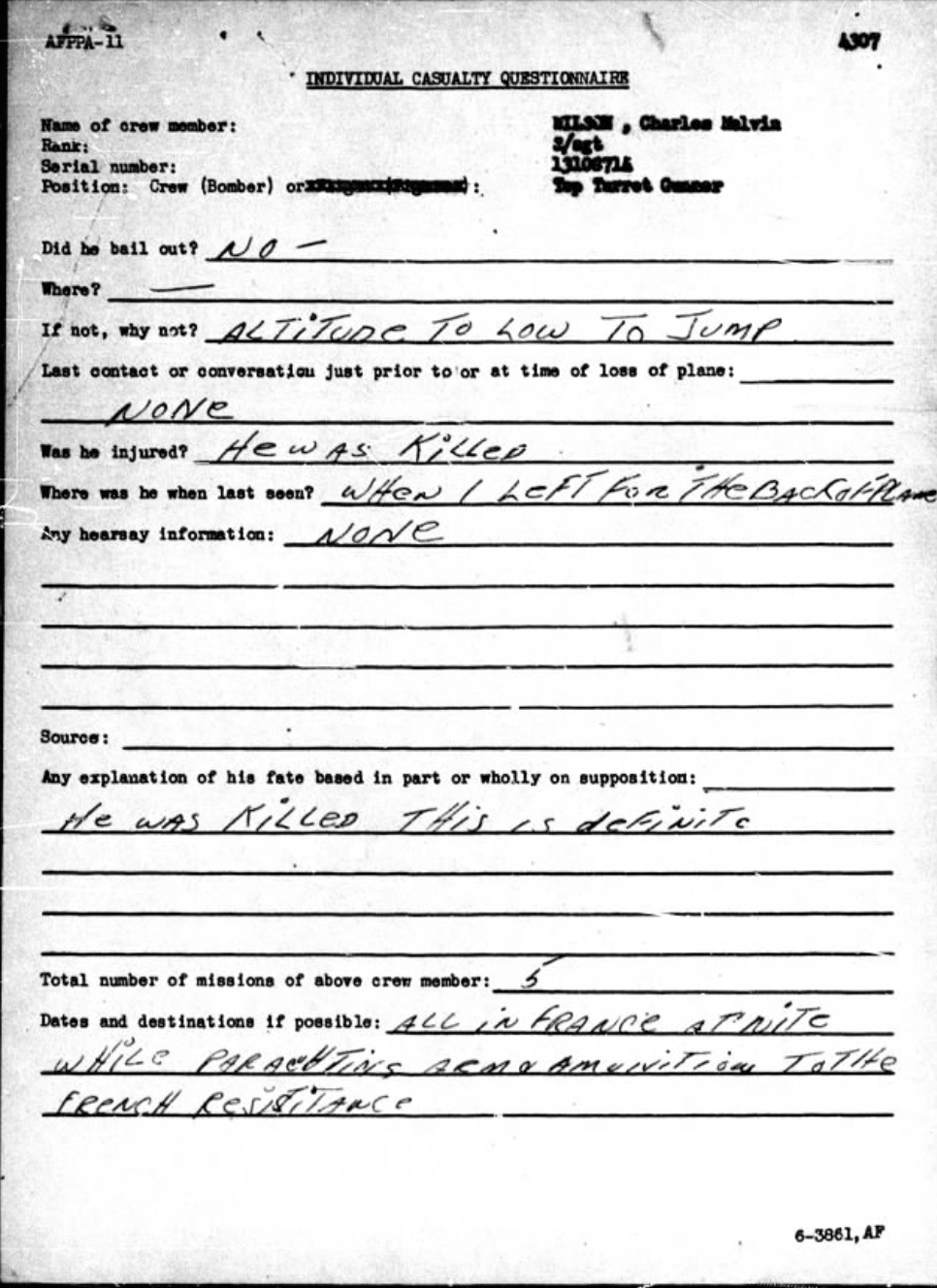
By survivor Sgt. James Heddelson
Next up: The Crash (part three) – seen like a beacon
 Unforgotten Glory