27 April 1944 – Daylong preparations for final flight

Operation “Lackey 3A” – Each Carpetbagger mission completed at Harrington took place in a 36 hour cycle, which began at 17:00 hours the day before the flight, when the OSS in London gave Lt. Robert Sullivan a list of approved targets for the following night.  Based on historical documents and the Harrington Museum website, it is possible to frame out Chuckie’s schedule on his last day on earth before he took off with his crew into the dark night sky.

9AM – Weather report & targets

The Commanding Officer selected the nightโ€™s targets according to priority of requests from the Resistance groups, reception record of the group, and availability of crews and aircraft. The lists were then given to OSS, who informed the reception teams on times and recognition codes. The Station Weather Officer advised the Commanding Officer, or his deputy, of weather conditions anticipated in the target areas, and at it is decided where it will be practical to send Chuckie and The Worry Bird aircraft. 

11AM – Target agreed

Chuckie’s Squadron Commander is called in and meets before a map in the Group Operations Room with the tabs pinpointing the targets for the night. Together, the squadron leaders select targets for their crews, balancing the difficult with the comparatively easy, the distant with the near, so that each squadron finally will have about the same work load.

Noon – Navigator receives targets

The navigators of the crews receive their targets from the Squadron Navigator. The Worry Bird crew navigator turns in a flight plan to his Squadron Navigator by 3PM. A take off time for Chuckie and his crew is agreed.

3PM – Loading the aircraft
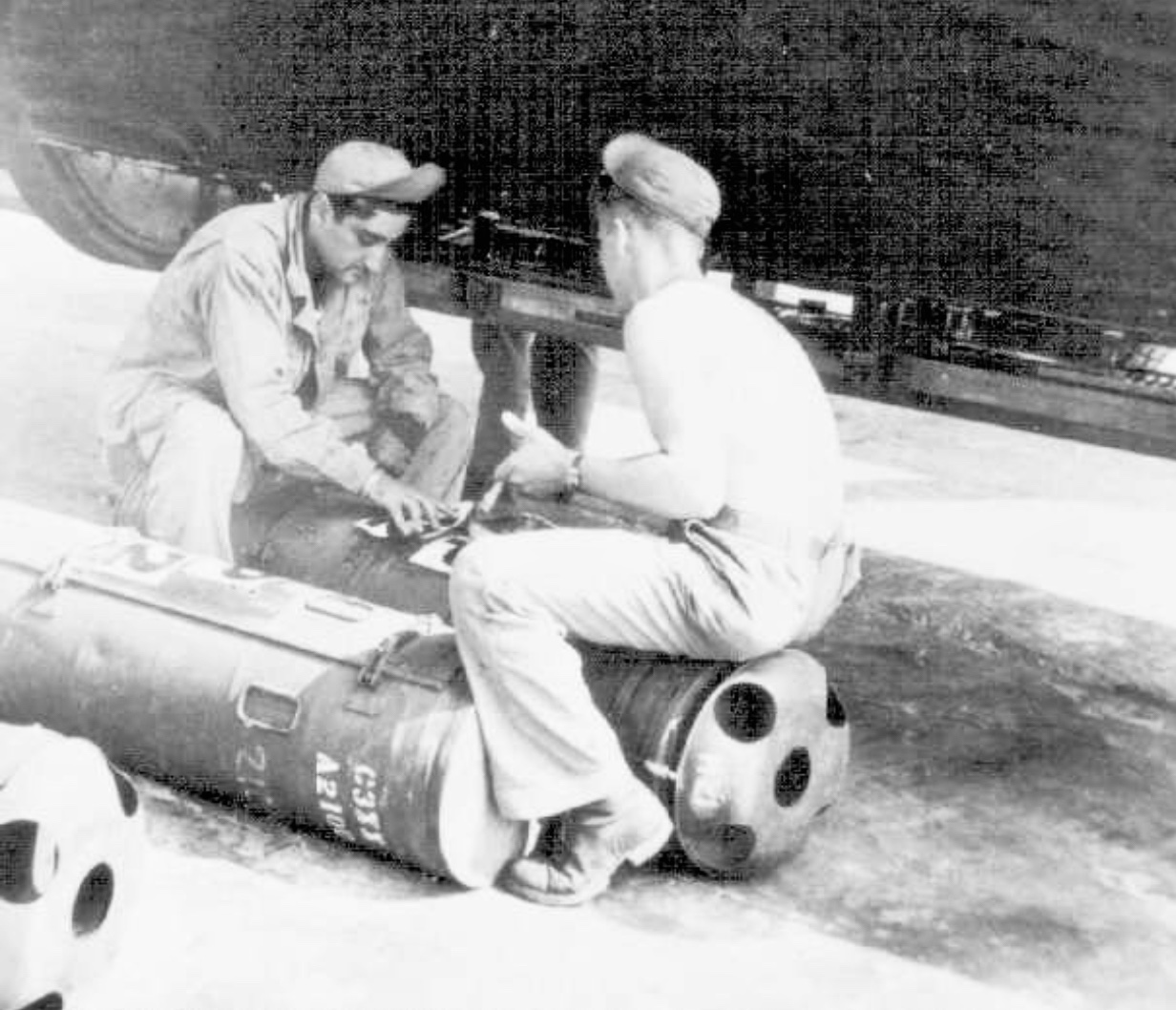
Photo credit: HarringtonMuseum.org.uk

Chuckie and his crew meet with an S-2 Officer and had the opportunity to study the S-2 map and to compare it with their own map. Crew maps are checked for location of the target (latitude, longitude and terrain features). 

4:30 PM Chuckie attends final briefing

Chuckie attends a final briefing session with all crew members. The Intelligence Officer gives any special information which may affect the crew. Next, the Deputy Commander gives general flying and dropping instructions, and finally the Group Navigator gives instructions on the route to be followed whilst over England and the point and altitude for crossing the English coast. He ends up by giving the men a โ€˜time checkโ€™, on which all crew watches are synchronised.

06:00 PM Squadron Commanders and crew navigators briefed

All details, and weather to be expected en route to the drop zones were reviewed. The Worry Bird crew navigator briefs them on the course, the type of reception signal, the code recognition letters for the target, and the terrain features approaching and around the target.
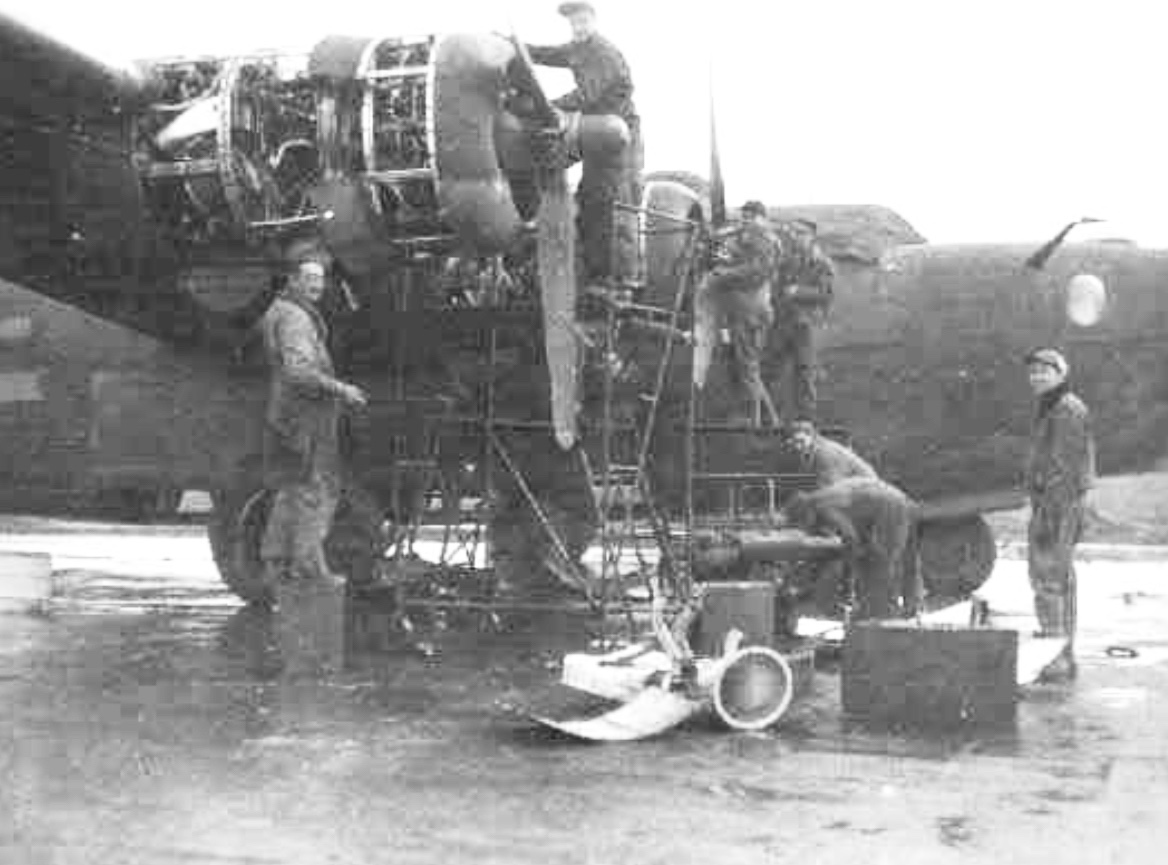
Phot credit: HarringtonMuseum.org.uk

09:00 PM Pre-flight visual check

As the Engineer, Chuckie would have done a pre-flight visual check of the plane prior to take off, and make sure that the gas caps were secured. The Engineer was also responsible to see that the wheels were always locked (prior to landing), and some reports say there were times when he had to lower them by crank, from inside the plane.

Timeline – Life story from the beginning

Unforgotten Glory readership continues to grow. Here, indexed in chronological order read the story from the beginning.

Thanks everyone for joining in commemorating the 75th anniversary of D-DAY by following this storytelling of the life of US Army Staff Sergeant Charles โ€œChuckieโ€ Melvin Wilson and his fellow Operation Carpetbagger crew of the 36thBomb Squad, 801st Bomb Group so that their contribution to freedom will not be forgotten.

Pinpoint Target: A farm near Saint-Cyr-de-Valorges

Records show the secret code name for the Carpetbagger mission Chuckie was flying the night he was killed was Operation Lackey over the Timdale drop zone near Lyon, France –“TIMBALE DZ 45deg 57’N, 04deg 22’E”. The exact location of the planned drop is still a farm today and can be seen on Google maps is here.

On its final approach to make the drop “on lights” where members of the resistance were waiting on the ground, the plane hit a hill at 02:00AM and separated into four parts when crashing at nearby Saint Cyr de Valorges (Loire), France, killing five of the eight crew members including Chuckie.

Curious to see pictures of the village where Chuckie died on that hill, I did a Google search. Right there as I’d imagined. Beautiful, green rolling farmland, high wooded hills, peaceful, wide open expansive views. So familiar. It’s the same topography of Western Pennsylvania where Chuckie and this author grew up.

A very dangerous place to be flying a huge B-24 bomber in the dark of night just 130 feet above the ground at an airspeed of near stalling. The heroism, their bravery now even more clear. God bless them all.

One important lesson taught to the Carpetbaggers was the need to memorize the route to the drop zone. Pilots learned to literally map read their way by moonlight, memorizing landmarks โ€“ the most successful pilot sometimes spent hours studying the route. However, the B-24s were fitted with the best possible flying and navigational instruments. The most important flying instrument was a radio altimeter giving an accurate height readout on the low level flights.

The route to the drop zone was achieved by a team effort, the bombardier sat in the glazed nose on a swivel seat reading off landmarks to the navigator sitting at his table behind the blackout curtains. The pilot was provided with large blister windows giving a good downward view of the ground.

First radio navigation aid to be used on a mission was the Gee set, this recorded directional signals which were marked on a special chart โ€“ accurate within a quarter of a mile over England, but prone to jamming over enemy territory. The Rebecca / Eureka directional system explained on an earlier post consisted of a ground beacon (Eureka) set up on the drop zone, this was triggered by a signal from Rebecca set in the aircraft. Eureka then automatically sent out signals which were picked up by a calibrated receiver, this indicated the aircraftโ€™s position in relation to the drop zone.

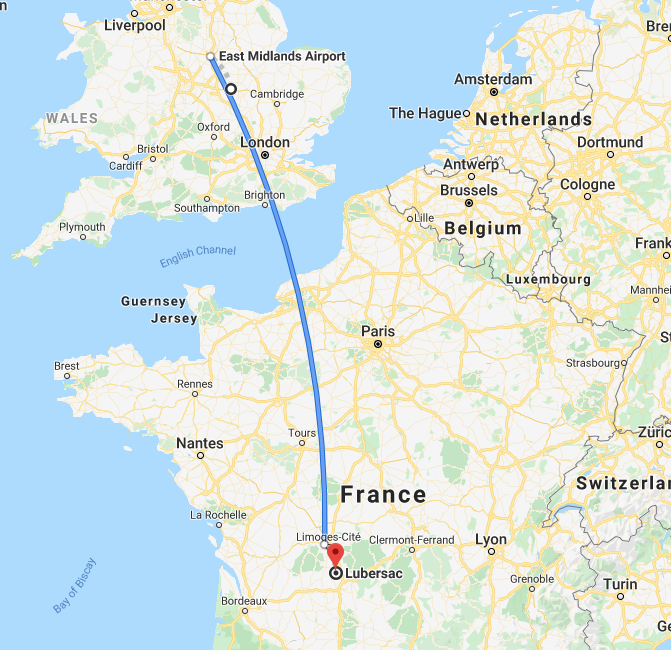
Relief map of Saint-Cyr-de-Valorges
Chuckie and his crew flew at night from Great Britain to deep into German occupied France
to drop supplies to the French resistance.
They crash landed at the red dot pinpointing Saint-Cyr-de-Valorges.

Coming up over the next 10 days are daily posts with details of that last mission, monuments to Chuckie and fellow Carpetbaggers by the grateful people of France and, for the first time, a family visits Chuckie’s grave in France for Memorial Day.

24-25 April 1944 – Reception Excellent

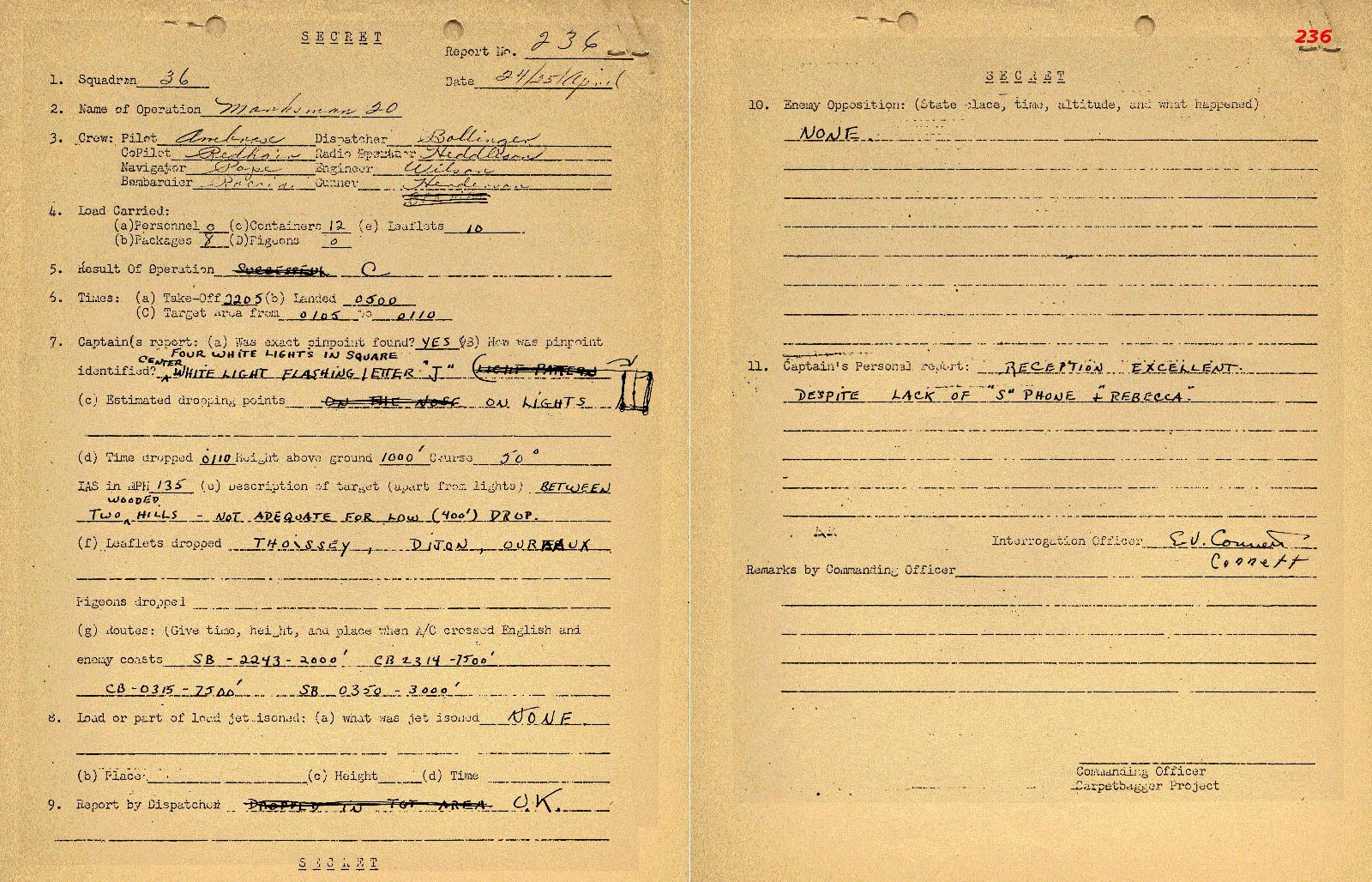
Report 236 – Another completed operation. The Ambrose crew completed operation “Marksman 20”, its third successful mission. Chuckie took off from Harrington at 10:05PM on 24 April and returned to home base safely at 5:00AM the next morning. The Worry Bird B-24 Liberator reached its target at 1:05AM. The crew identified the pinpoint for the drop by “four white lights in a square and a center white light flashing the letter โ€œJโ€. They dropped 12 containers and 8 packages to the waiting resistance army flying 1000 feet above the ground.

The report notes that the drop was made โ€œbetween two wooded hills – not adequate for low (400โ€™) drop.โ€ Presumably, this was the exact same drop location in France referenced on their prior mission. Pilot Ambrose notes in his personal report that โ€œreception excellent despite lack of โ€œSโ€ phone + โ€œRebecca.โ€

This was the Ambrose Crew’s last completed operation and the last time the crew flew together as one unit. On The Worry Bird’s next and final flight three nights later, regular crew member Sergeant Wilford Bollinger did not fly because he was sick in the infirmary. In his place, Sergeant James Cyrll Mooney volunteered to substitute for him. More coming up. . .

Operation Report of Chuckie’s third successful operation – “Marksman 20”

23-24 April 1944 – Rebecca, can you hear me?

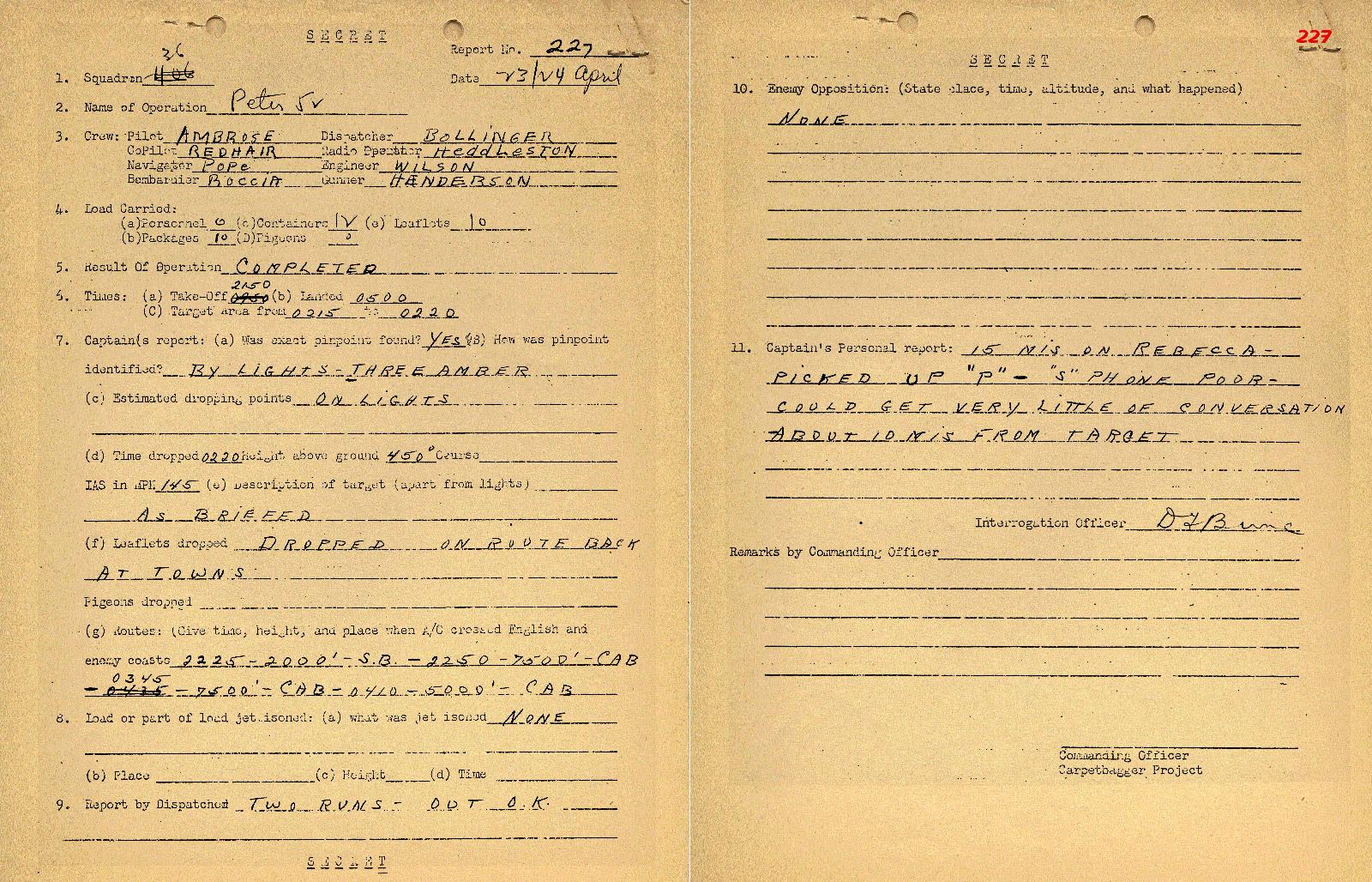
Report 277 – Chuckie and his crew took off from Harrington on 23 April 1944 on S E C R E T Operation “Peter 5v” at 9:50PM in the evening and returned back to home base at 5:00AM the next morning. It was the Ambrose Crew’s second successful Carpetbagger operation – “Completed.”

They reached the target in France at 2:15AM in the morning and dropped 12 Containers and 10 Packages “as briefed” directly on their pinpoint target which the report notes they easily identified “By lights – three amber” the French resistance members set up on the ground. It took them two runs but the drop was made on lights at a low flying altitude of just 450 feet above the ground. They were out O.K.” and 10 leaflets were “dropped on route back at towns.” No enemy opposition was encountered.

“Could get very little of conversation”

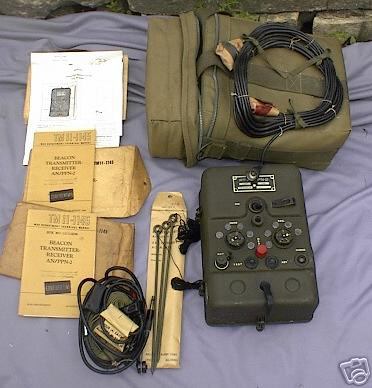
This operation must have been occurred during a non-moon period. The report references the โ€œRebecca” short-range radio navigation system used for the dropping of airborne forces and their supplies. The system was used by Carpetbaggers for dropping supplies to resistance fighters in occupied Europe, after delivery of the portable Eureka unit that was used as a homing device on the ground.

Beacon transmitters, “Eureka,” were used by agents on the ground to signal the location of a desired air drop to the transmitter “Rebecca” on the aircraft. These signals could be activated from up to seventy miles away to enable the aircraft crew to pin-point its drop zone.

Rebecca calculated the range to the Eureka based on the timing of the return signals, and its relative position using a highly directional antenna.

On this mission the system did not seem to work. In his personal report after the mission, the pilot Ambrose noted “15 Nis on Rebecca – picked up “P” – “S” phone poor – could get very little of conversation 10 Nis from target”

Eureka sets weighed up to 100 lbs and had to be parachuted in to Resistance groups in advance of future drops. Many Resistance radio-operators refused to use Eureka because they didn’t want to lug the set, which was heavy, or run the risk of being caught by the Germans with it in their possession.

Operation Report from Chuckie’s mission on 23-24 April 1944

The ‘Rebecca’ name comes from the phrase “Recognition of beacons“. The ‘Eureka’ name comes from the Greek word meaning “I have found it!“.

18 – 20 April 1944 ~ On Leave in London

The Carpetbaggers had a hiatus of ten nights between 11 April and 21 April 1944 when combat missions from Harrington, England to France resumed. Historical records show many crews, including Chuckie’s, went off base on personal leave starting on 18 April. No record exists of where in England Chuckie and his fellow Ambrose Crew traveled on their three days of leave.

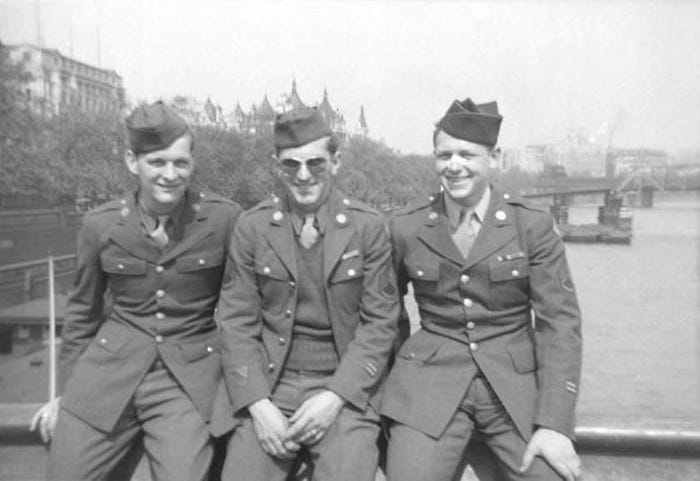
This undated photo captures a few US Army Air Force personnel enjoying a day of leave in London. They are sitting on the Westminster Bridge with the Thames River behind them. A happy day in London like the one in this photo was, perhaps, how Chuckie spent his last days.


Photo Credit: ARGUNNERS Magazine

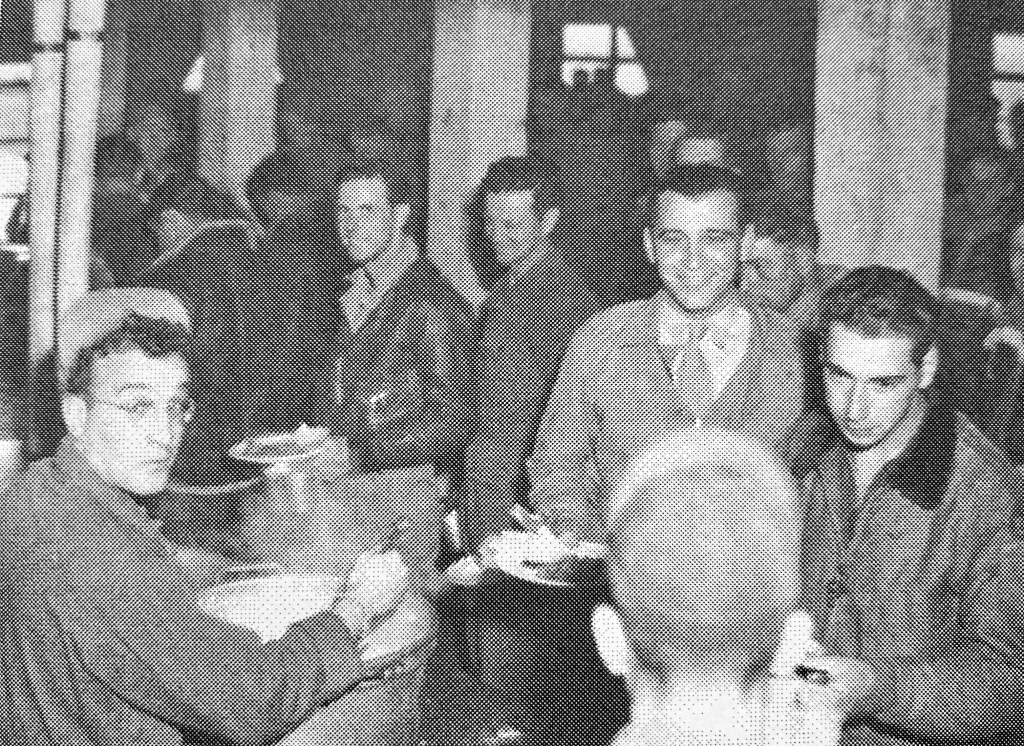
The Carpetbaggers were all ages, shapes and sizes.
They became close friends.

Photo Credits: The Carpetbagger Project – Secret Heroes

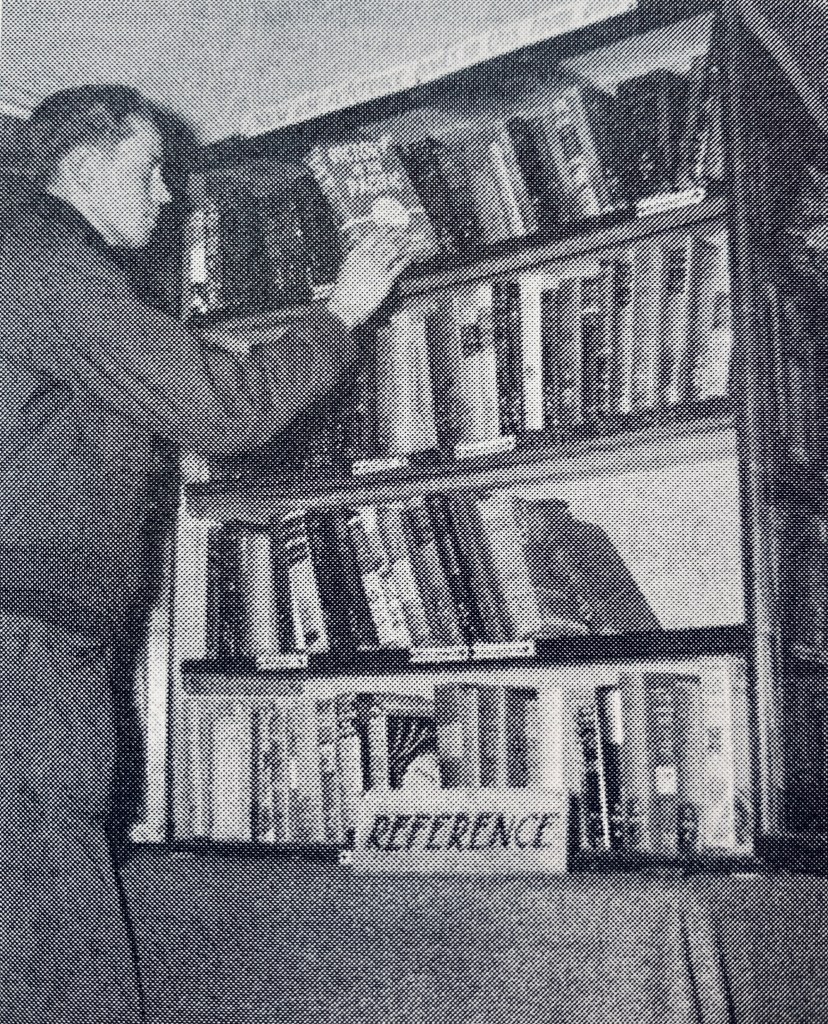
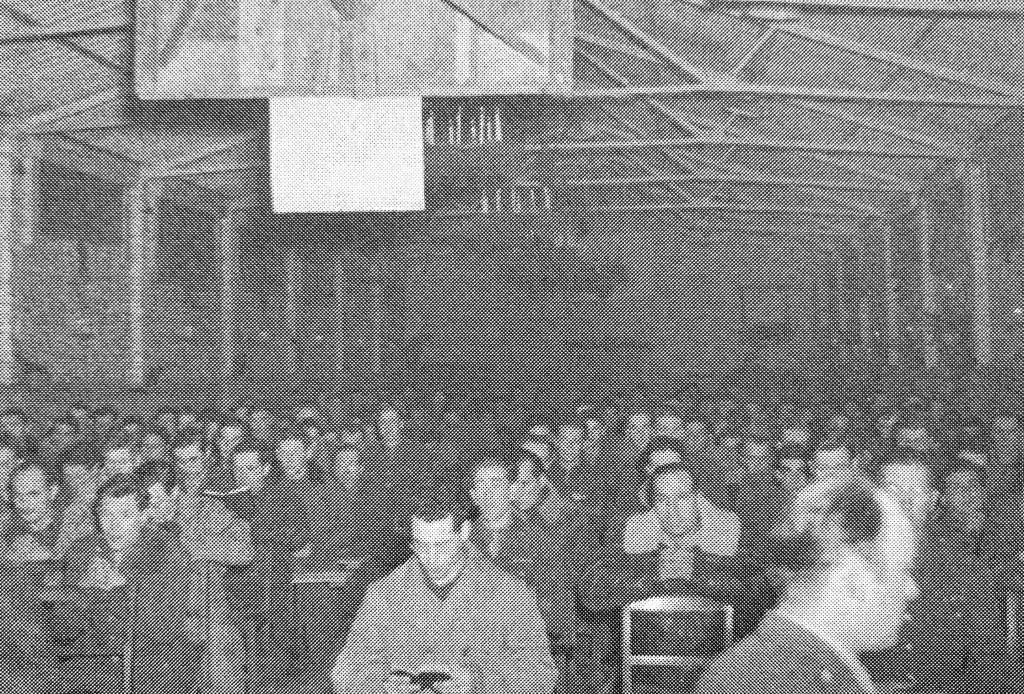
Off duty activities at Harrington included church services, eating at the mess hall, mail call, getting paid at the payroll ten, checking out the library, listening to music and raising puppies and pigs.

Historian Thomas L Ensminger’s book Spies, Supplies and Moonlit Skies, Volume II: The French Connection, April-June 1944, provides a wealth of illumniating and previously unknown facts related to Chuckie’s Carpetbagger missions based on historical records. Upon their return to active duty at Harrington, all remaining operational nights in April 1944 would be more dangerous dark flights – with no moonlight to help guide them. Whether this was necessity, or deemed as necessary for the buildup prior to D-Day and to be tested, is not recorded.

Chuckie would make just two more flights.

10 -11 April 1944 – First completed operation

The Ambrose Crew had better luck on its second operation.
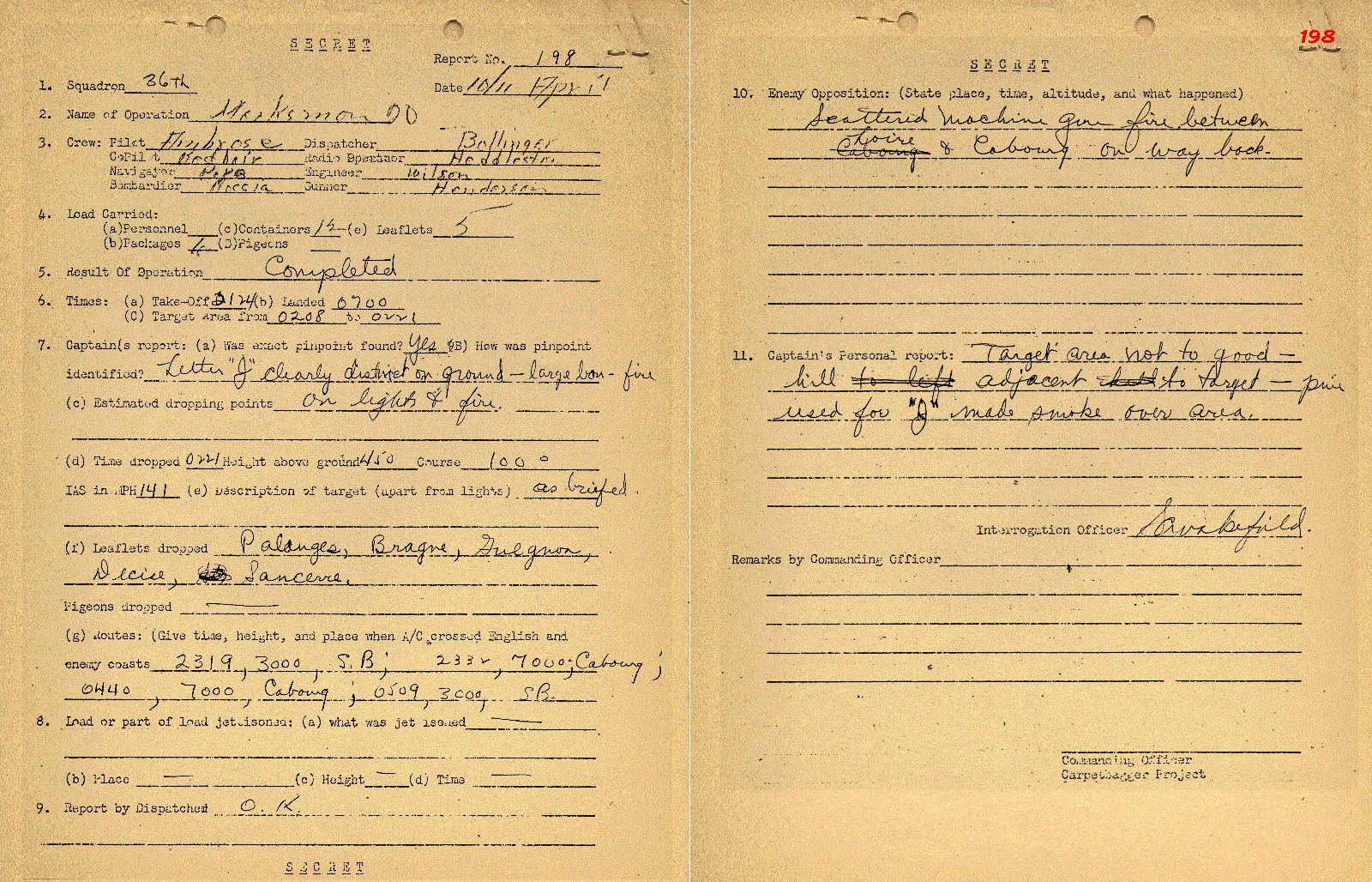
Report 198 notes the results of the nine and half hour operation โ€œMarksman 20โ€ as completed. After flying a few hours to behind enemy lines in France, Chuckie and his fellow crew dropped 12 containers, 6 six packages and 5 leaflets in France and returned safely back to Harrington in England.

Loading the aircraft

Once the flight was confirmed, the target went to the OSS Liaison Officer at Harrington so that he could draw up a list of required containers and packages and arrange delivery to the plane. Containers were consigned to the Group Ordnance Officer, whose men first snapped on parachutes then delivered them to The Worry Bird where Armament Section men stood ready to load the containers into the aircraft. Packages are delivered to the Armament Officer and taken to the aircraft also for loading.

Leaflets were used to disseminate both pro-Allied and anti-Axis propaganda, with the aim of damaging enemy morale and sustaining the morale of the occupied countries. Usually six to ten bundles of 4,000 were loaded onto the plane according to the stock on hand, the length of flight and the time over enemy territory. No leaflets are dropped near Carpetbagger targets, for security reasons.

The OSS Liaison Officer and his men check each aircraft to ensure that the proper loading is in place.

The Worry Bird is ready for take off.

Report 198: Chuckie and his crew took off at 9:24PM in the evening and returned at 7AM the next morning. They found the pinpoint, the letter “J” was clearly distinct on the ground from a large bonfire. Flying just 400 feet above the ground, they made the drop of containers and packages to the resistance members.

After leaving the target thirty to fifty miles behind, the dispatcher drops the leaflets on villages and towns passed over on the homeward flight.

They encountered “scattered machine gun firebetween Loire, a river in West central France, and Cabourg in the Normandy region of France on the English channel.

Pilot Ambroseโ€™s personal report: “The target area was not to (sic) good. Hill adjacent to target – pine used for J target made smoke over the area.” The intelligence gathered on the flights was valuable for improving operations and helping guide more successful future operations.

Operation Report 198 from Chuckies successful operation

Chuckie must have been exhausted from the long mission but likely also exhilarated from the adrenaline, proud of his crewโ€™s success that night.

9-10 April 1944 – Chuckie’s first Carpetbagger mission

Chuckie’s first mission was actually the second night of combat missions at Harrington. Twenty two aircraft lifted off the runway that night.

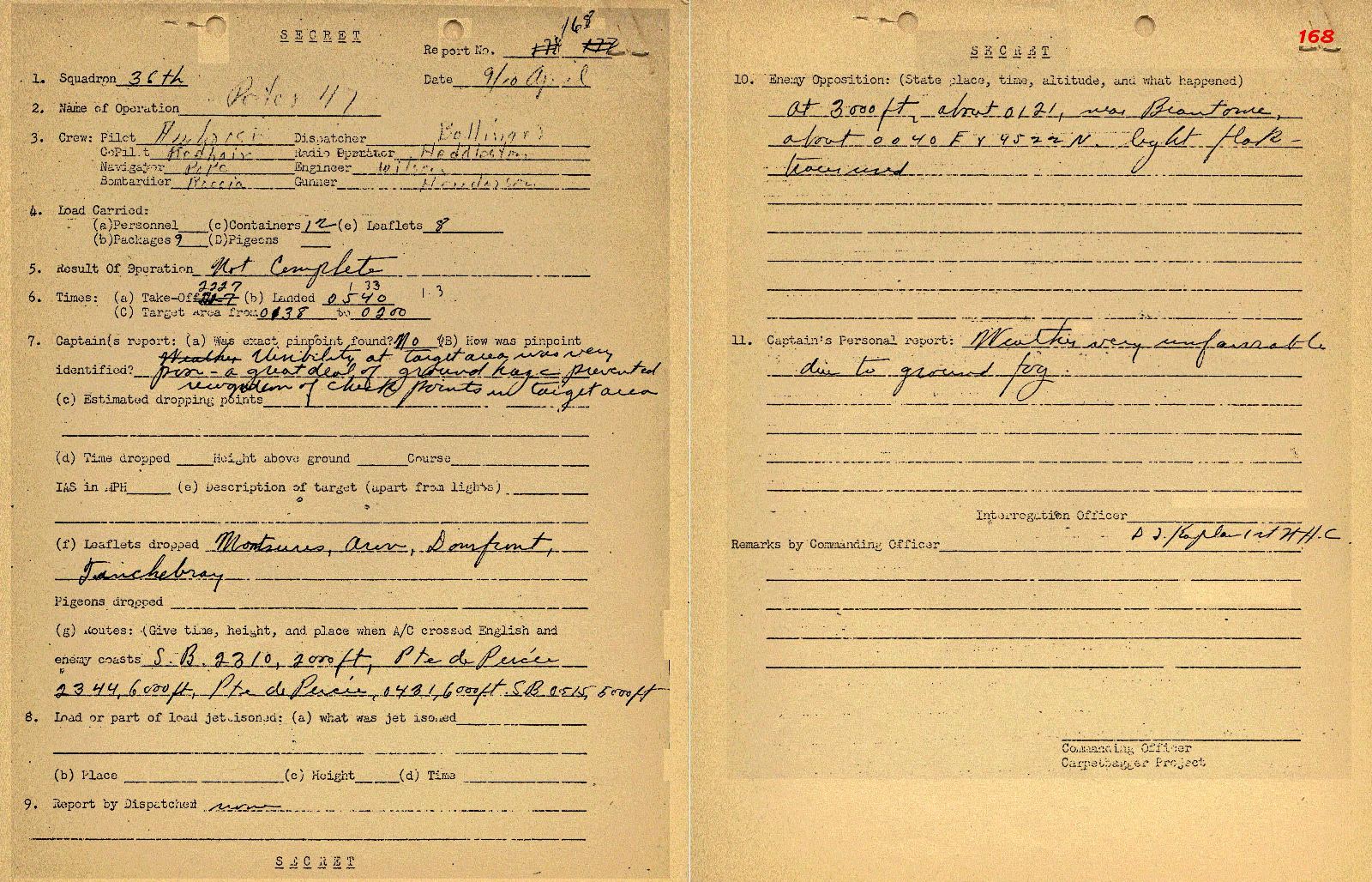
Report 168: Chuckie’s first flight mission is documented in a Secret Mission Report dated 10 April 1944. These reports were filed by the Commanding Officer immediately after each aircrew were debriefed when they returned back from its “Special Operation.โ€

Report 168 lists Chuckie as the Engineer of the B-24 Liberator that took off for France at 10:27 PM on 9 April and returned at 5:40 AM the next morning 10 April. The plane was carrying 12 containers, 8 leaflets and 9 packages to be dropped to the resistance in France.

Their Target was Peter 47 –
specific coordinate was 45ยฐ 26′ N 01ยฐ 25′ E

Result of Operation: Not Complete

B-24 Liberators were big planes for carrying supplies and people. The bottom gun turret had been taken out and the hole covered with plywood. The opening was known as a โ€œdump holeโ€ or โ€œjoe hole.โ€  Supplies were all packed in long tubes that the crew shoved out when the pilot signaled.

The reason given: “Visibility of the target was very poor – a great deal of ground haze prevented navigation of check points with target was the reason.” The report also notes that at 1:21 AM they encountered enemy opposition enemy opposition at 3,000 feet on their left flank.

I was amazed when after a few clicks on the internet, I was able to get a copies of all the Mission Reports for each of Chuckie’s Carpetbagger missions. The first one was filed 10 April 1944. Stay tuned for the rest.

The Mission Report from Chuckie’s first Carpetbagger Mission

Interrogation (debriefing) of Crews

When an aircraft completed its mission and returned to the home base, its crew were driven directly to the Intelligence Library situated at the rear of the Group Operations Building for debriefing by S-2 Officers.

Drop success that evening had been fourteen complete and nine incomplete. Three out of the four agents had been delivered, 156 of 252 containers had been delivered, 202 of 210 bundles delivered and 95 out of a possible 139 packages had been delivered.

The interrogation may find a crew showing the stress of a hard dangerous mission which has lasted from five to eight hours. Free, frank interchange of information is encouraged. The S-2 Officers handle the jumpy crew with a great deal of tact and flexibility. An official Report is then filed by the Commanding Officer.


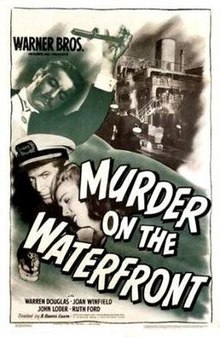
The movie playing that night was
Murder on the Waterfrontย  – the 1943 American film staring Warren Douglas and Joan Winfield.

B-24 Liberator – Flight Engineer

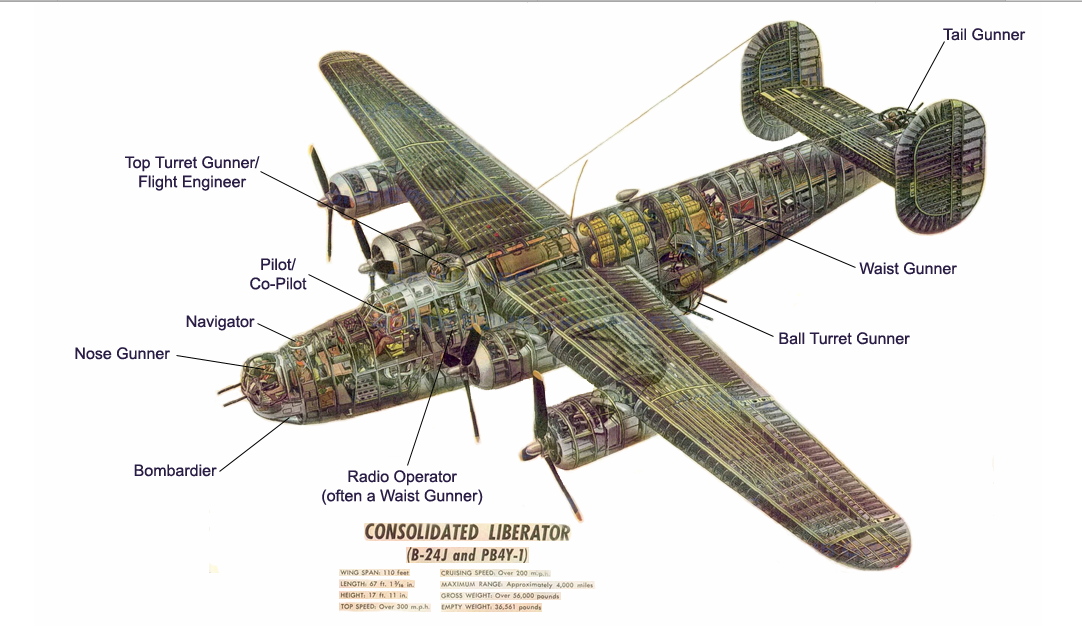
Records show that Chuckie was the Flight Engineer of “The Ambrose Crew” on the B-24 Liberator “The Worry Bird” for those Carpetbagger missions in April 1944. A B-24 carried a crew of eight to ten men (a ten man crew was most common) comprised of both officers and enlisted men. Among the six enlisted crewmen, each crew typically had three specialists: the Flight Engineer which Chuckie was; Radio Operator; and Aircraft Armorer. 

The Flight Engineer had to be a qualified airplane mechanic. Chuckie had gone through training school (and in all probability) at Kesssler Air Force Base, in Biloxi, Mississippi. It focused on specialized training in Consolidated B-24 Liberator maintenance. The Liberator was a complicated and advanced machine, leading to prolonged training programs.

The Engineer perhaps knew more about the B-24 than any other member of the crew, including the airplane commander. In emergencies, the airplane commander turned to the engineer. The duties of the flight engineer were to assist the pilot and copilot in monitoring the performance of the engines and to keep track of fuel burn.

The Engineer was usually also the top turret gunner, a position that allowed him to monitor the four engines and where the Pilot could call to him in a hurry, when something went wrong and needed fixing, while in the air. The Pilot and Co-Pilot’s attention were needed in the duties of flying the plane.  The top turret gunner’s position provided a good view of the engines as well as a panoramic view of the surrounding airspace.

The May 1, 1945 version of the B-24 Pilot Training Manual provides the following duties for the Flight Engineer:

  • Principal duty:  Aerial Engineer
  • Secondary duty:  Top Turret Gunner
  • Added duty:  Qualified for Copilot Duties
  • Added duty:  Parachute Officer
  • Added duty:  First Aid Specialist
  • Added duty:  Assistant Radio Operator

One veteran noted that the Engineer usually got to fly the plane many times, and on occasion, to even take off. Maybe Chuckie got to do that too.

4-5 January 1944 – First Carpetbagger Mission from Harrington

For over fifty years, families of American servicemen Killed In Action on Operation Carpetbagger like Chuckie knew very little about their loved ones’ dangerous, top-secret mission or the circumstances of their death. It was classified, top-secret. During World War II, Operation Carpetbagger was a general term used for the aerial resupply of weapons, ammunition, food, medical supplies, and sometimes even spies to resistance fighters in France, Italy, and other European countries by the U.S. Army Air Forces.

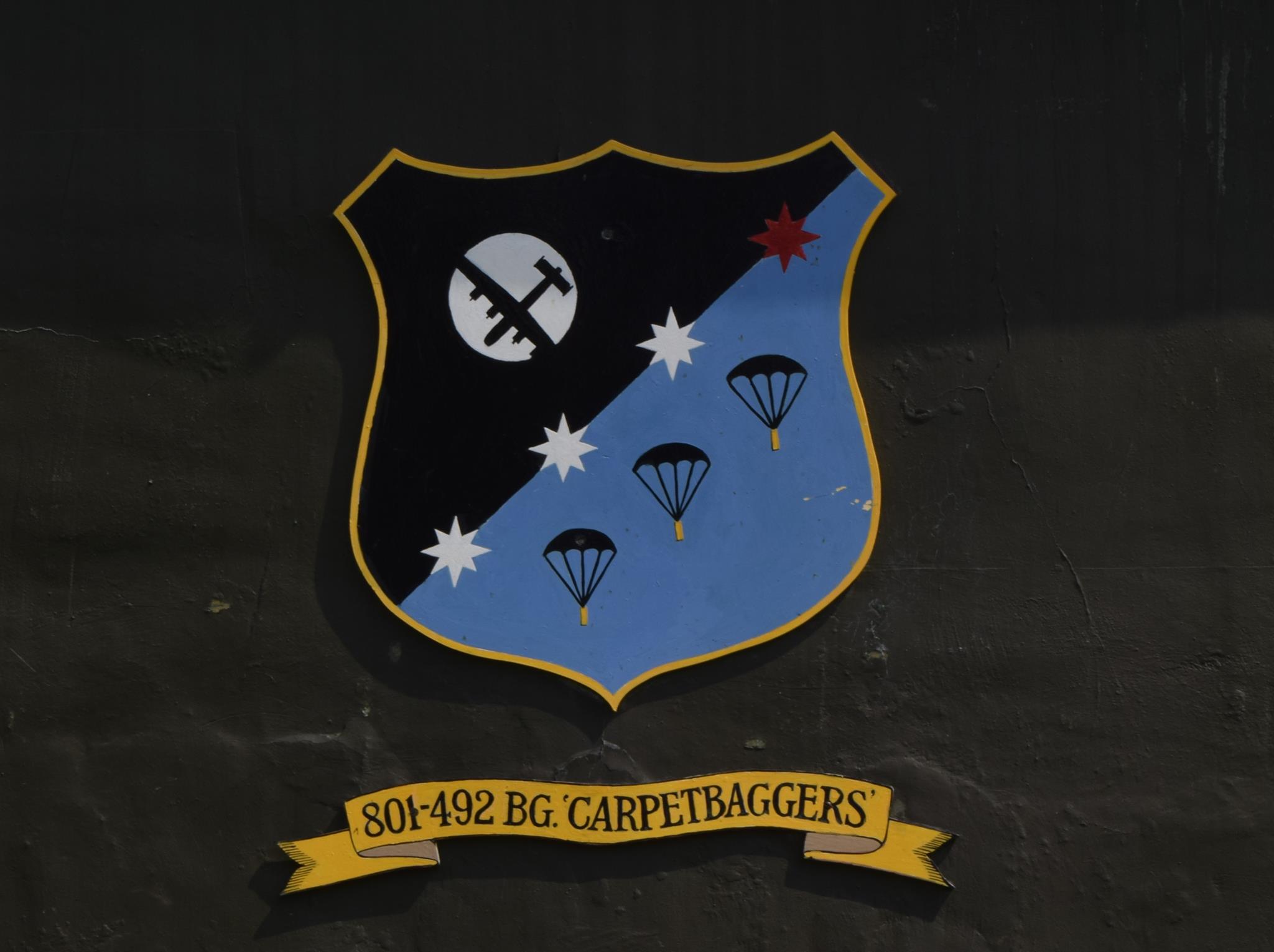
Carpetbaggers Insignia

Today, thanks to declassification of Army Air Force and OSS records beginning in the 1980s, and many years of effort by a handful of researchers, there is considerable information on Operation Carpetbagger now available. It can easily be found in national archives, history books, museums, news articles, movies, websites and YouTube videos. (Don’t worry reader, the entire history won’t be covered on this blog. Just what’s relevant to complete Chuckie’s story.)

Operating under the cover of night darkness and often in weather considered impossible for flying, they flew Consolidated B-24 Liberators to supply French partisan groups north of the Loire River in support of the upcoming D-Day invasion.  Chuckie and his air crew joined the Carpetbaggers at Harrington on 25 March 1944 and flew five successful missions to France and back again over the following weeks of April 1944.

They dropped canisters of supplies to resistance fighters: radios, batteries for radios, weapons, ammunition, first aid supplies, food, clothing, and many other daily necessities. They also delivered items used in the world of espionage agents. A parachute attached to one end of a canister, and the other end had a shock-absorbing cap to protect the contents. Once on the ground, resistance forces quickly gathered the canisters before German forces could arrive.

I found on YouTube a fascinating 15-minute Central Intelligence agency archival film hat’s been digitally restored of the actual Carpetbaggers at Harrington. At minute 12:40, watch for the aviator checking his watch on the farthest left. When he lifts his head up and looks at the camera, is it possible we catch a glimpse of Chuckie for a brief moment? Some in Chuckie’s family think so.

In addition to the dangers from German night fighters and flak, the Carpetbaggers always ran the risk of crashing into hillsides as they made low-level parachute deliveries to the resistance forces waiting below. I found out that is exactly what happened to Chuckie and his fellow airman of “The Worry Bird” that fateful night. Stay tuned.

Carpetbaggers were among those who received the Congressional Gold Medal in DC last year. The group has been generally recognized as the ancestor of today’s Air Force Special Operations. The National Air Force Museum in Dayton, Ohio has one of the few surviving Consolidated B-24 Liberators like Chuckie flew on display.

I hope to see it one day.