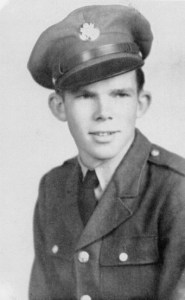
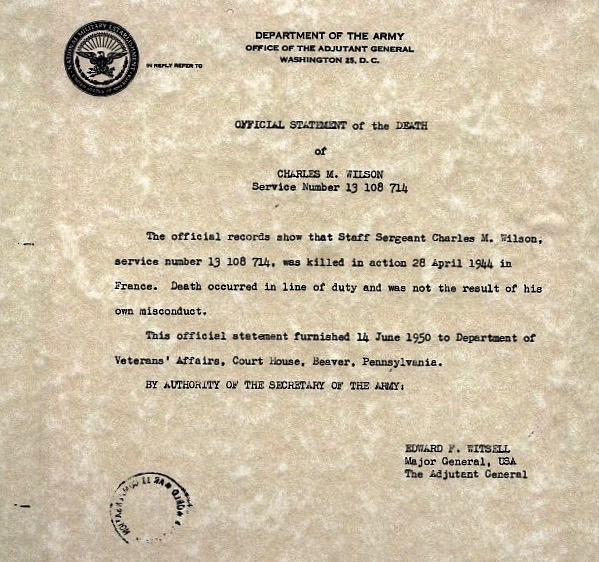
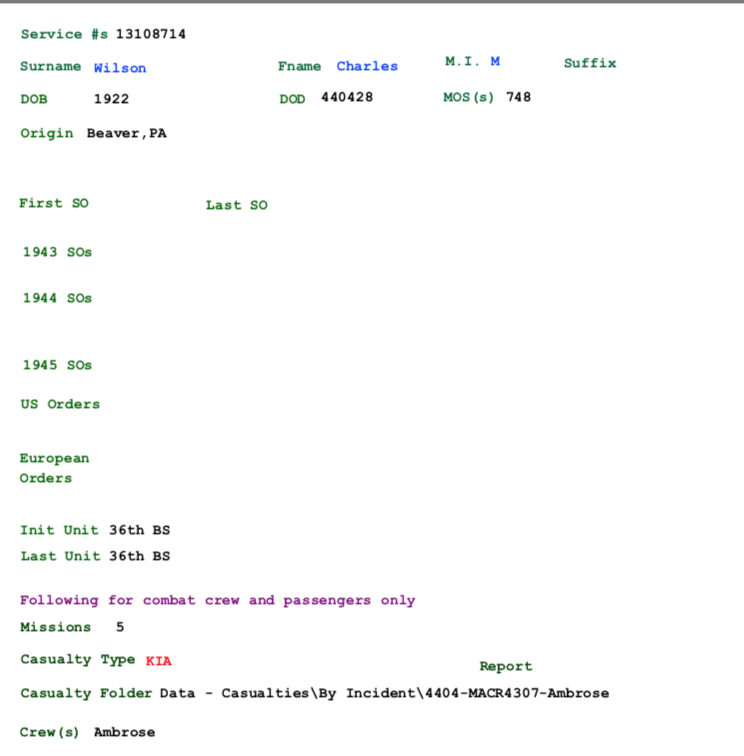
World War II was the deadliest military conflict in history. An estimated total of 70–85 million people perished, which was about 3% of the 1940 world population (est. 2.3 billion). Chuckie was one of the 52,173 U.S. Army Air Force killed in action. On 14 June 1950 an official Statement of Death was furnished by the Department of the Army to the Department of Veteran’s Affairs, Court House, Beaver, Pennsylvania noting Charles M. Wilson was killed in action on 28 April 1944 in the line of duty in France.
Battle deaths of US citizens (including POWs who died in captivity, but does not include those who died of disease and accidents) were 292,131: Army 234,874 (including Army Air Forces 52,173); Navy 36,950; Marine Corps 19,733; and Coast Guard 574. Of those killed, 185,924 deaths occurred in the European/Atlantic theater of operations and 106,207 deaths occurred in Asia/Pacific theater of operations. Source: STATISTICAL AND ACCOUNTING BRANCH OFFICE OF THE ADJUTANT GENERAL (June 1, 1953).
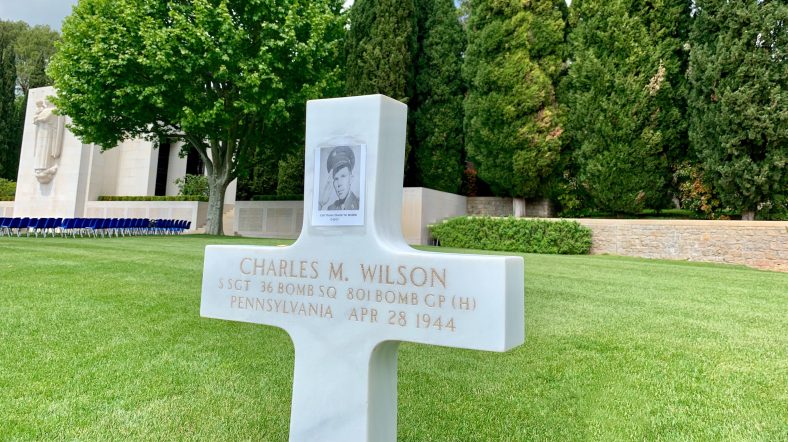
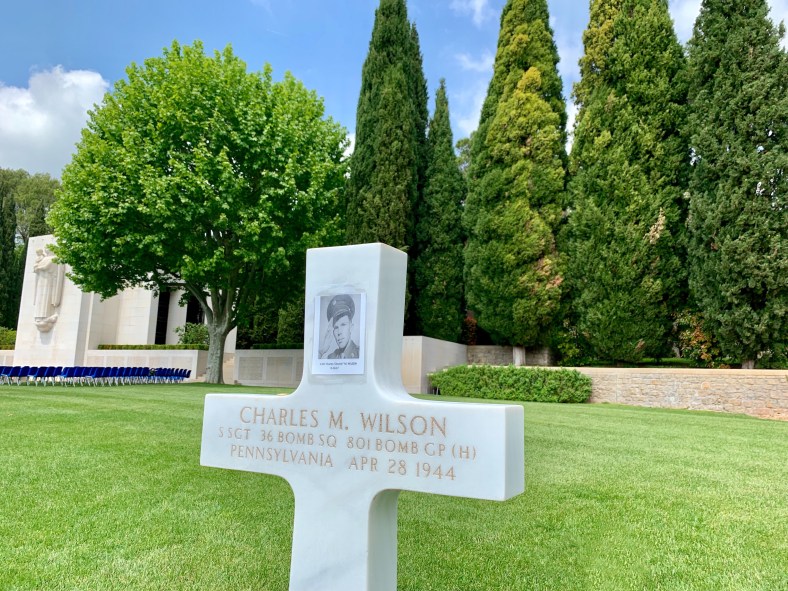
The final resting place of Charles M. Wilson at Rhone American Cemetery in France
Just before Christmas in 1948 Chuckie’s parents received a letter confirming the final interment of their son Staff Sergeant Charles. M. Wilson per their expressed wishes. Like many who lost loved ones in WWII, the Wilson family chose to honor him by leaving his remains in the region near where he died fighting for what he believed and interred side by side with comrades who also gave their lives for their country rather than having his remains returned to the United States.
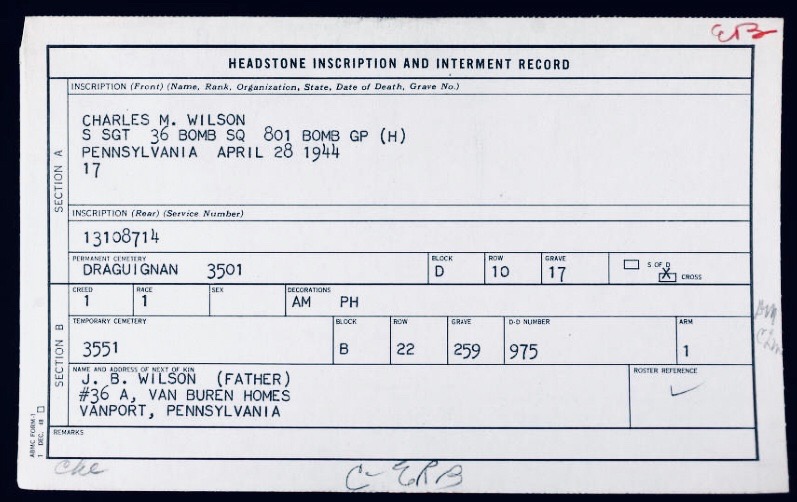
The record Chuckie’s father J.B Wilson authorized for Chuckie’s permanent internment in France
At military cemeteries, the decedent’s full name, rank, date of death, unit, and state of entry into military service are inscribed on the grave marker. The individual’s service number is included on white marble headstones at the World War II cemeteries.
The interment of remains of World War I and World War II war dead at permanent overseas American military cemeteries was made by the American Graves Registration Service, Quartermaster General of the War Department. When the interment program was completed the cemeteries were turned over to American Battle Monuments Commission (ABMC) for maintenance and administration.
The interments of World War I and World War II remains at ABMC cemeteries are permanent. It is no longer possible to repatriate the remains of those interred at these American military cemeteries. A provision of the law terminated authority to make further disposition of remains after December 31, 1951, when the decision of the next of kin became final. The program of final disposition of war dead established the moral and legal obligation of the U.S. government to honor the expressed wishes of the next of kin authorized to make the decision regarding the permanent interment of their loved one’s remains.
“Dear Mr. Wilson:
This letter is to inform you that the remains of your loved one have been permanently interred, as recorded above, side by side with comrades who also gave their lives for their country. Customary military funeral services were conducted over the grave at the time of burial.
After the Department of the Army has completed all final interments, the cemetery will be transferred, as authorized by the Congress, to the care and supervision of the American Battle Monuments Commission. The commission also will have the responsibility for permanent construction and beautification of the cemetery, including erection of the permanent headstone. The headstone will be inscribed with the name exactly as recorded above, the rank or rating where appropriate, organization, State, and date of death. Any inquiries relative to the type of headstone or the spelling of the name to be inscribed thereon should be addressed to the American Battle Monuments Commission. . . “
While interment activities are in progress, the cemetery will not be open to visitors. However, upon completion thereof, due notice will be carried by the press.
You may rest assured that this final internment was conducted with fitting dignity and solemnity and that the grave-side will be carefully and conscientiously maintained in perpetuity by the United States Government.”
Letter to Chuckie’s parents from Thomas B Larkin, Major General, The Quartermaster General, United States War Department
Chuckie is buried at RHONE AMERICAN CEMETERY in the city of Draguignan which is located in Southern France. More on his final resting place and the recent visit by this author coming up in a future post.
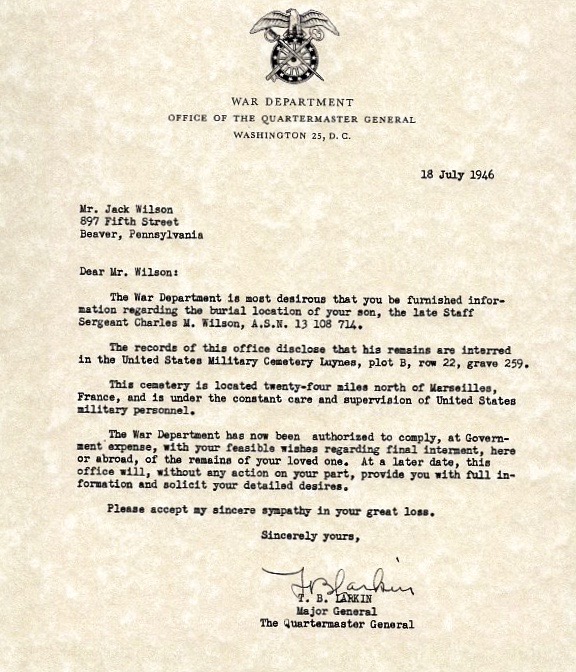
Chuckie’s parents received a letter from the War Department providing them with the temporary burial location of their son in a US military cemetary located twenty-four miles north of Marseilles, France. It also references information will be provided at a later date for making arrangements for his final interment. At that time the next of kin, authorized to make the decision regarding their loved one’s interment, was given the option of having the remains returned to the United States for permanent interment at a national or private cemetery, or permanently interred at the overseas American military cemetery in the region where the death occurred.
Dear Mr. Wilson,
The War Department is most desirous that you be furnished information regarding the burial location of your son, the late Staff Sergeant Charles. M. Wilson, A.S.N. 13 108 714.
The records of this office disclose that his remains are interred in the United Statement Military Cemetery Luynes, Plot B, row 22, grace 259.
This cemetery is located twenty-four miles north of Marseilles, France, and is under the constant care and supervision of Unites States military personnel.
The War Department has now been authorized to comply, at Government expense, with your feasible wishes regarding final interment, here or abroad, of the remains of your loved one. At a later date, this office will, without any action on your part, provide you with full information and solicit your detailed desires.
Please accept my sincere sympathy in your great loss.
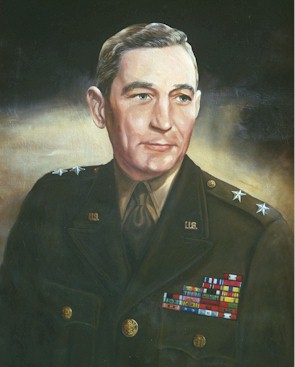
Thomas B. Larkin Major General – The 32nd Quartermaster General February 1946-March 1949
As Quartermaster General, Larkin launched the program for return and final burial of American service personnel and civilians who died overseas during World War II. In January 1946, he was named by President Truman as Quartermaster General of the Army. He served in that capacity until March 1949.
One sad truth Unforgotten Glory uncovered in research for this In Memoriam project is that many families were deliberately not ever told the full truth about the circumstances related to their loved ones’ death or contribution to Freedom – to protect the Carpetbagger secrets for over 50 years. Chuckie’s family waited for two long years – and nearly one year after the war ended – with the uncertainty that their son, their brother, their cousin, their uncle, their friend was “Missing In Action” and hope he might soon return home safely. Yet all that time the War Department knew he was killed in action from confirmation they received just ten days after Chuckie’s plane crashed from the French Resistance who retrieved his body from the wreckage and buried him.
When the news his family feared finally came to the Wilsons the letter contained many facts but also some fabrication and omissions likely put forward by the War Department as a plausible cover story so that the Carpetbagger Project would remain ‘S E C R E T‘ and to explain the delay.
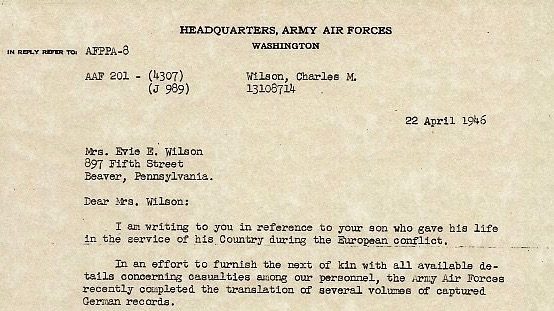
“Dear Mrs. Wilson:
In am writing to you in reference to your son who lost his life in the service of his Country during the European conflict.
In an effort to furnish the next of kin with all available details concerning casualties among our personnel, the Army Air Forces recently completed the translation of several volumes of captured German records.[Untrue]
Captured German records? ~ This couldn’t have been true.
“In regard to Staff Sergeant Charles M, Wilson, these records indicate that he was killed 28 April 1944 , when his B-24 (Liberator) bomber crash landed at Sr. Cry de Valorges, near Lyon, France. These records further state that his body was interred in the new cemetery of Lyon, row #3, grave #1. The Quartermaster General, in his capacity as Chief, American Grave Registration Service, is charged with the responsibility of notifying the legal next of kin concerning grave locations of members of the military forces who are killed or die outside the continental limits of the United States. If the report of your son’s burial has not been confirmed and you have not been notified by the quartermaster General, that official will furnish you definite information immediately upon receipt of the official report of interment from the Commanding General to the theater concerned. May the knowledge of your son’s valuable contribution to our cause sustain you in your bereavement. Very sincerely,“
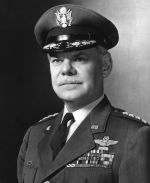
The letter was signed by Brigadier General Leon W John
Leon W. Johnson Brigadier General, USA Chief, Personnel Services Division
During World War II, Johnson was one of the first four flying officers of the Eighth Air Force, and served on it staff during its formative period at Savannah, Georgia. In 1943, he assumed command of the 44th Bombardment Group, which flew the Consolidated B-24 Liberator. After V-E Day, he was Chief of Personnel Services at Headquarters, Army Air Forces, in Washington, DC, from 28 June 1945 to 15 May 1946.
The need to protect top secret missions in wartime to advance war objectives and prevent further harm and loss of life is certainly understandable. Yet, a consequence of protecting the Carpetbagger secrets were the parents, brothers, sisters, and other families such as Chuckie’s who lived the rest of their entire lives not ever knowing the facts of these brave men and the glory of their deeds that we know today.
In gratitude this project has reclaimed a more complete story of Charles M Wilson story which has now been widely shared with with others today and into the future In Memoriam. A bit more of the story to come ~ Unforgotten Glory
A copy of the actual letter from the Headquarters, Army Air Forces
The Carpetbaggers have been recognized with many prestigious awards and citations includng a Presidential Unit Citation by the United States for “extraordinary heroism in action against an armed enemy” and most recently the Congressional Gold Medal.
Chuckie’s Commander was Colonel Clifford Heflin, a decorated member of the Armed Forces, serving in the Air Force for 31 years. Commander Heflin was personally honored with several prestigious awards from the Amy Air Force and from General Charles DeGaulle’s Free French Forces.
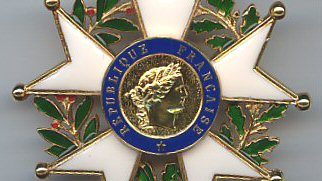
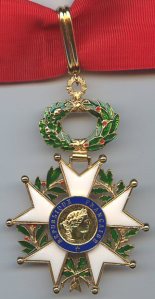
At a ceremony in Paris on 7 Sep. 1945, Heflin received the French Ordre National de la Légion d’honneur (“National Order of the Legion of Honor”), France’s highest award, and the Croix de Guerre (“Cross of War”) from General Marie Pierre Joseph Francois Koenig, Charles DeGaulle’s head of the resistance, and later military governor of Paris.
The Croix de Guerre is awarded either as an individual award or as a unit award to those soldiers who distinguish themselves by acts of heroism involving combat with the enemy.
Due to the S E C R E T classification until 1984 of the Carpetbagger Project, some of the awards are still not yet included in official published lists of honorees.
Sources include Heflin’s personal papers and copies of brief articles in two French newspapers published 10 Sept. 1945.
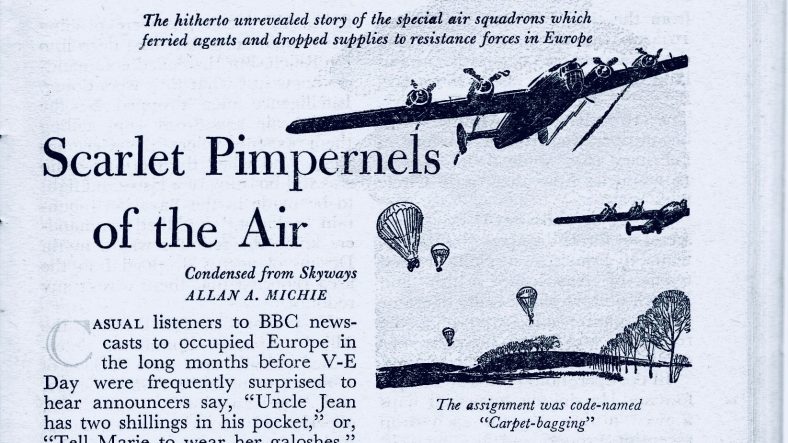
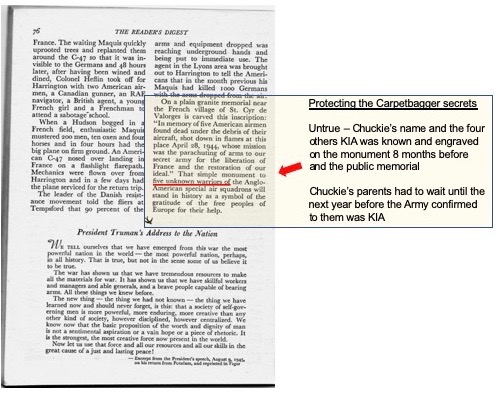
While the secrets of the Carpetbagger Project were closely guarded for fifty years, the American publication Readers Digest was the first to publish “the hitherto unrevealed story of the special air squadrons which ferried agents and dropped supplies to resistance forces in Europe.” I found a reference to the article in the Worry Bird Missing Air Craft Report – so I went on Ebay and quickly and easily bought an actual copy of the November 1945 issue. Chuckie is referenced at the end of the article but, unsurprisingly, not by name nor did the article reveal the full truth about him or his fellow airmen despite all the complete facts well known to many and none made known to his parents yet.
“Scarlet Pimpernels of the Air”
The article is a fascinating read and provides interesting information about RAF Harrington, the B-24 Liberators, the French Marquis and their important role in the War. But it did not reveal the names or that Chuckie was killed in action.
Readers Digest was a popular publication in America at one time with a wide circulation of American readers. Whether Chuckie’s parents read this story is not known and likely. Chuckie’s parents still thought their son was missing in action. If they read this article, the last paragraph would have come as a shock.
“In memory of five American airmen found dead under the debris of their aircraft, shot down in flames at this place April 28, 1944, who’s mission was the parachuting of arms to our secret army for the liberation of France and the restoration of our ideal.“
Sixteen months before this Readers Digest article published, Chuckie’s parents were informed he was reported as Missing in Action on 28 April 1944. Sadly, they would still be made to wait another five months before finally receiving official confirmation that their son was killed in action and as an upcoming post will reveal.
Carpetbaggers from their base at RAF Harington helped build disparate French resistance groups into an effective sabotage and guerrilla force. The objective was to help the French resistance to “harass, disrupt and divert” the German army’s defense against the Allies’ D-Day invasion. Following the Carpetbagger successes early in 1944, Gen. Dwight D. Eisenhower, Supreme Commander of the Allied Expeditionary Force, ordered Lt. Gen. Carl Spaatz, Commanding General of U.S. Strategic Air Forces in Europe, to increase the size of the unit, which quickly grew to a force of 3,000 airmen, sixty-four B–24 bombers and several C–47s.
From January 1944 to May 1945, the Carpetbagger Project completed 1,860 sorties and delivered 20,495 containers and 11,174 packages of vital supplies to the resistance forces in western and northwestern Europe. More than 1,000 parachutists dropped through the B-24 Joe Holes into enemy territory.
Chuckie’s B-24 Liberator The Worry Bird was on one of the twenty-five B-24s lost. Eight more were so badly damaged by enemy action and other causes that they were no longer fit for combat. Personnel losses initially totaled 208 missing and killed and one wounded. Fortunately, many of those listed as missing had parachuted to safety and returned to RAF Harrington with the help of the same resistance forces they had been sent to resupply.
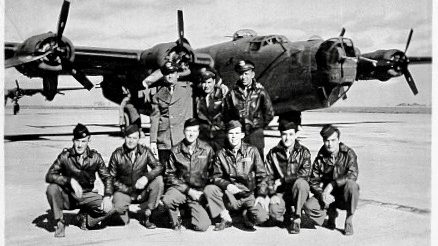
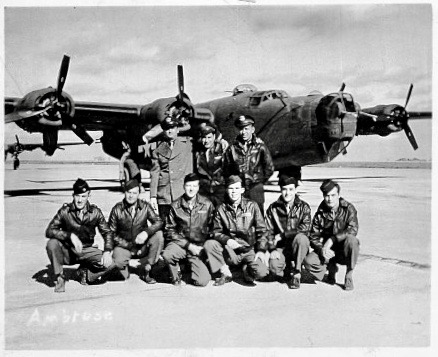
The Ambrose Crew in front of B-24 Liberator The Worry Bird. Charles M. Wilson is 4th from left, front row kneeling.
“The Free French had been of inestimable value in the campaign. Without their assistance, the liberation of France and the defeat of the enemy would have consumed much longer time and meant greater losses to ourselves.”
U.S General Dwight D. Eisenhower
“The French Resistance Movement played a noble part in the liberation of Brittany and the peninsula was quickly overrun.”
British Prime Minister Winston Churchill
On 13 August 1945 the Carpetbaggers were re-designated as the 49nd Bomb Group H and the four Bomb Squadrons. On 7 July 1945, the air echelon of the 492 Bomb Group left Harrington for Kirtland Field, Albuquerque, New Mexico, where they later joined up with the ground echelon who had returned on the ocean liner Queen Elizabeth.
The 492nd Bomb Group deactivated on 17 October 1945.
Staggering losses
World War II proved to be the deadliest international conflict in history directly involving more than 100 million people from over 30 countries. The war took the lives of 60 to 80 million people, including 6 million Jews who died at the hands of the Nazis. Civilians made up an estimated 50-55 million deaths from the war, while military comprised 21 to 25 million of those lost during the war. Millions more were injured, and still more lost their homes and property.
The third crash survivorJames Cyril Mooney volunteered for this mission (his first) when regular Worry Bird crew member Sgt. W. Bollinger reported off sick that day. Mooney was rescued by the French resistance on the morning of the Worry Bird Crash landing 28 April 1944. His life was saved but he was wounded so badly with a broken back that they had no choice to turn him over to the Germans for medical treatment or he would have likely died.
He survived his injuries but was hospitalized for months in a POW hospital in Lyon, France and was then marched on foot back to Germany and eventually to Poland before the British liberated his POW camp in 1945.
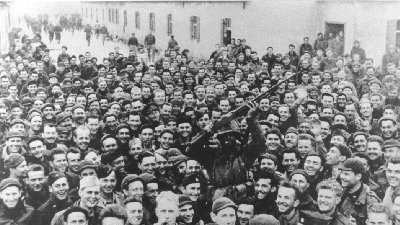
On 4 May 1945 RAF Bomber Command implemented Operation Exodus, and the first prisoners of war were repatriated by air. Bomber Command flew 2,900 sorties over the next 23 days, carrying 72,500 prisoners of war. By 20 May 1945, all surviving American POWs were back in US hands.
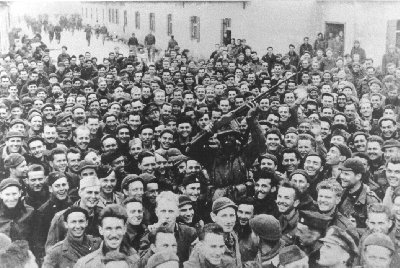
Liberation of POW camps in 1945.
I have been unable to obtain a photograph of Mooney but was able to locate his obituary.
Born 20 April 1921 in Englewood, New Jersey he was the youngest of three children born to Mary and William Mooney. He was a graduate of Horace Mann High School then volunteered to serve in the US Army Air Corps on 25 June 1942.
Mooney was awarded the Purple Heart, and a Bronze Star. After the war, he attended Citadel University and went on to become a successful regional sales executive for Johnson & Johnson. He and his wife of 58 years, Jeanne T. Mooney, raised a daughter Deborah A. Frey. He was a winner of the Greenwich Town Golf Tournament in the Super Senior Bracket.
James Mooney died on Saturday 29 December 2007 in Connecticut at the age of 86.






 Unforgotten Glory