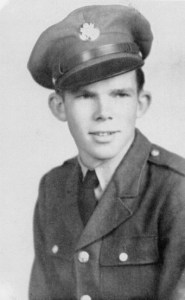
The Carpetbagger’s long held secret contribution to paralyzing German infrastructure has now gained widespread recognition for its significant role in helping to defeat the enemy. The war in Europe concluded on 8 May 1945 following an invasion of Germany by the Western Allies and the Soviet Union, culminating in the capture of Berlin by Soviet troops, the suicide of Adolf Hitler and the German unconditional surrender.
Carpetbaggers from their base at RAF Harington helped build disparate French resistance groups into an effective sabotage and guerrilla force. The objective was to help the French resistance to “harass, disrupt and divert” the German army’s defense against the Allies’ D-Day invasion. Following the Carpetbagger successes early in 1944, Gen. Dwight D. Eisenhower, Supreme Commander of the Allied Expeditionary Force, ordered Lt. Gen. Carl Spaatz, Commanding General of U.S. Strategic Air Forces in Europe, to increase the size of the unit, which quickly grew to a force of 3,000 airmen, sixty-four B–24 bombers and several C–47s.
From January 1944 to May 1945, the Carpetbagger Project completed 1,860 sorties and delivered 20,495 containers and 11,174 packages of vital supplies to the resistance forces in western and northwestern Europe. More than 1,000 parachutists dropped through the B-24 Joe Holes into enemy territory.
Chuckie’s B-24 Liberator The Worry Bird was on one of the twenty-five B-24s lost. Eight more were so badly damaged by enemy action and other causes that they were no longer fit for combat. Personnel losses initially totaled 208 missing and killed and one wounded. Fortunately, many of those listed as missing had parachuted to safety and returned to RAF Harrington with the help of the same resistance forces they had been sent to resupply.
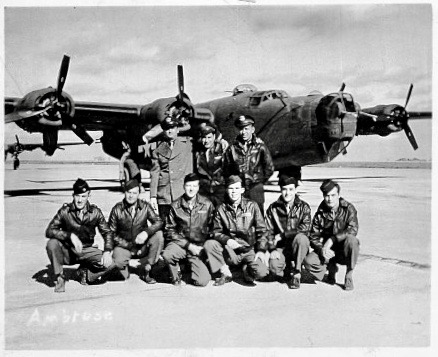
Charles M. Wilson is 4th from left, front row kneeling.
“The Free French had been of inestimable value in the campaign. Without their assistance, the liberation of France and the defeat of the enemy would have consumed much longer time and meant greater losses to ourselves.”
U.S General Dwight D. Eisenhower
“The French Resistance Movement played a noble part in the liberation of Brittany and the peninsula was quickly overrun.”
British Prime Minister Winston Churchill
On 13 August 1945 the Carpetbaggers were re-designated as the 49nd Bomb Group H and the four Bomb Squadrons. On 7 July 1945, the air echelon of the 492 Bomb Group left Harrington for Kirtland Field, Albuquerque, New Mexico, where they later joined up with the ground echelon who had returned on the ocean liner Queen Elizabeth.
The 492nd Bomb Group deactivated on 17 October 1945.
Staggering losses
World War II proved to be the deadliest international conflict in history directly involving more than 100 million people from over 30 countries. The war took the lives of 60 to 80 million people, including 6 million Jews who died at the hands of the Nazis. Civilians made up an estimated 50-55 million deaths from the war, while military comprised 21 to 25 million of those lost during the war. Millions more were injured, and still more lost their homes and property.
 Unforgotten Glory