25 May 2019 – family visit grave for first time

As the world commemorates the 75thanniversary of D-DAY this year, I felt a new sense of urgency and family duty to visit Chuckie’s grave to honor his memory and contribution to freedom.  No one from our family had ever visited his grave. They never had passports, didn’t know anyone French and never traveled abroad. On a bright sunny Spring day in May, I journeyed to a beautiful cemetery nestled in the heart of a small village, Draguignan, in Southern France and visited Chuckie’s grave.

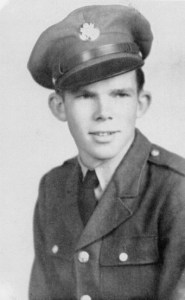
US Army Staff Sergeant Charles “Chuckie” Melvin Wilson, 36thBomb Squad, 801stBomb Group, was killed in action on 28 April 1944 along with four other American aviators when his B-24 ‘Liberator’ Bomber crashed in the French village of Saint-Cyr-de-Valorges on a secret mission to supply the French resistance in advance of D-Day. He is permanently interred in the military war grave cemetery Rhone American Cemetery and Memorial located in Draguignan, France. The site was selected because of its historic location along the route of the U.S. Seventh Army’s drive up the Rhone Valley. 

When I arrived the cemetery, staff members we at the gate to greet me. They were so warm and friendly and said how honored they always are when family members visit especially for the first time. The didn’t have any records or photographs of Chuckie on file so were particularly pleased I had made the trip and compiled this blog. It has helped them complete his story and will be included in ongoing educational programs and future memorial commemorative ceremonies. That alone made it all worth it.

For what is remembered lives.

I was given a white lily and taken to the row where Chuckie is laid to rest. Staff told me to walk on up ahead and I would soon came upon his headstone. They gave me a few moments alone to walk the few paces when I soon found him.. I didn’t know what to expect or how I would feel. What began casually a few months before as a simple desk research project to learn about a family member I didn’t know had now become an involved writing project published and shared with thousands of followers around the world on this blog and our Facebook page. Now being at the final resting place of all these young men and Chuckie that day I was filled with emotion that was sadness, gratitude – a but hugely inspired by the meaning of this unexpected journey.
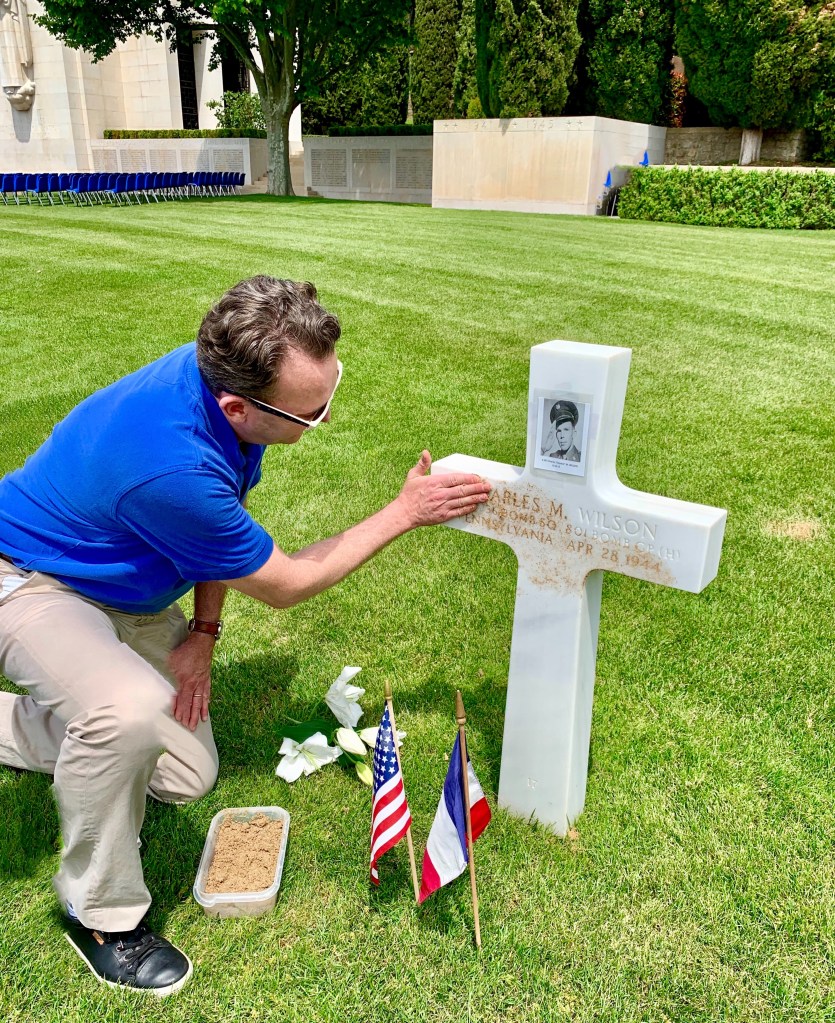
Chuckie’s great nephew rubs sand from Normandy beach on the headstone which makes the letters more readable

Since neither Chuckie’s parents nor his siblings were ever able in their lifetime to visit his gravesite to say a final goodbye, I brought along a few items that his mother and brother had personally touched. A cotton flannel blanket of his mother Evie was placed over his grave. It was likely in her possession from the 1920s when the family lived at her ancestral home deep in south among the cotton fields of Mississippi. The wedding ring of Chuckie’s brother JB (and the father of this author’s mother) was placed on top of the cross headstone. It was the only personal item I had that he’d touched so seemed appropriate and meant to be.
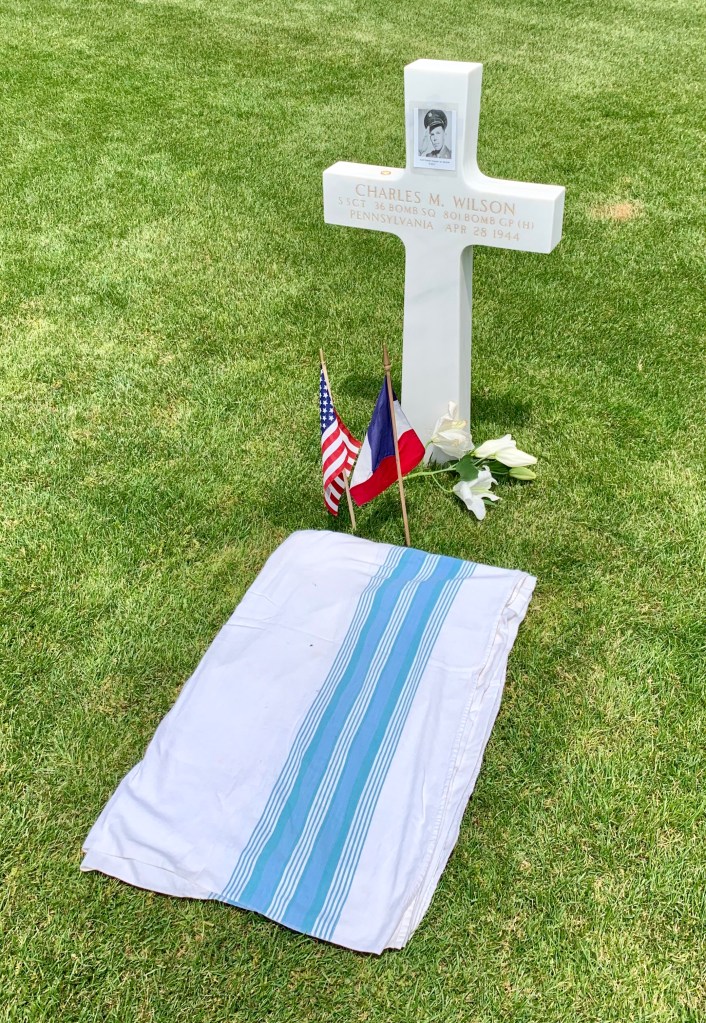
A blanket of Chuckie’s mother Evie placed over her son’s final place of rest; a gold ring of his brother is placed on the topside of the cross.

I said a silent prayer of gratitude for his service and the ability to symbolically bring Chuckie the warmth of one last hug from his mother that he’d waited 75 years for.

The ultimate sacrifice, the unforgotten glory of their deeds.

The cemetery staff and a few other visitors joined me and gathered around Chuckie’s grave for a brief ceremony. First a moment of silence, then I shared the story of Chuckie, his family and what we came to learn about his brave service. We all reflected upon all the brave young men of the Allied Forces who fought and died in WWII and the glory of their deeds that shall not be forgotten.
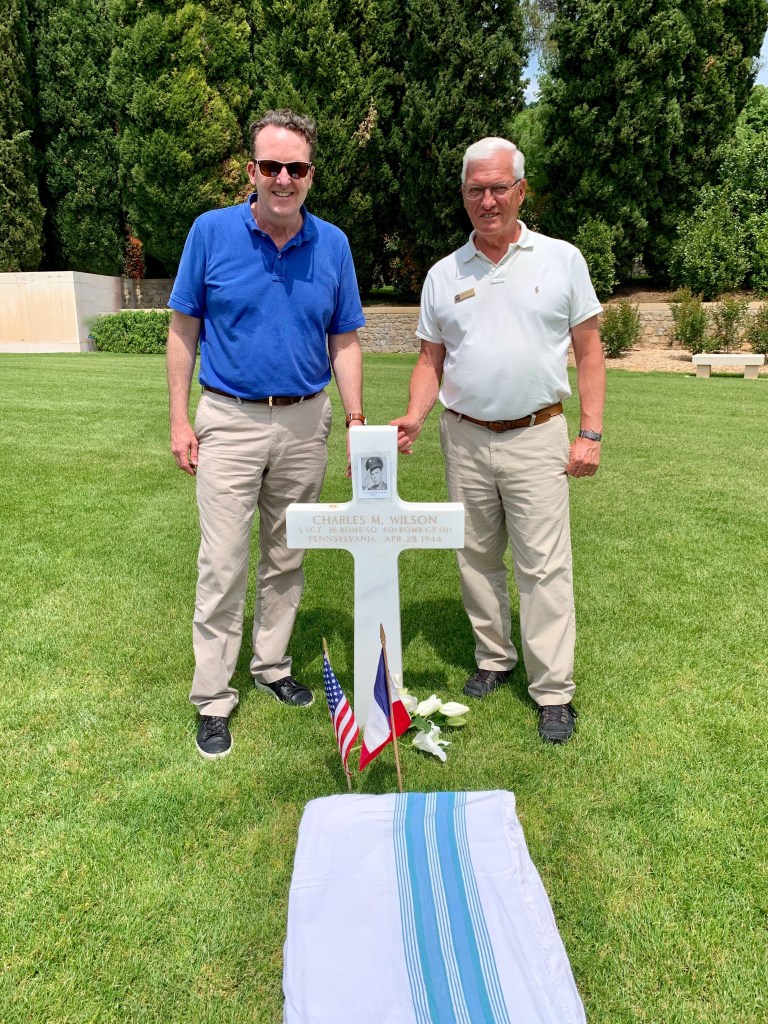
Chuckie,s great nephew is joined by the cemetery Superintendent.
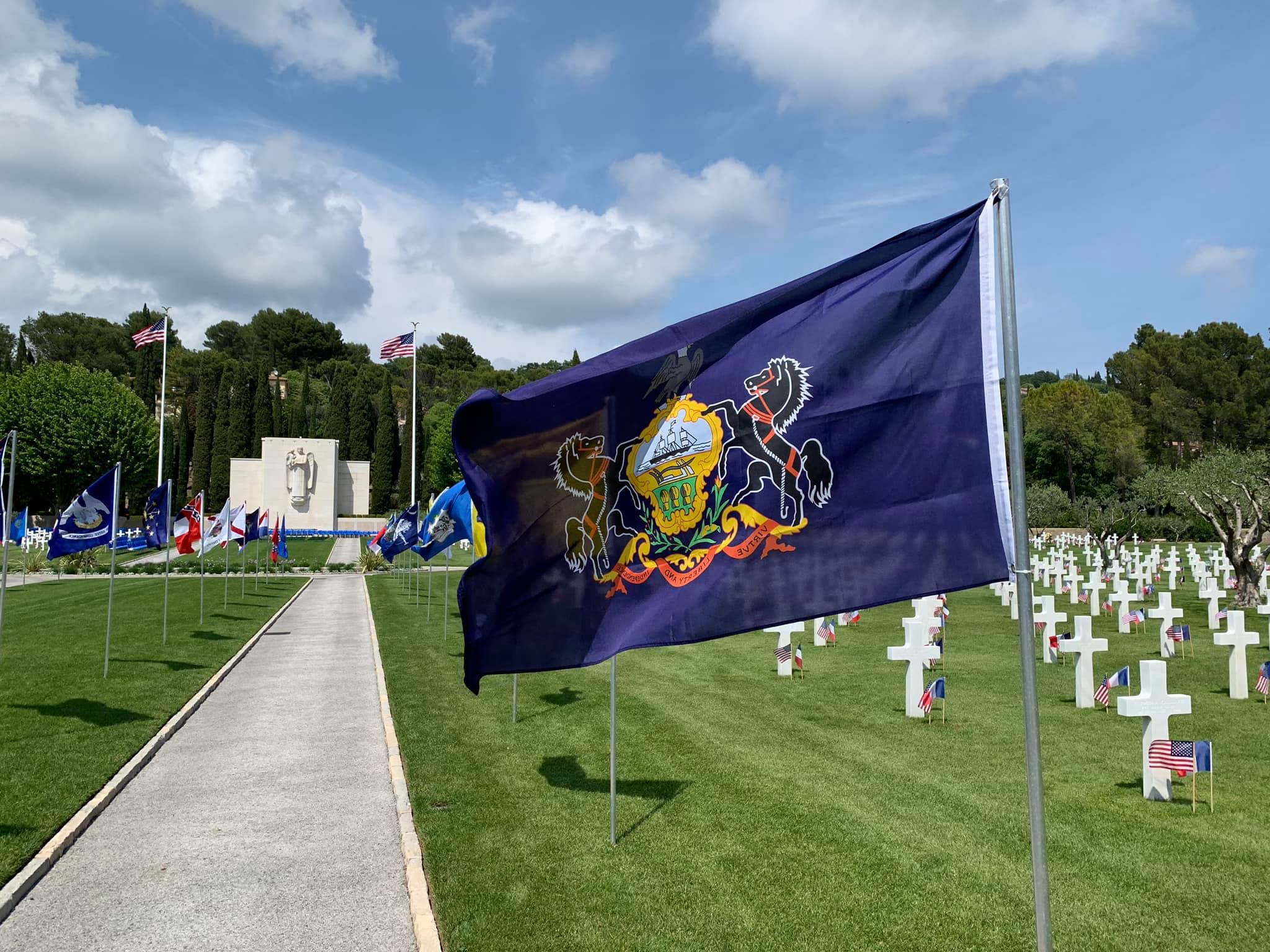
The State of a Pennsylvania flag flies as more than 100 men buried there are from Pennsylvania like Chuckie. And 80% buried there were just 20 years old when they died.

Together, we honor all those like Chuckie who fought and died for freedom. #RIP.

19 Sept. 1987 – Carpetbagger Memorial dedicated at Harrington

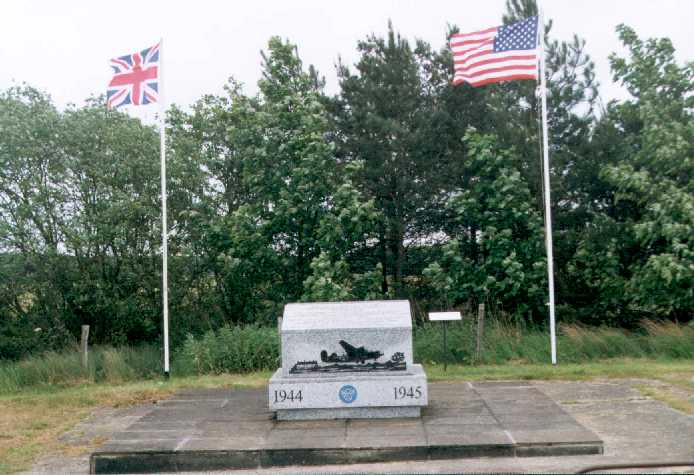
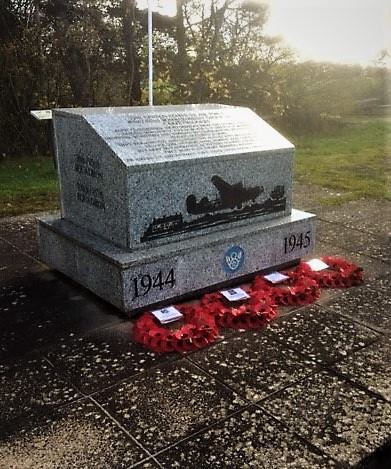
Forty two years after their mission, on 19 September 1987, fifty ex Carpetbaggers returned to Harrington to dedicate a memorial to Chuckie and the other Carpetbagger US Army Air Forces lost during WWII. The memorial is placed in a position overlooking the airfield where the B-24s carried out one of its most effective contributions to the Allied victory.

Chuckie’s family never knew that he was a Carpetbagger, that RAF Harrington was his base, or that this memorial to him existed until earlier this year when a family member and author of this blog began researching facts about about his life and contribution to Freedom.
The experience and techniques perfected during Carpetbagger operations were used as the US Central Intelligence Agency (CIA) continued to develop into a worldwide organization. For this reason many records of the 801st / 492nd Bomb Group and the US Army Airmen like Chuckie that Carpetbaggers remained secret or restricted until the 1980s.

A memorial to the Carpetbaggers overlooking the airfield at Harrington RAF
The memorial is located on site of Dispersal at side of the Harrington to Lamport Road

The Carpetbagger Aviation Museum was formed in 1993 for the 50th Anniversary reunion of the USAAF’s 801st / 492nd Bomb Group (The Carpetbaggers) at Harrington. It is housed in the Group Operations Building on the Administration Site of the former Station 179 airfield at Harrington, Northamptonshire, England. The Museum is administered by members of the Harrington Aviation Museum Society, a Registered Charity No 1061997

The author of Unforgotten Glory plans to visit Harrington RAF and The Carpetbagger Museum to pay respects at the last place Chuckie and his fellow comrades walked the earth as they prepared and then took off 27 April 1944 into the dark night sky.

Lone Carpetbagger – Rhone American Cemetery, France

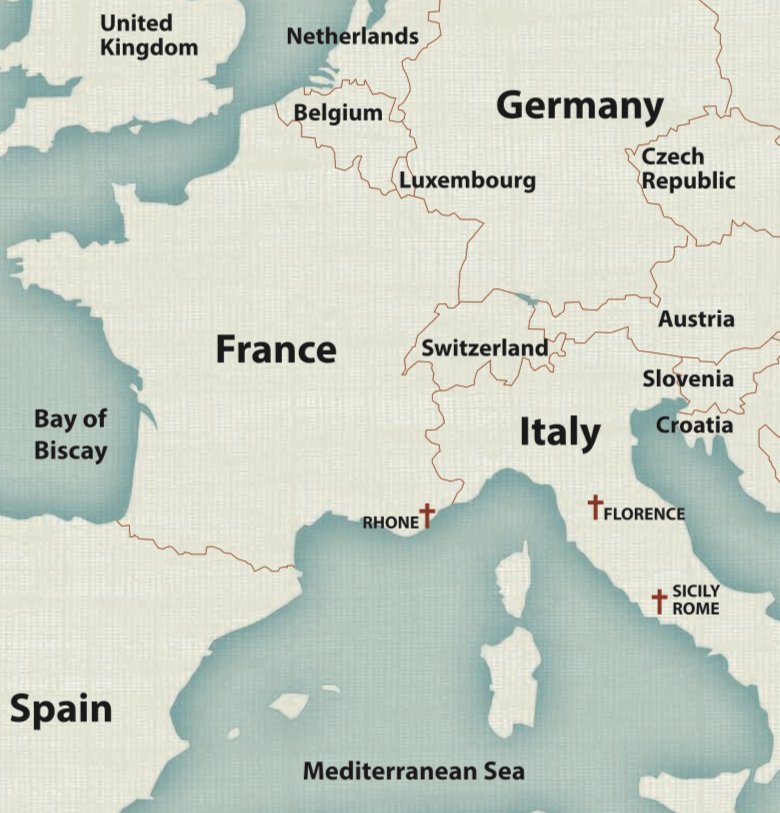
Chuckie is is the only member of the 36th Bombardment Squadron and lone Carpetbagger buried at Rhone American Cemetery in the city of Draguignan which is located in Southern France. The squadron conducted special operations and electronic warfare missions over Europe from 1943 until the end of the war. By the end of World War II, several hundred temporary burial grounds had been established by the U.S. Army on battlefields around the world. In 1947, 14 sites overseas were selected to become permanent cemeteries by the Secretary of the Army and ABMC and included Rhone American Cemetery.  Chuckie was interred there on 21 December 1948.

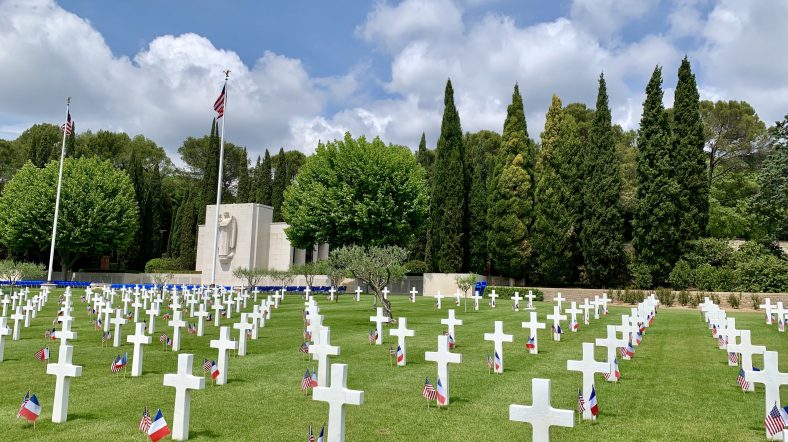
Draguignan, is the final resting place for 860 American war dead, most of whom lost their lives in the liberation of southern France in August 1944. Their headstones are arranged in straight lines, divided into four plots, grouped about an oval pool. At each end of the cemetery is a secluded garden and fountain surrounded by the characteristic cypresses, olive trees, and oleanders of southern France.

The American Battle Monuments Commission, established by Congress in 1923, is an agency of the executive branch of the federal government. ABMC—guardian of America’s overseas commemorative cemeteries and memorials—honors the service, achievements and sacrifice of U.S. Armed Forces. Each grave site in the overseas American World War I and II cemeteries is marked by a headstone of pristine white marble. 

The cemetery grounds are not American territory. However, use of the land is granted to the United States in perpetuity, free of any taxes, fees or any other charges. This is done through a treaty between the United States and France. Burial in ABMC cemeteries is limited by the agreements with host countries to members of the U.S. armed forces who died overseas during the wars. 

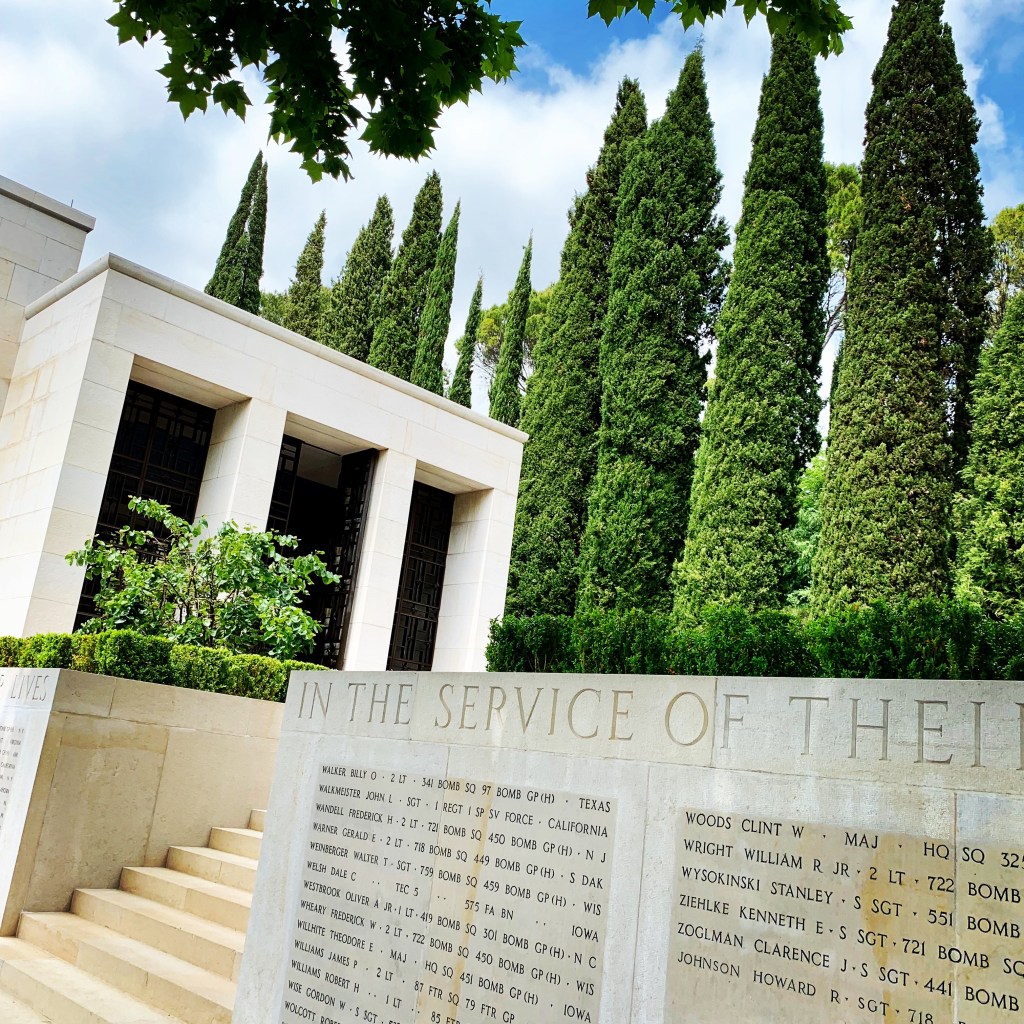
On the hillside overlooking the cemetery stands the magnificent chapel with its beautiful, decorative mosaic. On the retaining wall of the terrace are inscribed the names of 294 of the missing.

Rhone Chapel
The cemetery chapel
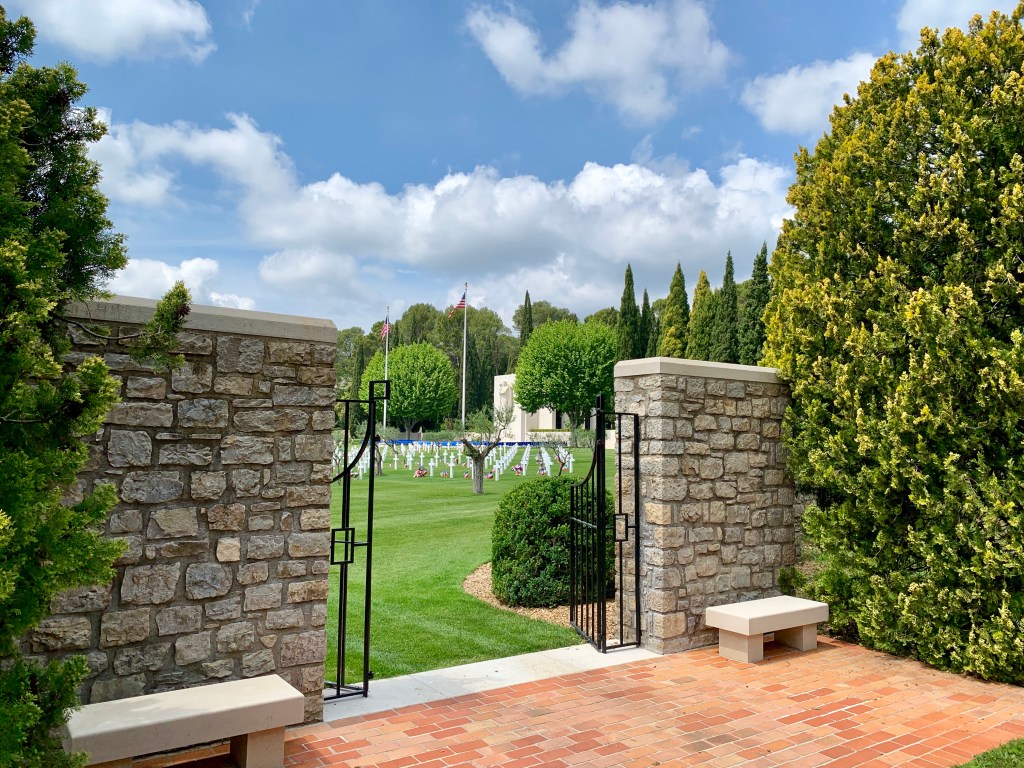
Looking out into the cemetery from the beautiful secluded garden and fountain
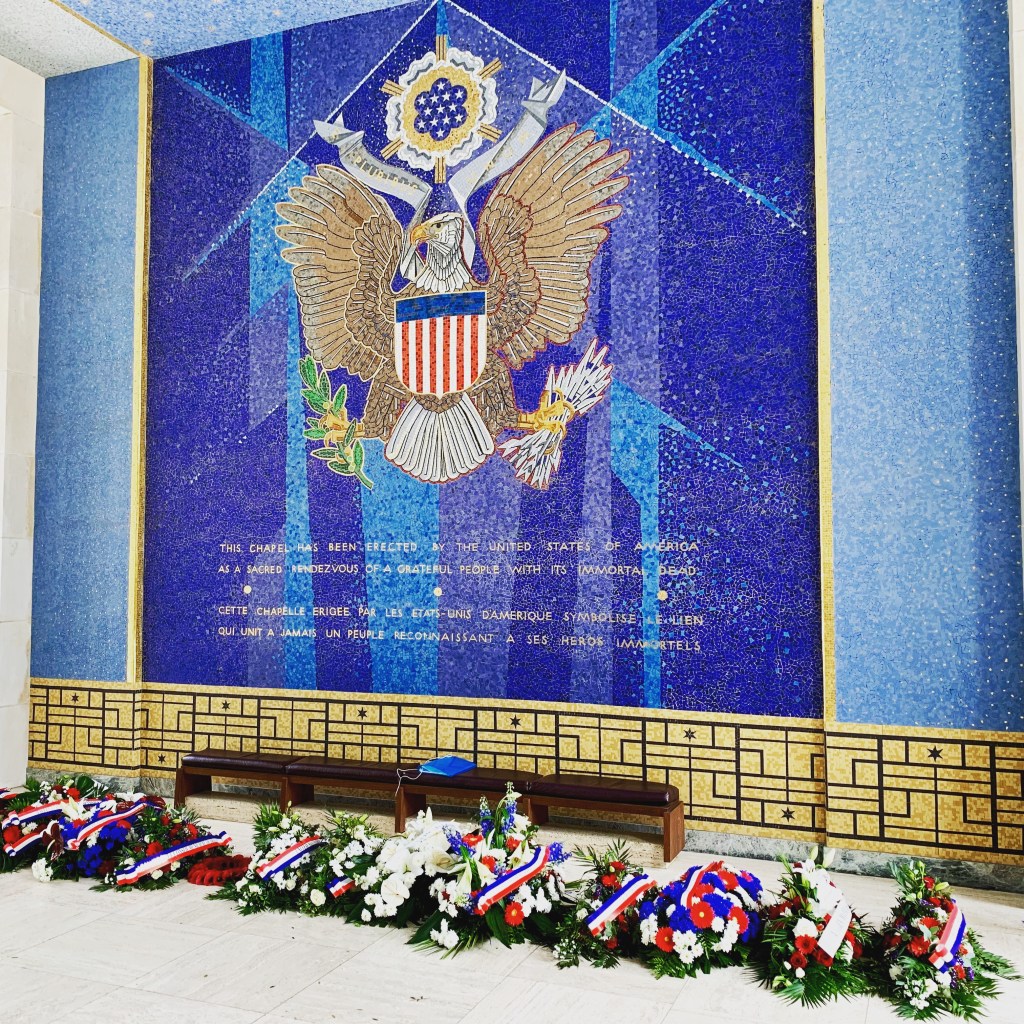
Mosaic
The beautiful, decorative mosaic inside the chapel

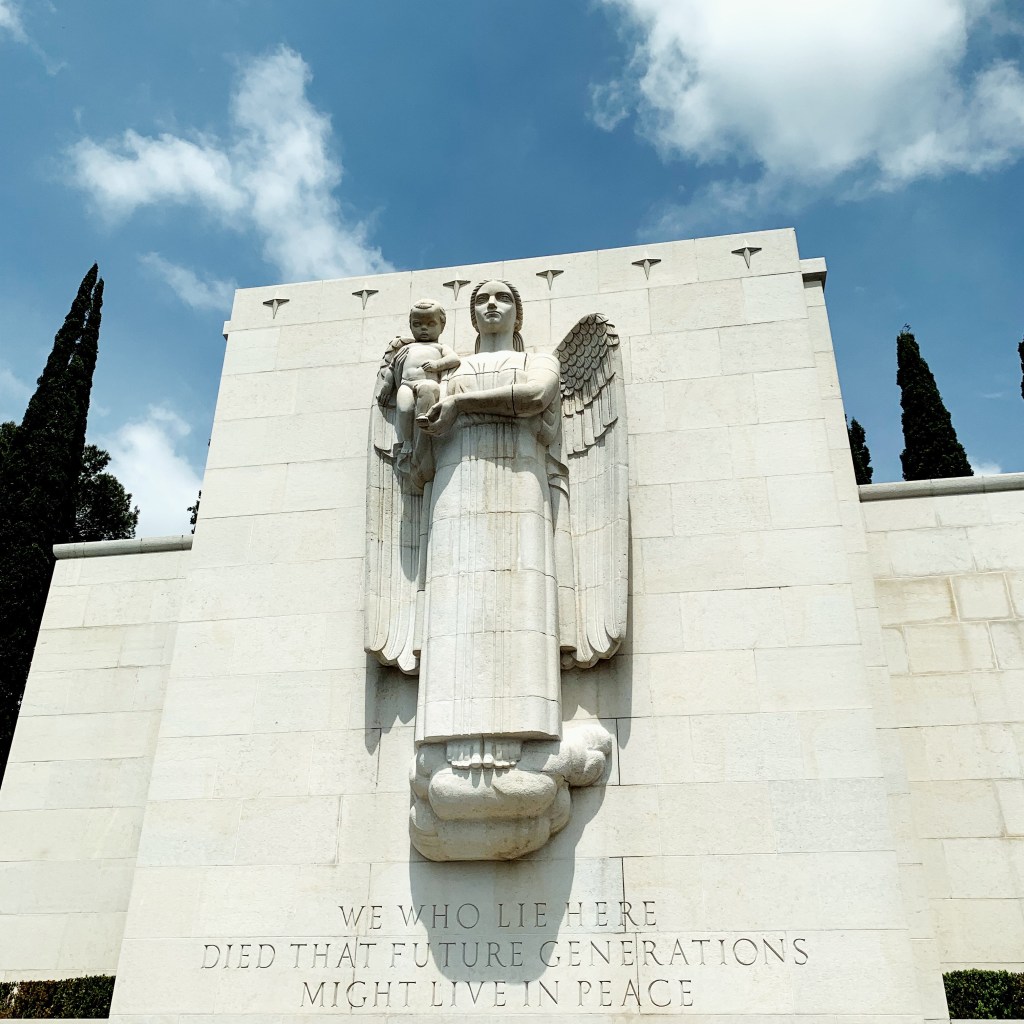
On the façade of the chapel is the sculpture of the Angel of Peace watching over the graves. Beneath the sculpture is the engraving, “Those who lie here died that future generations might live in peace.”

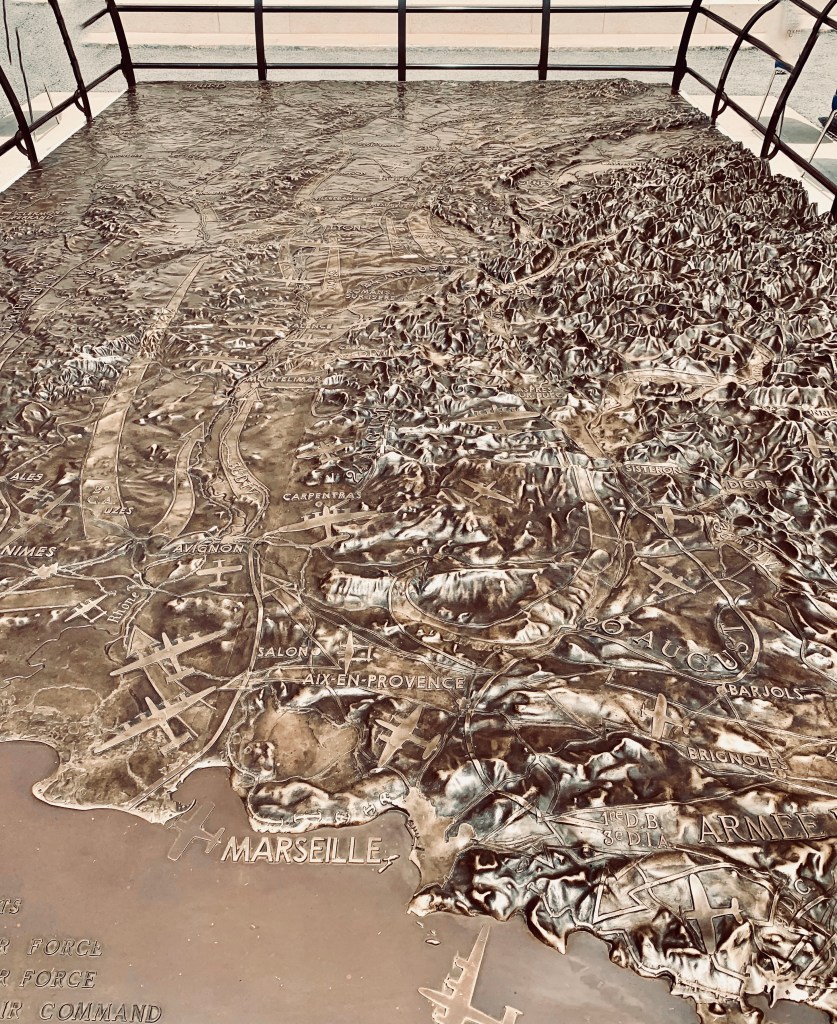
Between the chapel and the burial area, the great bronze relief map recalls the military operations in the region.

Bronze relief map recalls the military operations in the region.

Unlike the national cemeteries administered by the Department of Veterans Affairs, all permanent American military cemeteries on foreign soil are “closed” except for the remains of servicemen and women lost during World War I and World War II that may be found on the battlefields or recently identified by the Defense POW/MIA Accounting Agency. 

The 2018 Memorial Day Ceremony at Rhone American Cemetery took place outside the memorial building. Image courtesy of Michel Delannoy.