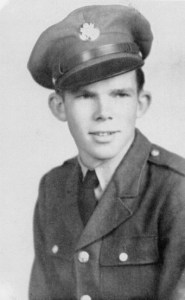
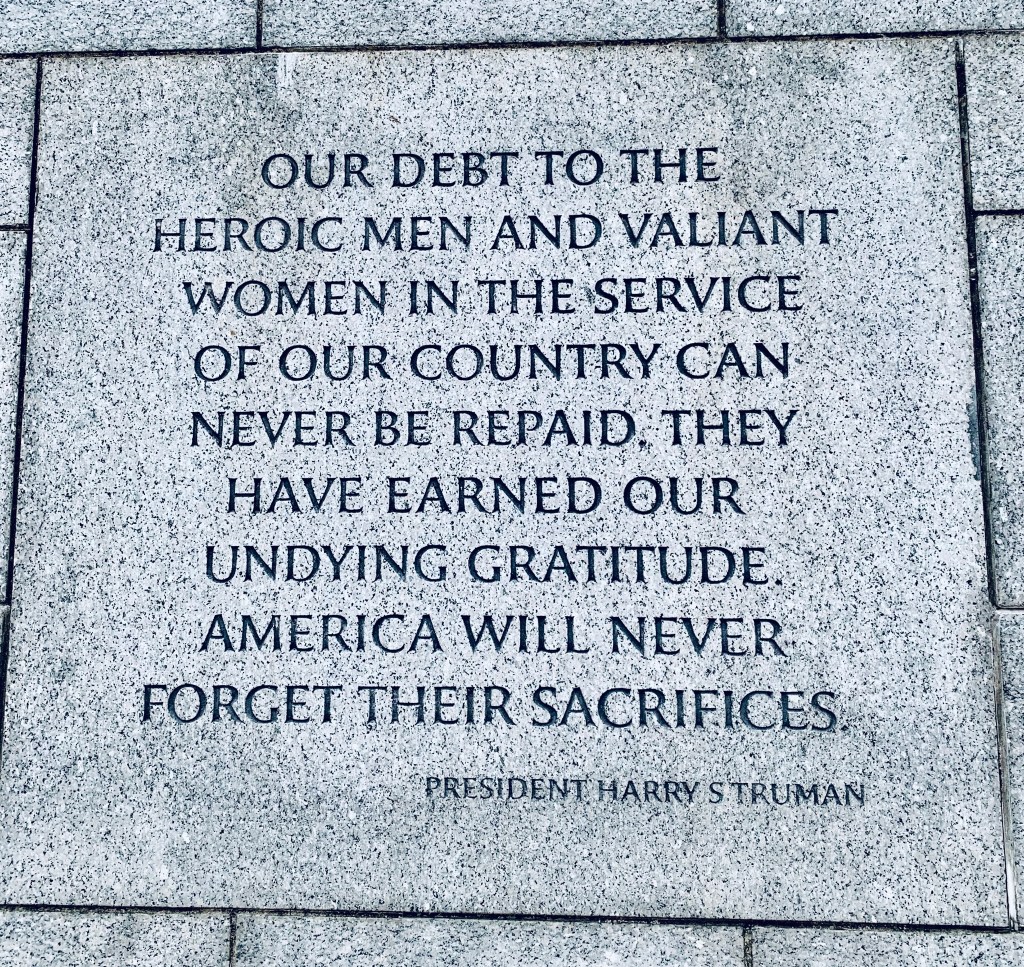
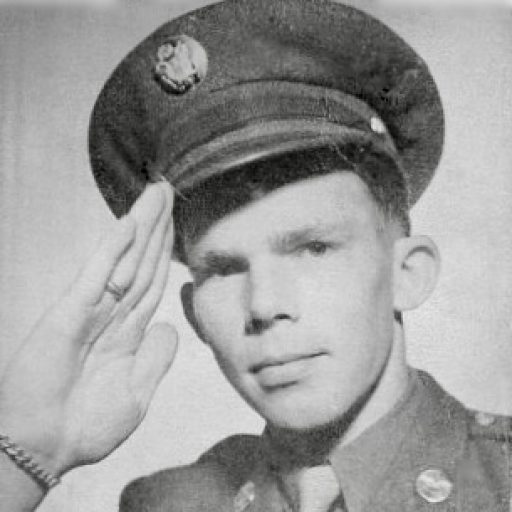
This weekend we visited the World War II Memorial in Washington DC that honors the 16 million who served in the armed forces of the U.S., the more than 400,000 like US Army Staff Sergeant Charles “Chuckie” Melvin Wilson, 36thBomb Squad, 801stBomb Group who died, and all who supported the war effort from home. Stone architecture, bronze sculptures, and a glorious fountain combine to recognize the many ways Americans served in the fight to end tyranny and restore freedom around the globe.
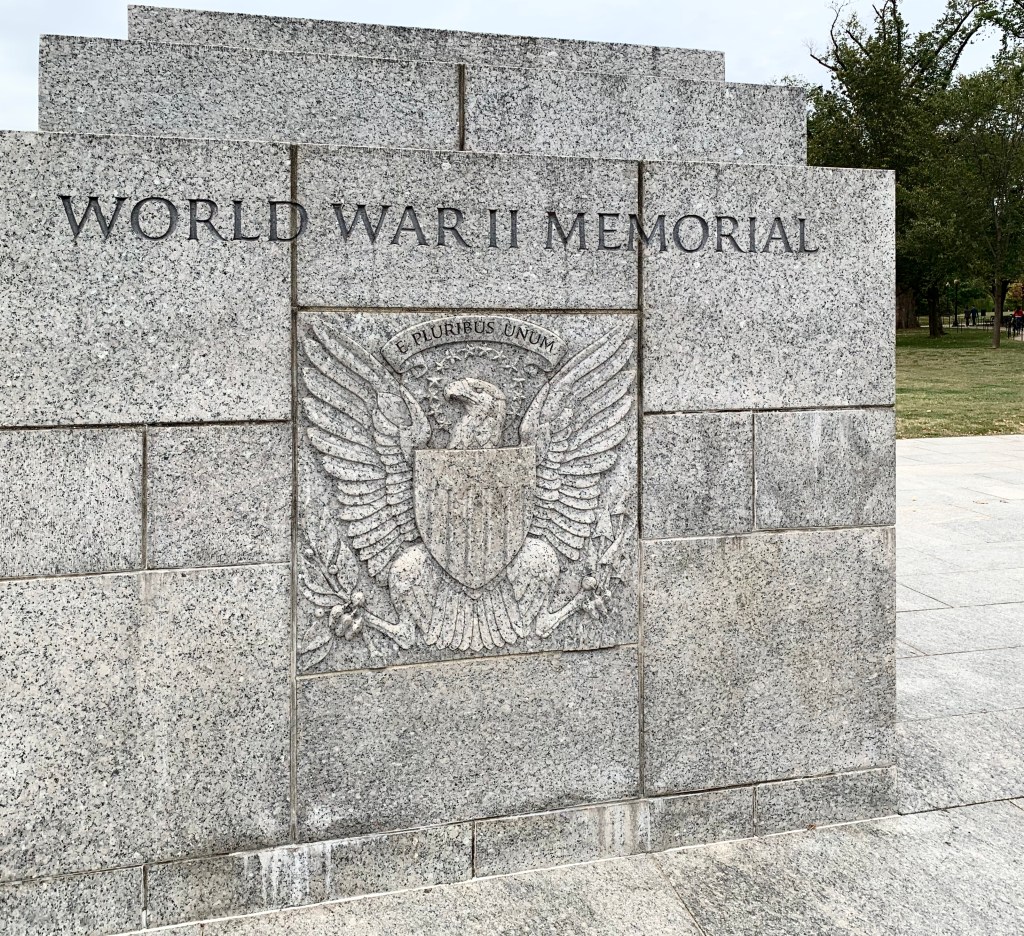
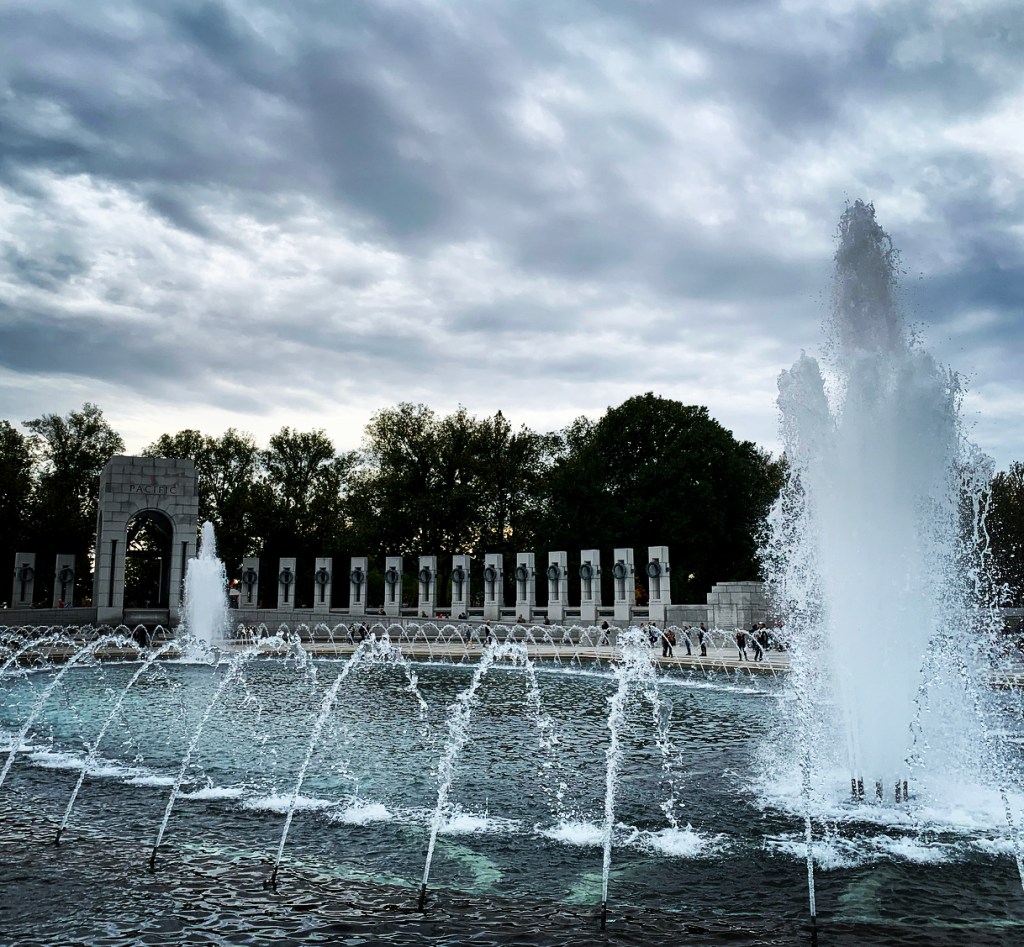
The memorial is a monument to the spirit, sacrifice, and commitment of the American people and is divided into two sides (north and south) that represent the Atlantic and Pacific fronts. They incorporate bronze baldachins, bronze columns bearing American eagles, World War II victory medals, and inscriptions noting the victories in the European and Pacific theatres of operations.
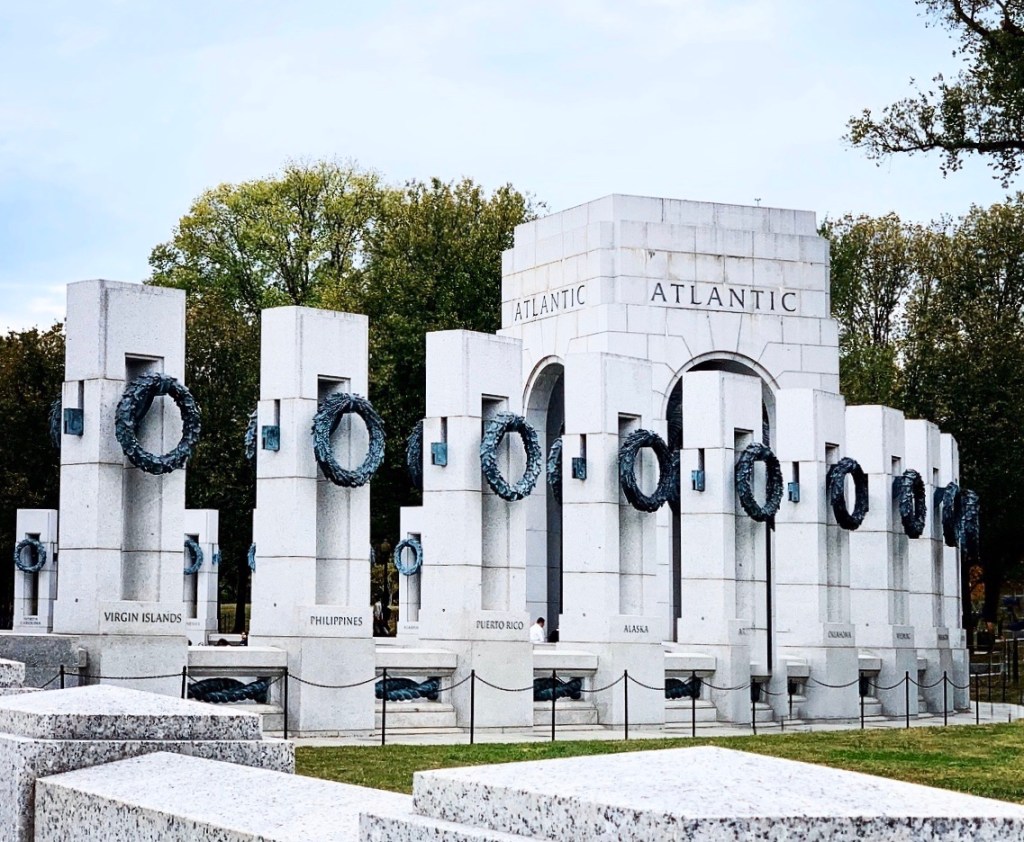
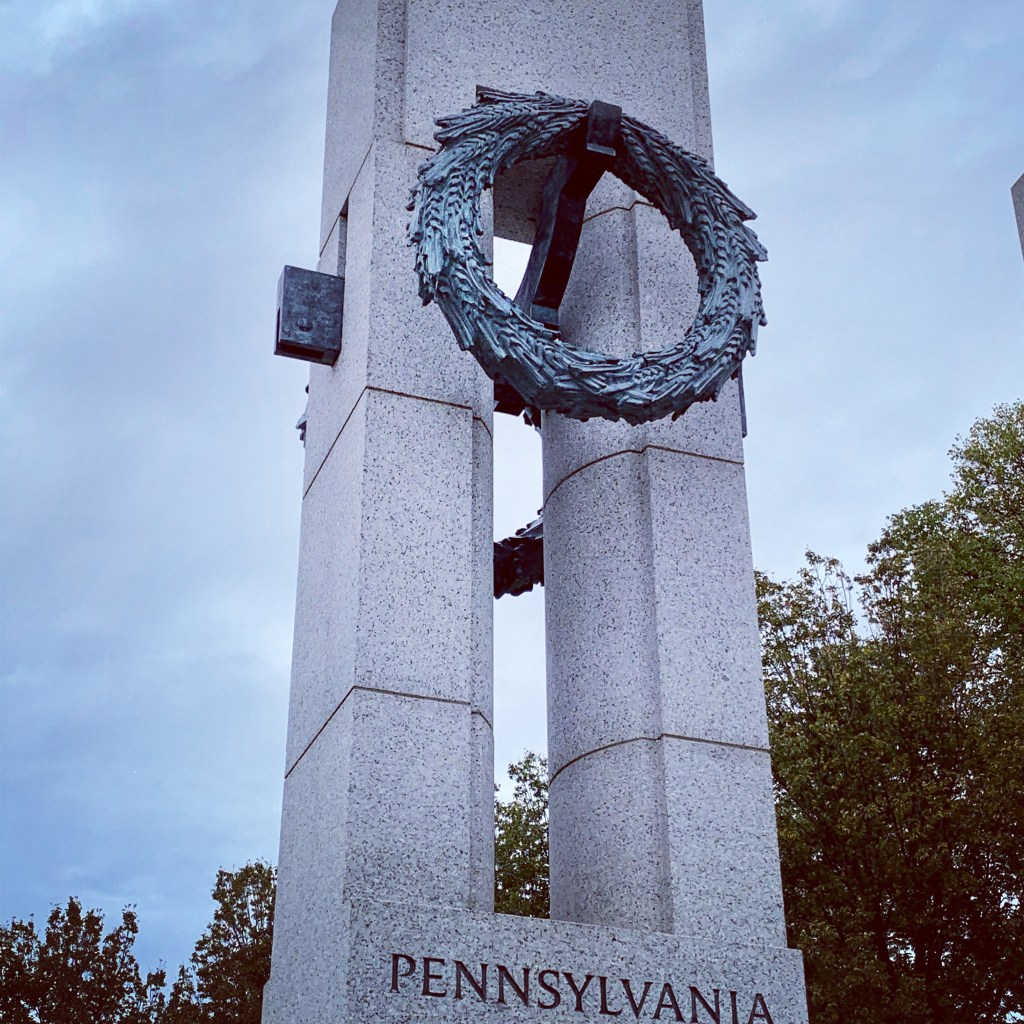
Especially moving to see were 56 triumphal columns surrounding the fountain that list U.S. states, commonwealths, and territories that sent men and women to serve under the U.S. flag during WWII. Chuckie was from Pennsylvania. Each column has two wreaths, one inside and one outside. One wreath consists of oak leaves, representing industrial might. The other consists of wheat, representing the agricultural might of the United States.
D-Day: A Turning Point in World War II – took years organize
As dawn broke on the French coast at Normandy on 6 June 6 1944, the long-awaited invasion of northwest Europe was, by all accounts, an awe-inspiring sight—the largest amphibious invasion force in history massed in the waters of the English Channel. The giant invasion had taken years to organize, in part because of the need to build up adequate forces in Britain.
In the months leading up to the invasion, millions of tons of supplies, ships, planes and weapons were transported across the Atlantic Ocean to Britain in advance of the operation. Hundreds of thousands of troops were assembled in southern England and intensively trained for the complicated amphibious action against Normandy.
Chuckie arrived in Britain five months before in January 1944 with the U.S. Army Air Forces joining the Carpetbaggers who flew hundreds of flights to provide aerial supply of weapons and other matériel to resistance fighters behind enemy lines in France, Italy and the Low Countries in advance of D-Day. Two months before D-Day, Chuckie paid the ultimate sacrifice for freedom when his plane crash landed while on a Top Secret night mission in France to supply the French resistance armies for D-Day.
A mighty endeavor – the hour of great sacrifice
On the night of 6 June 1944, President Roosevelt went on national radio to address the nation for the first time about the Normandy invasion. His speech took the form of a prayer. Chuckie’s parents would have listened with false hope from incorrect information that their their son was ‘over there’ officially classified as Missing in Action. The U.S . Army Air Force had kept from them the truth that one month before his commanding officer had confirmation that Chuckie was Killed In Action. Roosevelt’s radio address that night included a few brief words of comfort to the many American families whose worst fears would come true. Their loved ones – and Chuckie – would not return home alive.
“Some will never return. Embrace these, Father, and receive them, Thy heroic servants, into Thy kingdom. And for us at home — fathers, mothers, children, wives, sisters, and brothers of brave men overseas — whose thoughts and prayers are ever with them–help us, Almighty God, to rededicate ourselves in renewed faith in Thee in this hour of great sacrifice.”
President Franklin D. Roosevelt
The D-Day invasion opened up the long-awaited Second Front against Hitler. The United States and its allies had launched the greatest amphibious invasion in history on the shores of France. Over 150,000 soldiers, sailors, and airmen stormed the beaches of Normandy beginning a campaign that would end with the unconditional surrender of Germany in May 1945. In August, a second Allied invasion force landed on France’s southern coast. Soon Paris was liberated, and by the fall, Allied armies were poised to cross the German border.
The Carpetbagger’s long held secret contribution to paralyzing German infrastructure has now gained widespread recognition for its significant role in helping to defeat the enemy. Dwight D Eisenhower credited the Carpetbaggers and Free French enormous contribution – “Without their assistance, the liberation of France and the defeat of the enemy would have consumed much longer time and meant greater losses to ourselves.“
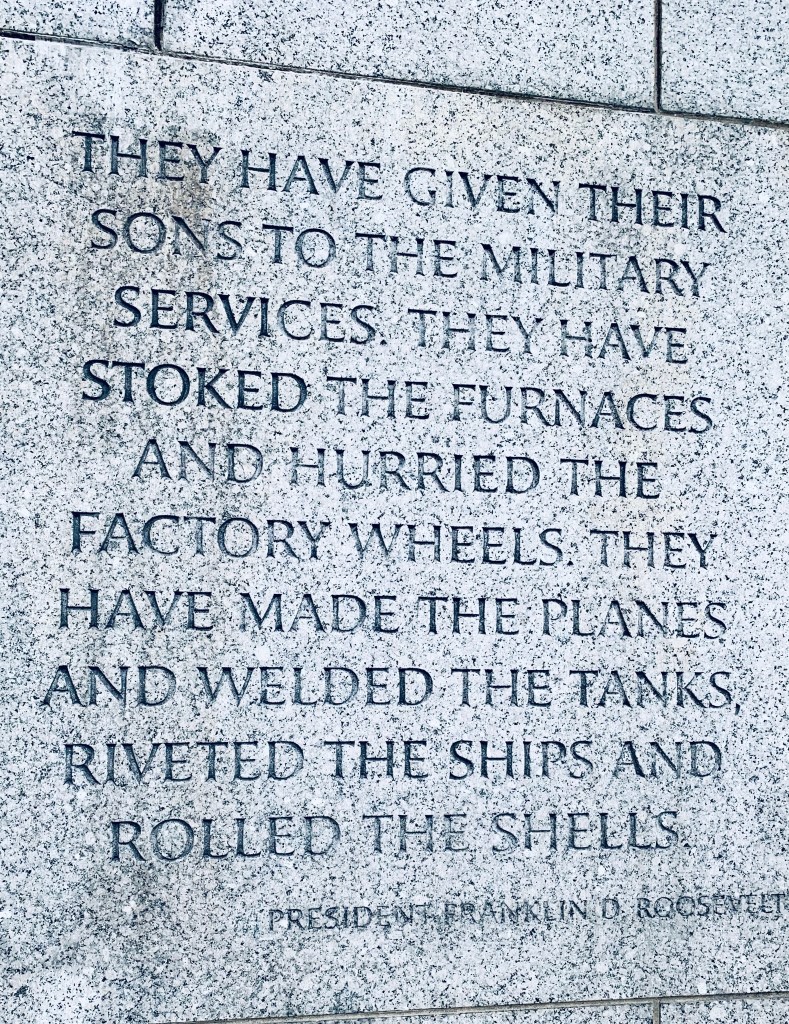
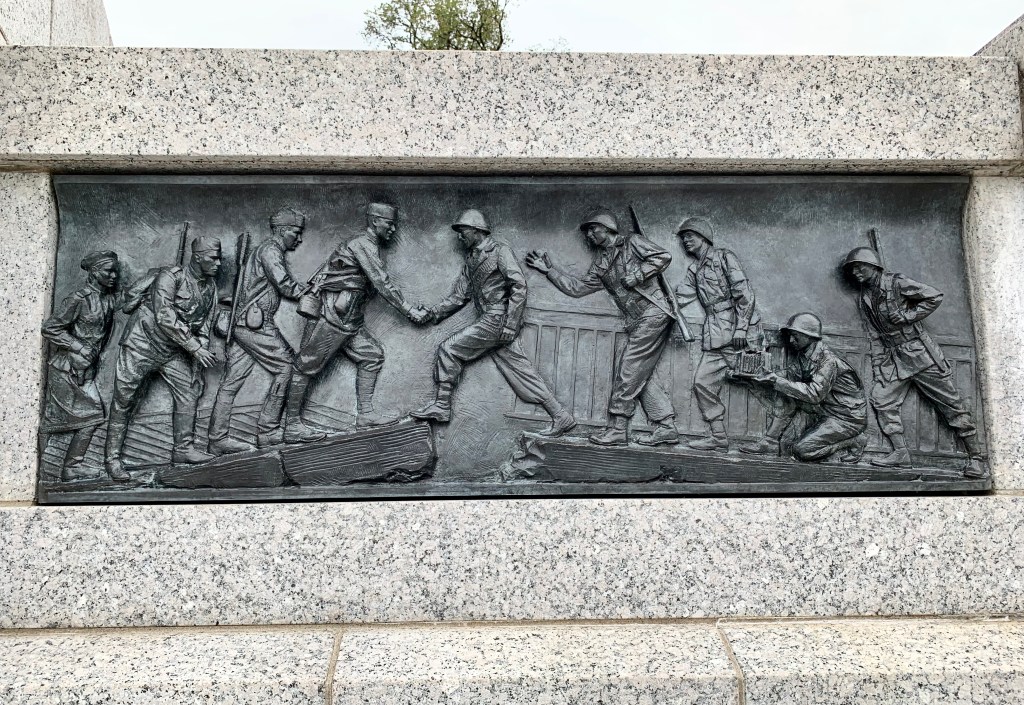
The Memorial it sits on the National Mall in Washington, D.C. between the Lincoln Memorial and the Washington Monument. A series of bas-relief sculpture panels created by sculptor Ray Kaskey is set into the balustrades of the north and south ceremonial entrance walls.
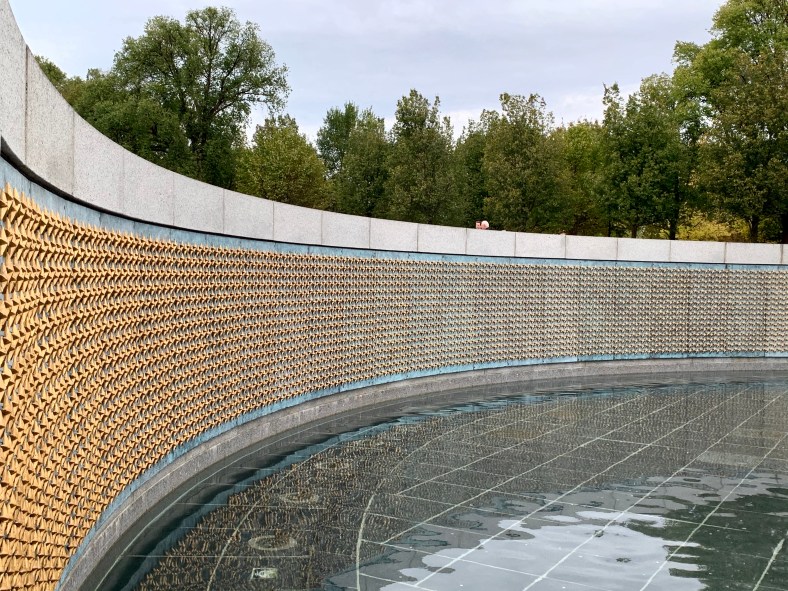
The Freedom Wall – Gold stars mark the price of Freedom
The Freedom Wall, an arched wall containing thousands of gold stars, is where the nation “mark the price of Freedom” and honor the 416,800 American servicemen like Chuckie who died in uniform during WWII. Unlike the Vietnam Veteran’s Memorial, there are no names listed at the WWII Memorial. Instead, those men killed in action are honored with the gold stars. The gold stars come from a military tradition in the USA where military families hang small flags in the windows of their homes to note that a family member was serving in uniform. If that member paid the ultimate sacrifice, then the blue star would be replaced with a gold star.

Symbolic of the defining event of the 20th Century, the WWII Memorial is a monument to the spirit, sacrifice, and commitment of the American people to the common defense of the nation and to the broader causes of peace and freedom from tyranny throughout the world. It will inspire future generations of Americans, deepening their appreciation of what the World War II generation accomplished in securing freedom and democracy. Above all, the Memorial stands as an important symbol of American national unity, a timeless reminder of the moral strength and awesome power that can flow when a free people are at once united and bonded together in a common and just cause.
For more information, see the special online exhibit, D-Day and the Normandy Invasion, hosted by the National Archives and Google Cultural Institute.
 Unforgotten Glory