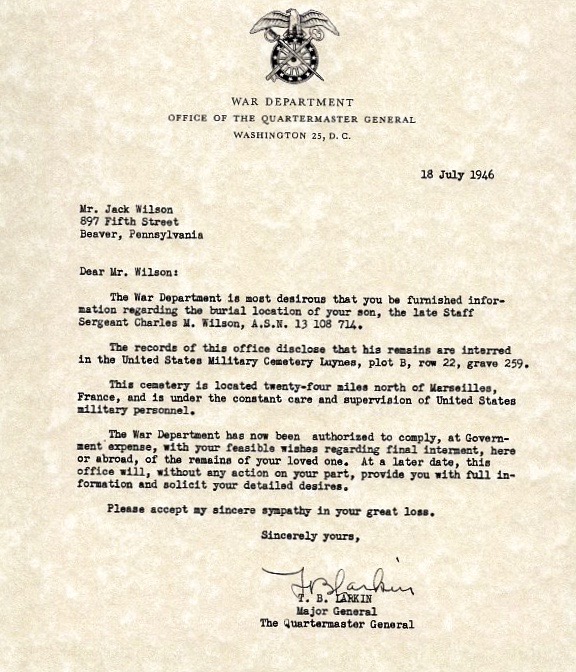
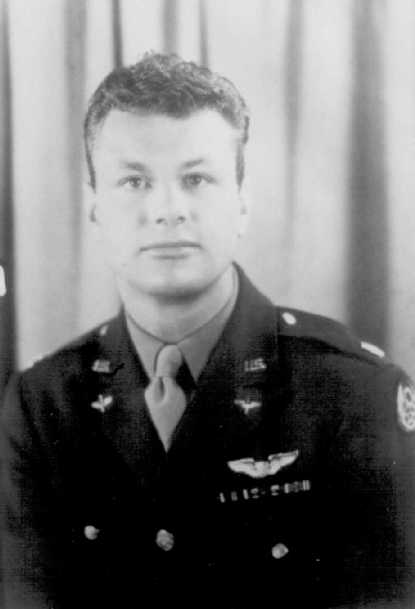
Chuckie’s parents received a letter from the War Department providing them with the temporary burial location of their son in a US military cemetary located twenty-four miles north of Marseilles, France. It also references information will be provided at a later date for making arrangements for his final interment. At that time the next of kin, authorized to make the decision regarding their loved one’s interment, was given the option of having the remains returned to the United States for permanent interment at a national or private cemetery, or permanently interred at the overseas American military cemetery in the region where the death occurred.
Dear Mr. Wilson,
The War Department is most desirous that you be furnished information regarding the burial location of your son, the late Staff Sergeant Charles. M. Wilson, A.S.N. 13 108 714.
The records of this office disclose that his remains are interred in the United Statement Military Cemetery Luynes, Plot B, row 22, grace 259.
This cemetery is located twenty-four miles north of Marseilles, France, and is under the constant care and supervision of Unites States military personnel.
The War Department has now been authorized to comply, at Government expense, with your feasible wishes regarding final interment, here or abroad, of the remains of your loved one. At a later date, this office will, without any action on your part, provide you with full information and solicit your detailed desires.
Please accept my sincere sympathy in your great loss.
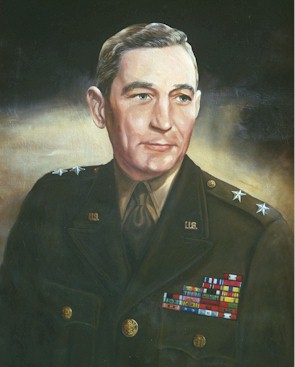
Thomas B. Larkin Major General – The 32nd Quartermaster General February 1946-March 1949
As Quartermaster General, Larkin launched the program for return and final burial of American service personnel and civilians who died overseas during World War II. In January 1946, he was named by President Truman as Quartermaster General of the Army. He served in that capacity until March 1949.
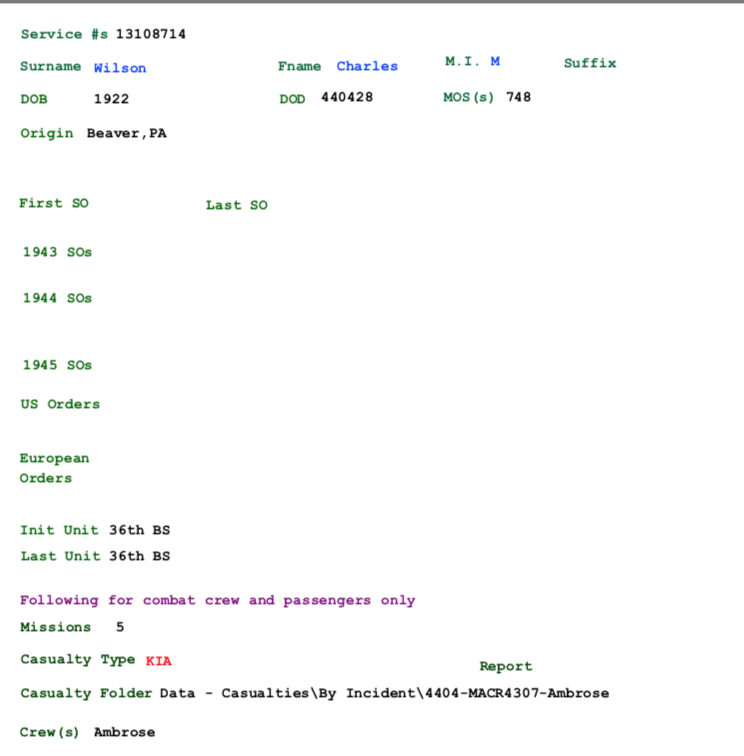
One sad truth Unforgotten Glory uncovered in research for this In Memoriam project is that many families were deliberately not ever told the full truth about the circumstances related to their loved ones’ death or contribution to Freedom – to protect the Carpetbagger secrets for over 50 years. Chuckie’s family waited for two long years – and nearly one year after the war ended – with the uncertainty that their son, their brother, their cousin, their uncle, their friend was “Missing In Action” and hope he might soon return home safely. Yet all that time the War Department knew he was killed in action from confirmation they received just ten days after Chuckie’s plane crashed from the French Resistance who retrieved his body from the wreckage and buried him.
When the news his family feared finally came to the Wilsons the letter contained many facts but also some fabrication and omissions likely put forward by the War Department as a plausible cover story so that the Carpetbagger Project would remain ‘S E C R E T‘ and to explain the delay.
“Dear Mrs. Wilson:
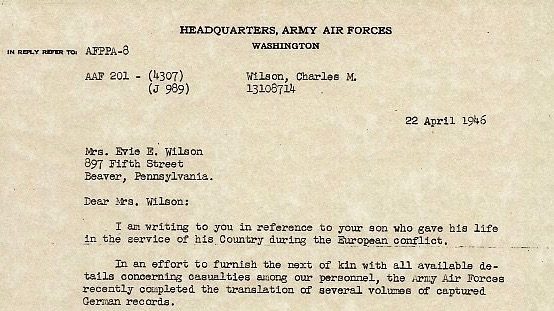
In am writing to you in reference to your son who lost his life in the service of his Country during the European conflict.
In an effort to furnish the next of kin with all available details concerning casualties among our personnel, the Army Air Forces recently completed the translation of several volumes of captured German records.[Untrue]
Captured German records? ~ This couldn’t have been true.
“In regard to Staff Sergeant Charles M, Wilson, these records indicate that he was killed 28 April 1944 , when his B-24 (Liberator) bomber crash landed at Sr. Cry de Valorges, near Lyon, France. These records further state that his body was interred in the new cemetery of Lyon, row #3, grave #1. The Quartermaster General, in his capacity as Chief, American Grave Registration Service, is charged with the responsibility of notifying the legal next of kin concerning grave locations of members of the military forces who are killed or die outside the continental limits of the United States. If the report of your son’s burial has not been confirmed and you have not been notified by the quartermaster General, that official will furnish you definite information immediately upon receipt of the official report of interment from the Commanding General to the theater concerned. May the knowledge of your son’s valuable contribution to our cause sustain you in your bereavement. Very sincerely,“
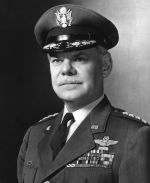
The letter was signed by Brigadier General Leon W John
Leon W. Johnson Brigadier General, USA Chief, Personnel Services Division
During World War II, Johnson was one of the first four flying officers of the Eighth Air Force, and served on it staff during its formative period at Savannah, Georgia. In 1943, he assumed command of the 44th Bombardment Group, which flew the Consolidated B-24 Liberator. After V-E Day, he was Chief of Personnel Services at Headquarters, Army Air Forces, in Washington, DC, from 28 June 1945 to 15 May 1946.
The need to protect top secret missions in wartime to advance war objectives and prevent further harm and loss of life is certainly understandable. Yet, a consequence of protecting the Carpetbagger secrets were the parents, brothers, sisters, and other families such as Chuckie’s who lived the rest of their entire lives not ever knowing the facts of these brave men and the glory of their deeds that we know today.
In gratitude this project has reclaimed a more complete story of Charles M Wilson story which has now been widely shared with with others today and into the future In Memoriam. A bit more of the story to come ~ Unforgotten Glory
A copy of the actual letter from the Headquarters, Army Air Forces
The Carpetbaggers have been recognized with many prestigious awards and citations includng a Presidential Unit Citation by the United States for “extraordinary heroism in action against an armed enemy” and most recently the Congressional Gold Medal.
Chuckie’s Commander was Colonel Clifford Heflin, a decorated member of the Armed Forces, serving in the Air Force for 31 years. Commander Heflin was personally honored with several prestigious awards from the Amy Air Force and from General Charles DeGaulle’s Free French Forces.
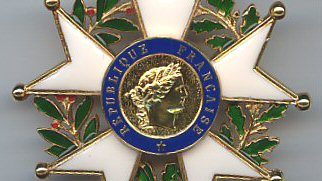
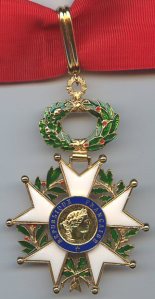
At a ceremony in Paris on 7 Sep. 1945, Heflin received the French Ordre National de la Légion d’honneur (“National Order of the Legion of Honor”), France’s highest award, and the Croix de Guerre (“Cross of War”) from General Marie Pierre Joseph Francois Koenig, Charles DeGaulle’s head of the resistance, and later military governor of Paris.
The Croix de Guerre is awarded either as an individual award or as a unit award to those soldiers who distinguish themselves by acts of heroism involving combat with the enemy.
Due to the S E C R E T classification until 1984 of the Carpetbagger Project, some of the awards are still not yet included in official published lists of honorees.
Sources include Heflin’s personal papers and copies of brief articles in two French newspapers published 10 Sept. 1945.
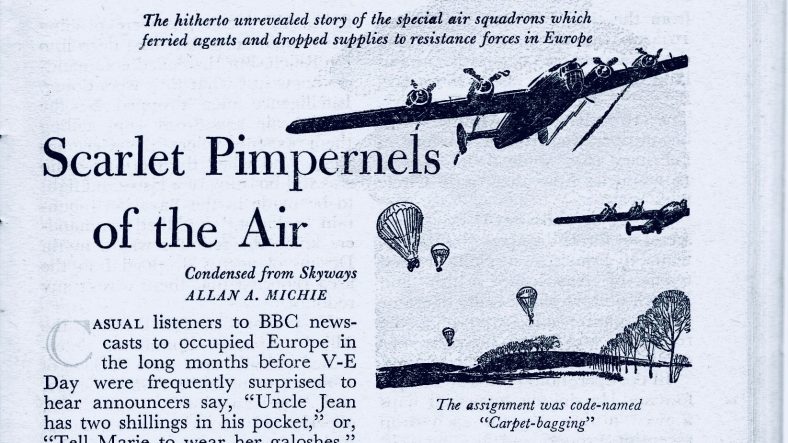
While the secrets of the Carpetbagger Project were closely guarded for fifty years, the American publication Readers Digest was the first to publish “the hitherto unrevealed story of the special air squadrons which ferried agents and dropped supplies to resistance forces in Europe.” I found a reference to the article in the Worry Bird Missing Air Craft Report – so I went on Ebay and quickly and easily bought an actual copy of the November 1945 issue. Chuckie is referenced at the end of the article but, unsurprisingly, not by name nor did the article reveal the full truth about him or his fellow airmen despite all the complete facts well known to many and none made known to his parents yet.
“Scarlet Pimpernels of the Air”
The article is a fascinating read and provides interesting information about RAF Harrington, the B-24 Liberators, the French Marquis and their important role in the War. But it did not reveal the names or that Chuckie was killed in action.
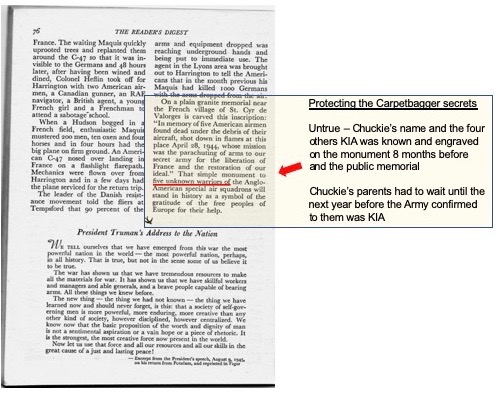
Readers Digest was a popular publication in America at one time with a wide circulation of American readers. Whether Chuckie’s parents read this story is not known and likely. Chuckie’s parents still thought their son was missing in action. If they read this article, the last paragraph would have come as a shock.
“In memory of five American airmen found dead under the debris of their aircraft, shot down in flames at this place April 28, 1944, who’s mission was the parachuting of arms to our secret army for the liberation of France and the restoration of our ideal.“
Sixteen months before this Readers Digest article published, Chuckie’s parents were informed he was reported as Missing in Action on 28 April 1944. Sadly, they would still be made to wait another five months before finally receiving official confirmation that their son was killed in action and as an upcoming post will reveal.
Carpetbaggers from their base at RAF Harington helped build disparate French resistance groups into an effective sabotage and guerrilla force. The objective was to help the French resistance to “harass, disrupt and divert” the German army’s defense against the Allies’ D-Day invasion. Following the Carpetbagger successes early in 1944, Gen. Dwight D. Eisenhower, Supreme Commander of the Allied Expeditionary Force, ordered Lt. Gen. Carl Spaatz, Commanding General of U.S. Strategic Air Forces in Europe, to increase the size of the unit, which quickly grew to a force of 3,000 airmen, sixty-four B–24 bombers and several C–47s.
From January 1944 to May 1945, the Carpetbagger Project completed 1,860 sorties and delivered 20,495 containers and 11,174 packages of vital supplies to the resistance forces in western and northwestern Europe. More than 1,000 parachutists dropped through the B-24 Joe Holes into enemy territory.
Chuckie’s B-24 Liberator The Worry Bird was on one of the twenty-five B-24s lost. Eight more were so badly damaged by enemy action and other causes that they were no longer fit for combat. Personnel losses initially totaled 208 missing and killed and one wounded. Fortunately, many of those listed as missing had parachuted to safety and returned to RAF Harrington with the help of the same resistance forces they had been sent to resupply.
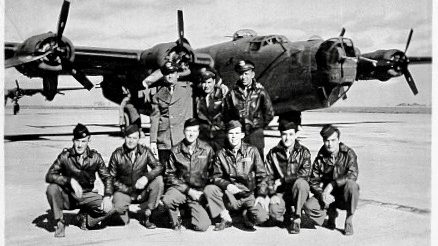
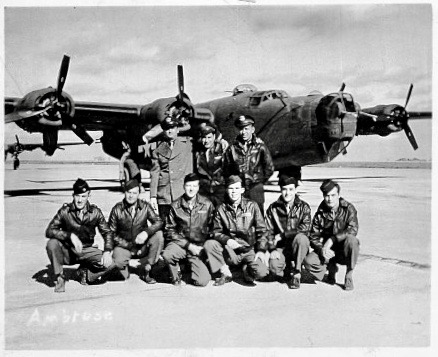
The Ambrose Crew in front of B-24 Liberator The Worry Bird. Charles M. Wilson is 4th from left, front row kneeling.
“The Free French had been of inestimable value in the campaign. Without their assistance, the liberation of France and the defeat of the enemy would have consumed much longer time and meant greater losses to ourselves.”
U.S General Dwight D. Eisenhower
“The French Resistance Movement played a noble part in the liberation of Brittany and the peninsula was quickly overrun.”
British Prime Minister Winston Churchill
On 13 August 1945 the Carpetbaggers were re-designated as the 49nd Bomb Group H and the four Bomb Squadrons. On 7 July 1945, the air echelon of the 492 Bomb Group left Harrington for Kirtland Field, Albuquerque, New Mexico, where they later joined up with the ground echelon who had returned on the ocean liner Queen Elizabeth.
The 492nd Bomb Group deactivated on 17 October 1945.
Staggering losses
World War II proved to be the deadliest international conflict in history directly involving more than 100 million people from over 30 countries. The war took the lives of 60 to 80 million people, including 6 million Jews who died at the hands of the Nazis. Civilians made up an estimated 50-55 million deaths from the war, while military comprised 21 to 25 million of those lost during the war. Millions more were injured, and still more lost their homes and property.
The third crash survivorJames Cyril Mooney volunteered for this mission (his first) when regular Worry Bird crew member Sgt. W. Bollinger reported off sick that day. Mooney was rescued by the French resistance on the morning of the Worry Bird Crash landing 28 April 1944. His life was saved but he was wounded so badly with a broken back that they had no choice to turn him over to the Germans for medical treatment or he would have likely died.
He survived his injuries but was hospitalized for months in a POW hospital in Lyon, France and was then marched on foot back to Germany and eventually to Poland before the British liberated his POW camp in 1945.
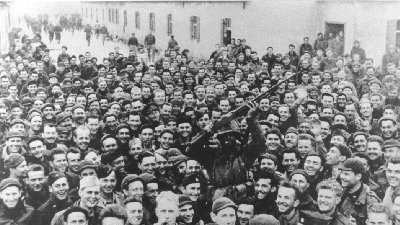
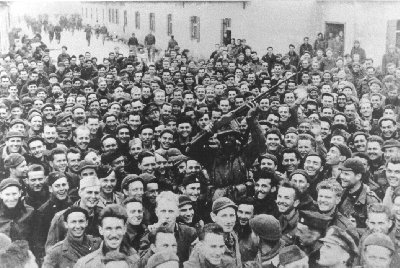
On 4 May 1945 RAF Bomber Command implemented Operation Exodus, and the first prisoners of war were repatriated by air. Bomber Command flew 2,900 sorties over the next 23 days, carrying 72,500 prisoners of war. By 20 May 1945, all surviving American POWs were back in US hands.
Liberation of POW camps in 1945.
I have been unable to obtain a photograph of Mooney but was able to locate his obituary.
Born 20 April 1921 in Englewood, New Jersey he was the youngest of three children born to Mary and William Mooney. He was a graduate of Horace Mann High School then volunteered to serve in the US Army Air Corps on 25 June 1942.
Mooney was awarded the Purple Heart, and a Bronze Star. After the war, he attended Citadel University and went on to become a successful regional sales executive for Johnson & Johnson. He and his wife of 58 years, Jeanne T. Mooney, raised a daughter Deborah A. Frey. He was a winner of the Greenwich Town Golf Tournament in the Super Senior Bracket.
James Mooney died on Saturday 29 December 2007 in Connecticut at the age of 86.
This was a difficult post to write. On 22 April 1945, hundreds of people, including Chuckie’s squadron commander, from two villages in France paid tribute to Chuckie that day in a public memorial. Yet sadly, due to the need to keep the secrets of the Carpetbagger Project, Chuckie’s parents sat in a small apartment in a small American town unaware with hope still alive that he would return home safely. All they still knew from the US Government was that he was still Missing in Action. It would be another year before they knew what what everyone else involved in the public memorial knew that day – Chuckie was killed in action one year before.
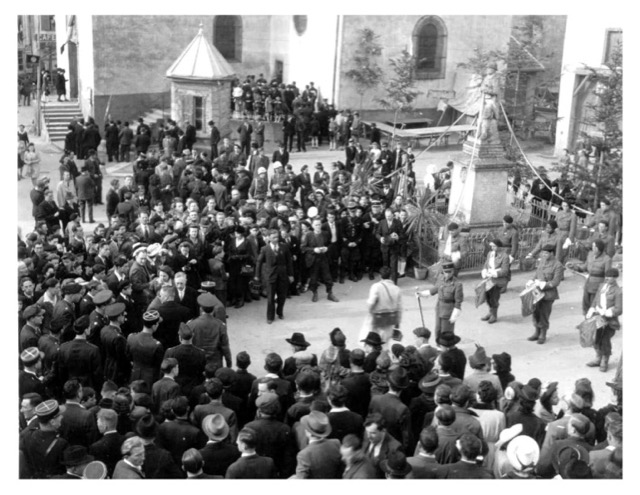
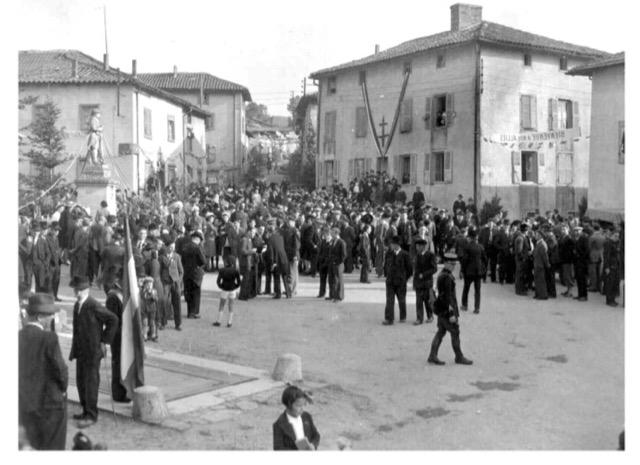
The villagers of St. Cyr de Valorge and Tarare built a monument to honor these men. The held a public memorial to the five American airmen who died there in a crash one year before in a very large public ceremony that included Chuckie’s squadron commander. It was to be the first of a series of memorials to honor Allied Forces airmen who had died delivering supplied and agents to the French resistance forces.
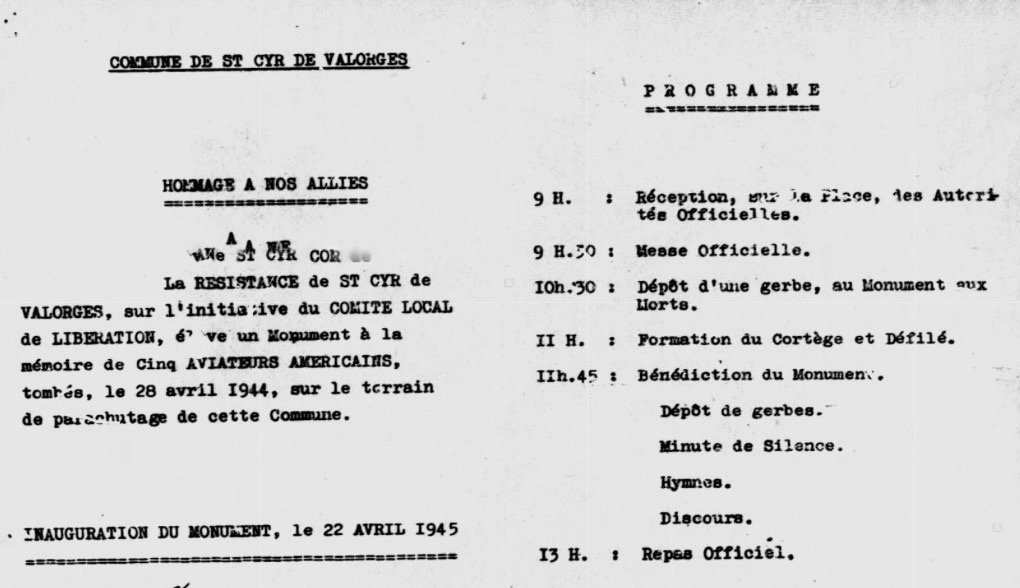
An actual copy of the official Memorial Program from that day.
Translation – Left side: 28 April 1944 “Five American aviators were killed in the process of air-dropping weapons.“ Right Side:: 22 April 1945 “Tribute from the French resistance to th five victims” The Official Program from the Memorial
English Translation
Left Hand side – Title: Tribute to our allies Main text: The Resistance of St Cyr de Valorges, upon the initiative of the local committee of Liberation, dedicates a memorial to the five American aviators fallen on 28thApril 1944 on the air-dropping field of this municipality. Bottom left: Unveiling of the memorial on 22ndApril 1945
Right-hand side – Title: Program Main text: 9:00 am: Welcome of the official public authorities on the square 9:30 am: Official mass 10:30 am: First wreath laying at the memorial 11:30 am: Cortege preparation to march 11:45 am: Blessing of the memorial Further wreath laying A minute of silence Anthem Speeches 1:00 pm: Official meal
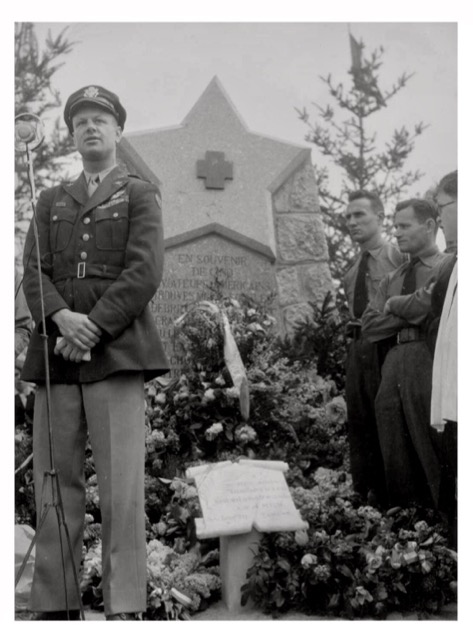
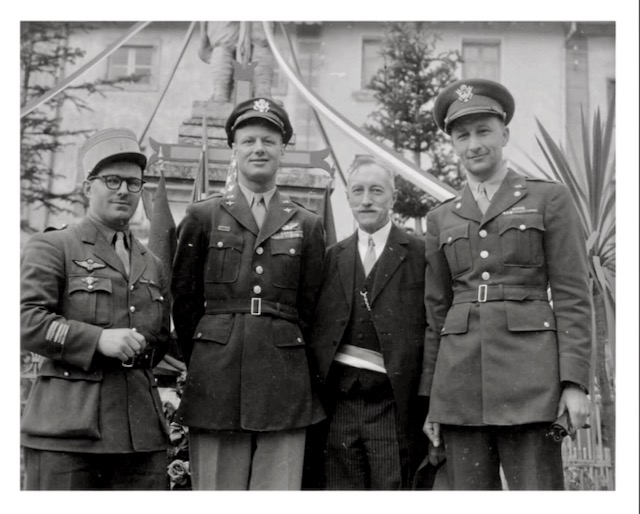
Lt. Col Robert Boone was invited to be present at the days celebration and memorial dedication as a representative of the American Carpetbagger units.
Lt. Col Robert Boone
Boone was one of Chuckie’s squadron commanders at Harrington and in command of the 801st Bomb Group. He was responsible for the working up of the air and ground echelons in preparation for the first Carpetbagger missions. On 13 August 1944 the Carpetbaggers at Harrington were redesignated to the 492nd Bomb Group (H) and the four squadrons became the 856th, 857th, 858th and 859th Bomb Squadrons under Col Clifford Heflin, the first commander of the 801st/492nd Bombardment Group, nicknamed the Carpetbaggers.
Public Memorial Program
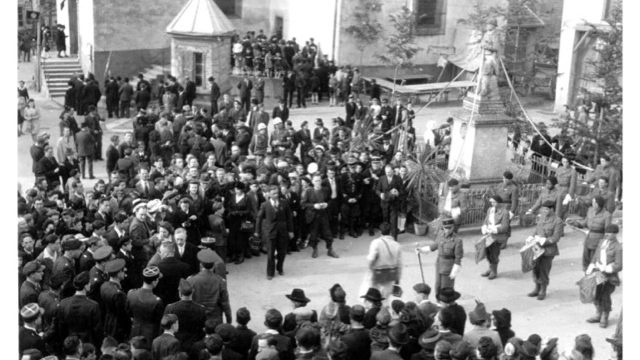
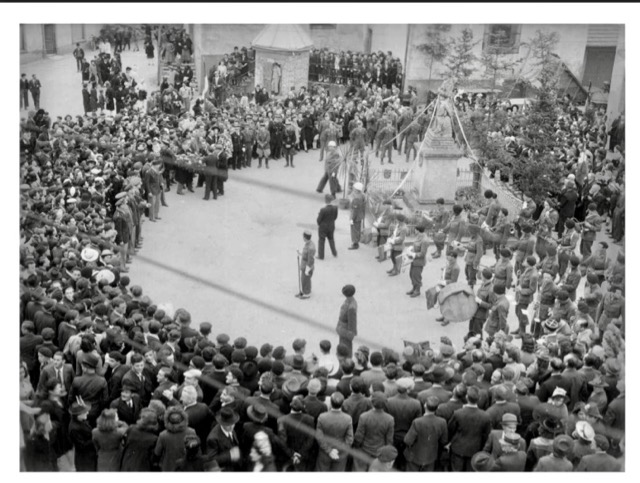
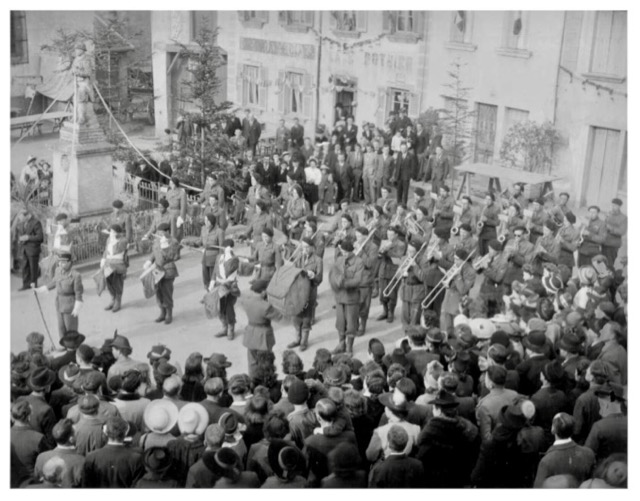
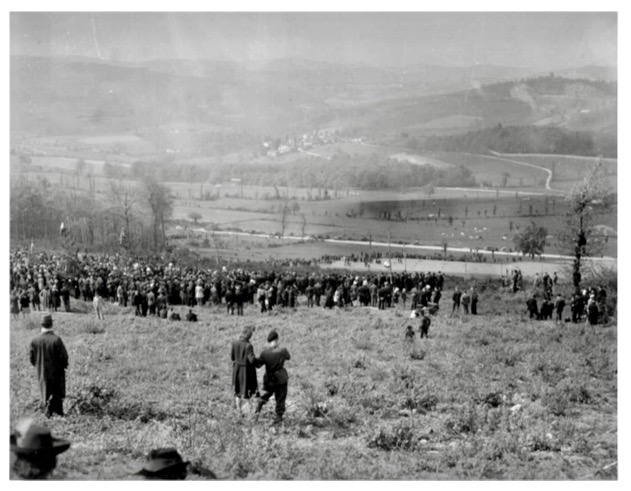
9AM Welcome – The public square at St. Cyr de Valorge, near where the crash had occurred, was packed with people from the two villages. Flags of France, the United Stated, and Great Britain were flying, while bands played the national anthems of the three countries. There was much cheering, and hundreds were in tears as speakers told of the stirring days of the resistance.
The village square at St. Cyr de Valorge, France
9:30 Official Mass – The official party and the villagers gathered in the village church, where a priest spoke, eulogizing Chuckie and the fliers. After the mass, the villagers moved to the monument for dedication.
This picture shows the village church in the background.
This is the hill and site where Chuckie’s plane crashed. The memorial still stands today.
11:45 AM Memorial Dedication Boone gave his address, which was translated into French by an interpreter, He said that he was happy to be on the ground in daytime to see the beauty of the country – something that was impossible to see at night – and to feel the warmth of the French people – impossible to feel in a Liberator airplane. He said that the men in his outfit remembered the dead men well, and to him the ceremony was evidence that the men fought not only for, but with, France in the war of Liberation.
Boone and French officials
Photos Above: The memorial from 22 April 1945 above.
1:00 PM Official Meal – After the ceremony, the party moved to a banquet hall for lunch. Colonel Boone was given Lieutenant Ambrose’s identification tags and part of his bracelet, which he promised to send to the lieutenant’s relatives in the United States.
The villagers walk back down the hill to an Official luncheon.
Sadly, Chuckie’s parents, brother and sister went to their graves thirty and forty years later never knowing any of this.
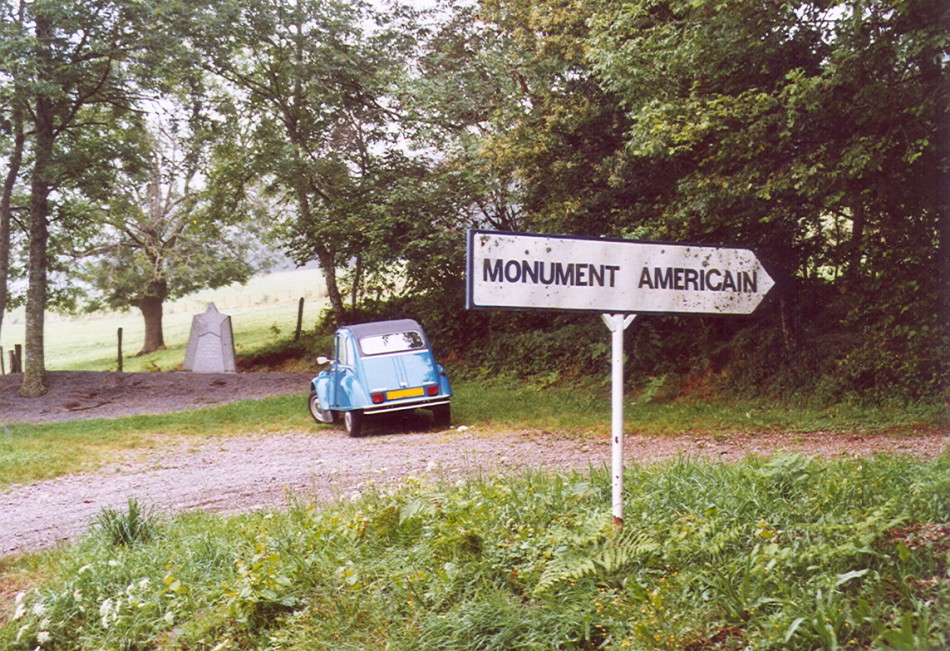
Here is that monument as it stands today, 74 years later.
The memorial as it stands today.
TRANSLATION: “In memory of five American aviators found dead in their plane debris, that crashed into flames in this place on 28th April 1944; whose mission was to airdrop weapons to our secret army for the liberation of France and the restoration of our ideals.” Lieutenant C.W. Ambrose Charles M. Wilson Robert H. Redhair A.B. Pope Lieutenant Peter Roccia”
Left hand side little black stone: “Frenchy to his friends”
It speaks to the service and sacrifices of all the Carpetbaggers.
Pilot 1st Lt George W Ambrose; is buried at Long Island National Cemetery, Farmingdale, New York, USA
Co-pilot, 2nd Lt. Robert Harry Redhair; is buried in Akhard Cemetery, Polk Co, Missouri
Navigator, 2nd Lt. Arthur Bozeman Pope; is buried in National Cemetery Marietta, GA
Bombardier, 2nd Lt. Peter Roccia; is buried in Arlington National Cemetery
Flight Engineer, Staff Sargeant Charles M Wilson; is buried at Rhone American Cemetery, Draguignan, France
Right hand side white stone: “Loved comrade-in-arms on 28 April 1944 James Heddleson”
There were three crash survivors, their stories told in previous posts.
James Joseph Heddelman
George Willam Henderson
James Cryl Mooney
A small clearing on the way to the monument. Photo credit.
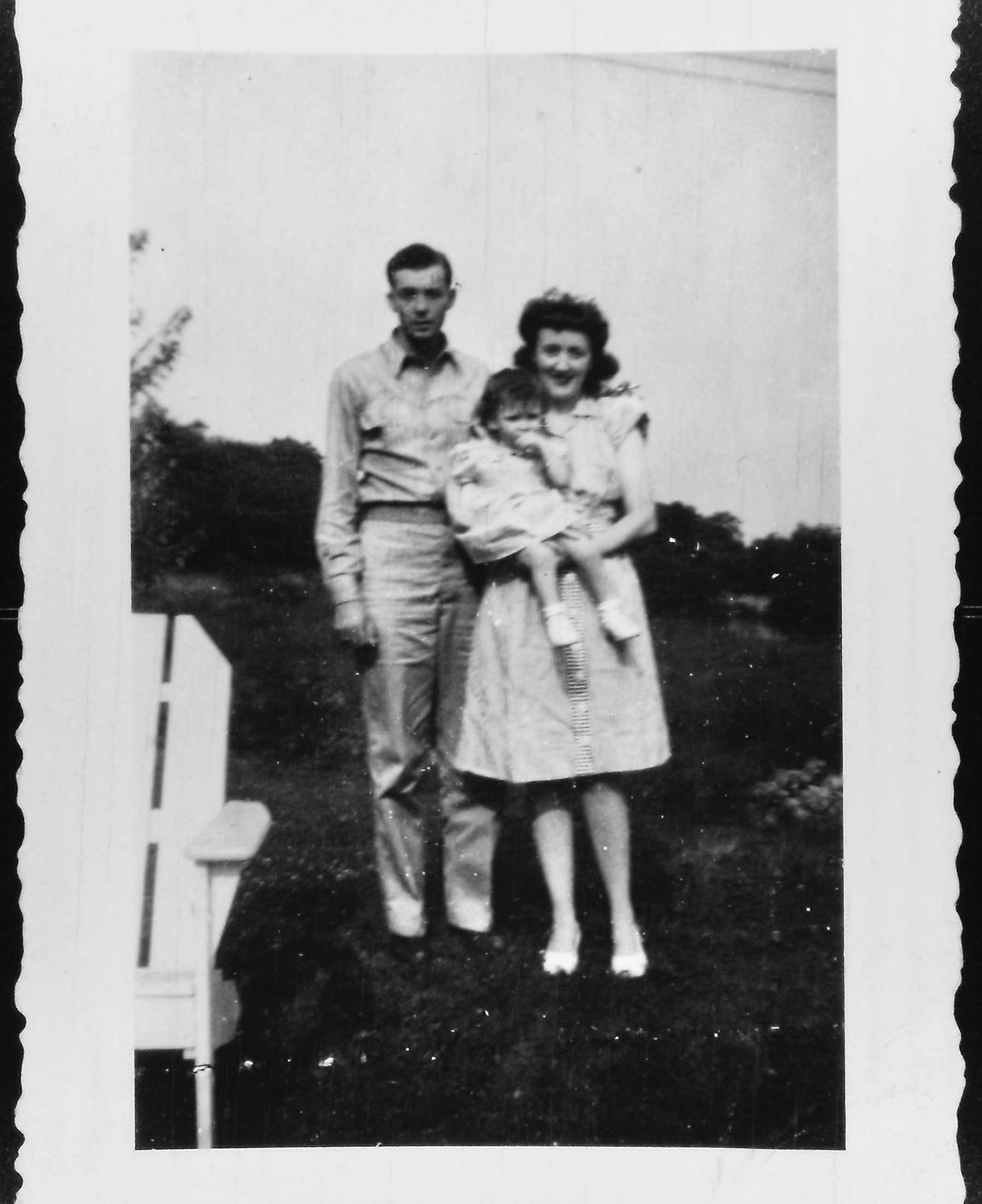
Nearly a year after Chuckie was killed in France in World War II, his older brother enlisted in the Army. The reason now is unknown but possibly out of a sense of duty to his country, honor the memory of his late brother – or both. Jack Wilson was 24 years old, married with a one year old daughter he left at home when he entered the Army on 3 April 1945.
Chuckie’s brother Jack, sister-in-law and niece on the day he left for the Army
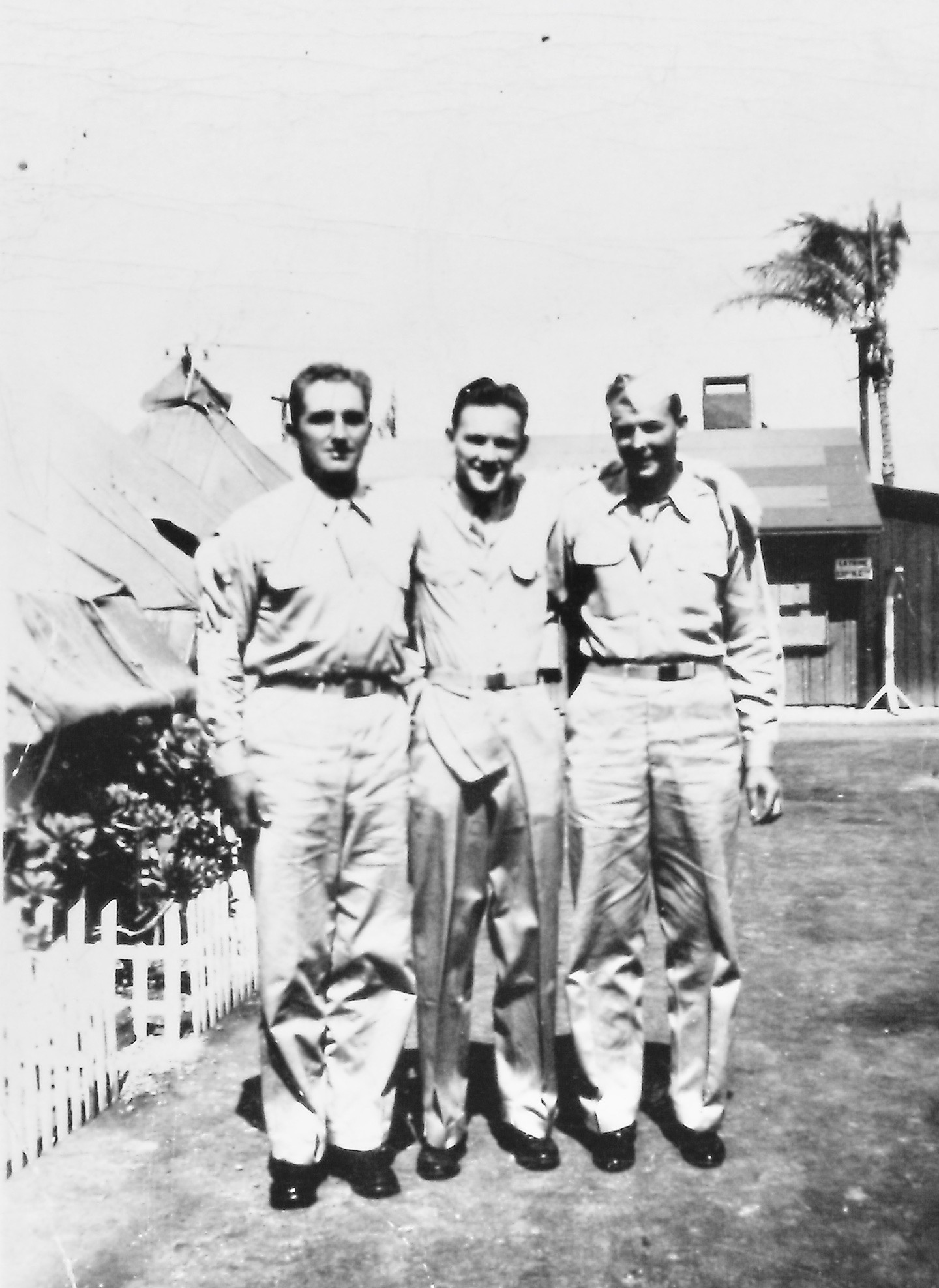
Jack served somewhere in the Pacific. This picture of Chuckie’s brother was taken on the day he was discharged from the Army on 23 Sept 1945 just five months after entering service. The war had ended.
Chuckie’s older brother on right on the day he was release from service.
After the war Jack returned to his hometown Beaver, Pennsylvania where he worked as a salesman the rest of his life. He had two grandsons one of whom is the author of this blog. Jack died at the age of 71 years old never knowing the true story of his brother Chuckie’s Carpetbagger mission or the glory of his deeds now captured In Memoriam on Unforgotten Glory.
Four months after they walked away from B-24 Liberator The Worry Bird crash landing that killed Chuckie and four others airmen of the 801st Bomb Group, two of the three survivors returned back to RAF Harrington on 27 August 1944 after successfully evading the German enemy with the help of the French.
“Only on one occasion we had a very close call. We were eating at an outside restaurant along the Rhone River, when word came that the Germans were stopping everyone for their papers. We climbed over a wall and dropped down to the river bank. Just as we cleared the wall I spotted the Germans, we made it. From here we were taken to a farm to hide out. We met several more French people who were also escaping back to England. The plane was supposed to come in July but didn’t arrive until the last week of August.
We were taken to a field before dark and hid in the nearby woods. As we heard the plane approaching, the Maquis lit several fires for the plane to land, when it came in and landed we were waiting to climb aboard. It only took several minutes to take off. We were overloaded but we made it.“
Edited from transcribed copy of letter by crash survivor James Heddelman in the archives at the Air Force Academy June – 1998
Historical records note they boarded on board RAF Hudson (Operation Machette) 27 August 1944.
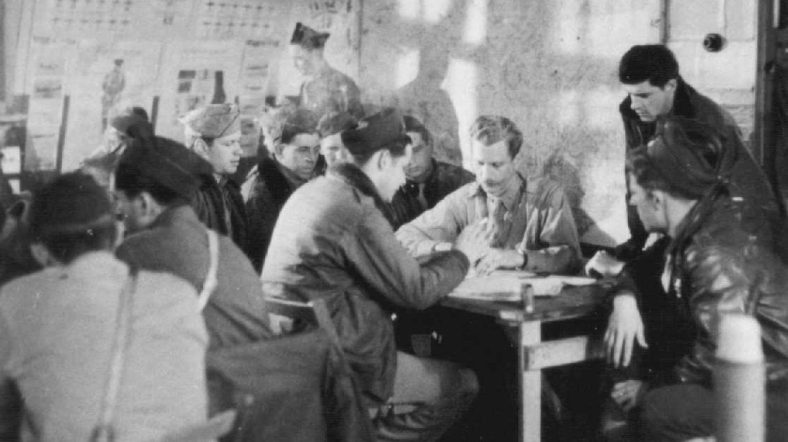
When an aircraft has completed its mission and returned to the home base, its crew are driven directly to the Intelligence Library situated at the rear of the Group Operations Building, for interrogation by S-2 Officers. In the case of Heddelson and Henderson, they had much to report. Their first person accounts given about the crash and Chuckie were posted in a previous post.
801st Bomb Group OSS Liaison Officer, S2 Lt.Robert D Sullivan debriefs a crew Photo credit Harrington Aviation Museum.
After the interrogation, the crew go to the Mess Hall, where under the supervision of a medical officer, each man is given a two ounce medicinal ration of whiskey. The man signs a receipt for his whiskey, which is issued for operational use only and serves to relax tense nerves.
More than 25 B-24s and 208 Carpetbaggers were lost in those lonely flights over enemy territory. Heddelson and Henderson were one of the very few Carpetbaggers to make the complete circle: (a) flew the parachute missions from England. (b) participated in the drops from the ground. (c) fought with the Maquis and did some sabotage. (d) escaped back to England by the secret landings.
After the war
Heddleson wound up back in his hometown Louisville, Ohio after the war, worked as senior works engineer of the Hoover Co. During World War II, the Hoover Company switched its production from vacuum cleaners to items needed for the American war effort, such as helmet liners and bomb fuses. Hoover won numerous government awards for its contributions to the nation’s war production. Once the war ended, the company returned to producing vacuum cleaners.
Heddelson and his wife, Ruth, raised four sons, and the couple twice traveled to France, where they visited the scenes of his wartime exploits.
I have been unable to find much about what happened to Henderson after the war.













 Unforgotten Glory
