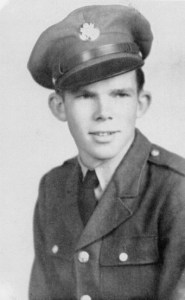
Second Letter: 21 June 1944 – My dear Mrs. Wilson, my sympathy

Two months after Chuckie’s parents first received news that he was missing in action, they received a second letter from the Government. This one from the United States Senate Finance Committee dated 21 June 1944 extending their sympathy. It contained no new information but now addressed as “my dear Mrs. Wilson.”

My dear Mrs. Wilson

I wish to extend to you my heartfelt sympathy because of the report that your son, Staff Sergeant Charles M. Wilson, has been reported as missing in action in the European Area.

If he has not been found or has not returned to his outfit by the time this letter reaches you, I sincerely hope that will occur in the very near future, and that when he does return he will be safe and sound.

With my kindest regards and best wishes, I am
Sincerely yours,

Letter to Chuckie’s mother, dated 21 June 1944, from US Senate Finance Committee
Chuckieโ€™s parents in the 1940s

I was curious to know why the Senate Finance Committee would send such a letter so Googled it. The Finance Committee had the responsibility to raise revenue to pay for the buildup to WWII. They also had responsibility for funding and administering pension and benefits programs to veterans, widows and their children.

By 1941, Germany had conquered most of Europe and had begun its bombing campaign against Britain.  And the Japanese had joined the Axis powers.  Meanwhile, in the United States, the boom in the defense industry had helped bring the country out of the Great Depression. 

The Finance Committee had the responsibility to raise revenue to pay for the buildup.  The result was some of the largest revenue measures in the nationโ€™s history, affecting all Americans.  By early 1942, the Federal Government was spending $150 million a day, or roughly $5 billion a month, with nearly half of this total going towards the war effort.

The letter was signed by two individuals.
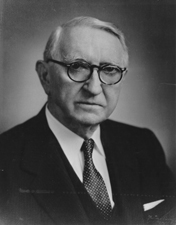
Senator Walter F. George (Georgia) Chairman of the United States Senate Committee on Finance
In the 1940s George supported President Roosevelt’s efforts at military preparedness and American defensive buildup in response to the threat posed. Once the United States entered World War II after the Japanese attack on Pearl Harbor, George embraced the president’s vigorous prosecution of the war.
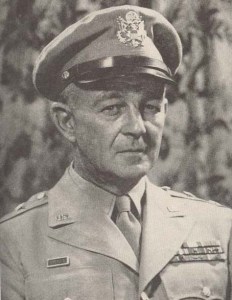

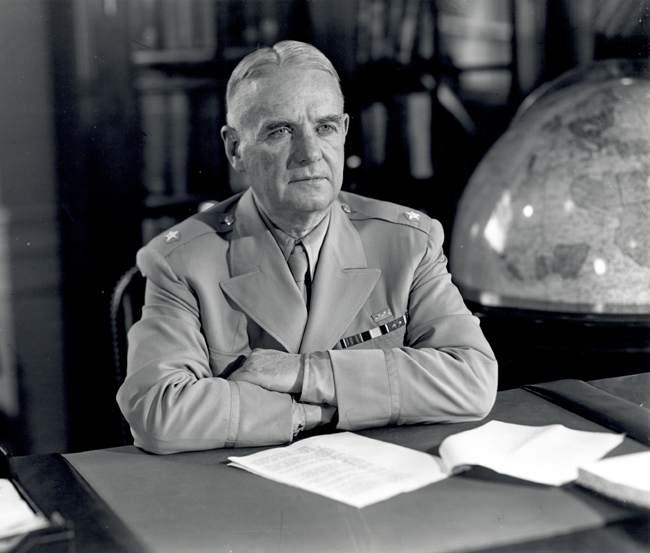
Major General Hugh J. Gaffey
At this time, he was chief of staff of the Third Army, serving again under Lieutenant General George Patton. Gaffey served in this capacity through the campaign in Western Europe, from the time the Third Army landed in France in July 1944 and played a major role in Operation Cobra and the Battle of the Falaise Gap, followed by the Allied advance from Paris to the Rhine and the Battle of Metz.

A copy of the actual letter recieved

The Crash (Part three): 02:20 – 28 April 1944, seen like a beacon

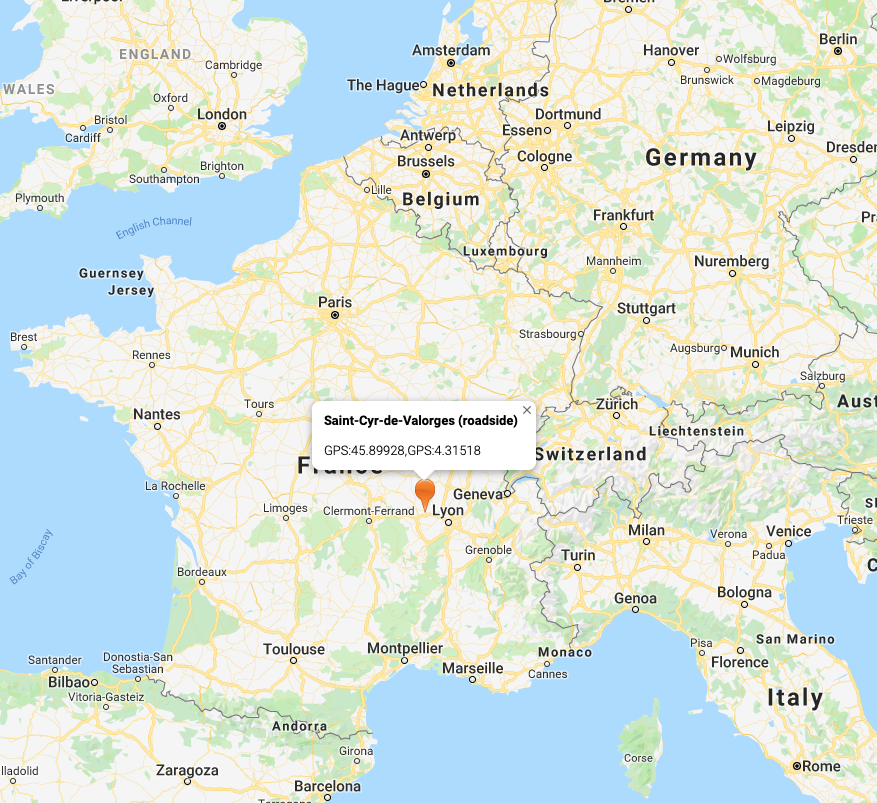
Chuckie and his fellow crew onboard B-24D serial no. 42-40997 The Worry Bird (formerly Screaminโ€™ Mimi of the 565th Bomb Squadron, 389th Bomb Group) clipped a hill near its drop zone in Saint-Cyr-de-Valorges, Loire, and crashed killing him and four other crew; three airmen survived.

The GPS location of the plane crash

When it struck the ground on the third downward circle, the B-24 divided into four distinct compartments as it crash landed.

Chuckie and the four other airmen in the first to sections were killed; the three airmen in the back two sections survived after being able to parachute out and away from the plane to safety just before the crash landing.

  1. bombardier-navigator’s compartment in the nose of the aircraft which contained the navigational equipment, bomb-sight, bomb controls, and nose guns or nose turret; where navigator Lieut. Arthur B Pope, Navigator; and bombardier Lieut. Peter Roccia, Bombardier were located
  2. flight deck which included the pilot’s compartment, radio operator’s station, and top gun turret; where flight engineer Chuckie along with pilot Lieut. George W Ambrose and co-pilot Lieut. Robert H Redhair were located
  3. bomb bay compartment in the center of the aircraft under the center wing section (half deck is located above the rear bomb bay); where survivor Sgt. James C. Mooney was located
  4. rear fuselage compartment which contains the lower gun turret, waist guns, bottom camera hatch, photographic equipment, and the tail gun turret; where survivors Staff Sgt. James Heddleson and Sgt. George Henderson were located

Radio operator James Heddleson and gunners George Henderson and James C. Mooney survived. Heddelsman wrote a first person account of the crash in a letter to author Ben Parnell for his 1987 book Carpetbaggers: America’s Secret War in Europe. A transcription is in the archives at the Air Force Academy. A portion is reprinted here.

1st I hit my forehead, partly falling out and then I was thrown backwards toward the โ€œJoe Holeโ€ area, with the back of my head slamming into something in the plane. Sgt. Mooney is gone, he apparently fell out of the โ€œJoe Hole.โ€ I found out later he held onto the chutes (packages). Luckily he wasnโ€™t killed, although the poor man must have suffered terribly. His back was broken, this I was told later. Sgt. Henderson was immediately out of the tail section.

We found each other.
Henderson and I were apparently fairly close to each other … as each of us made our way back to the plane.

The plane seemed to be everywhere
Our plane could be seen like a beacon for miles like a beacon.. . . the ammunition exploding and whatever was in the canisters also going off. . . and the noise it made in the still of the night with everything exploding certainly would attract a lot of attention.

The canisters were scattered everywhere.
The French worked very hard throughout the night, very hard, trying to retrieve them. Sgt. Henderson and I were apparently fairly close to each other and as each of us made our way back to the plane, we found each other.

We assumed everyone was killed except Sgt. Mooney.
Mooney, we tried to find him, hoping he was alright, but it was night and in the mountain area and after a while we gave up. We were not only hurting physically, but also emotionally, myself being only 20 years old at the time.

We could hear noises like cars or truck engines or so we thought.
My left leg was hurt and was getting worse as it was swelling around the knee. We had no idea where we were, but the 1st thing we thought of was it could be the Germans.

We started down the hills toward the valley,
Not knowing anything about the territory, we just decided to slip away in the night, the best way we could. 

Edited from transcribed copy of letter by crash survivor James Heddelson in the archives at the Air Force Academy June – 1998

His back broken, Mooney was helped from the crash area by a French women from the village but was soon handed over to the Germans for urgent care when the seriousness of his injuries became clear. He survived as a POW in a Lyon hospital recovering from his injuries. Heddleson and Henderson successfully evaded the enemy by first hiding under cover, then being taken in by the French Resistance Army the Maquis, living with them for three months and even going along one night to help blow up a railway trestle. In early August an RAF Lockheed Hudson picked them up safely and on 27 August 1944 they returned to Harrington.

Coming up The Crash (Part four): What happened the next day when then sun came up and photos of the crashed plane.

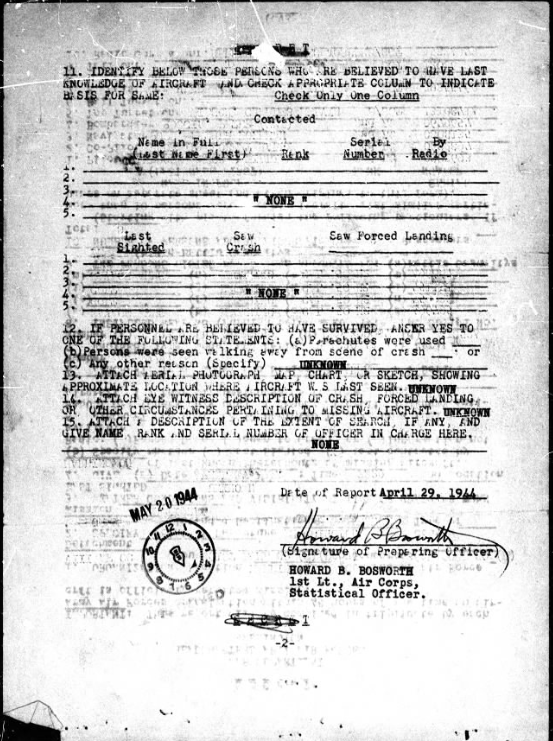
29 April 1944 – Official Report: Missing in Action

Every Army Air Forces organization was required to file a Missing Aircraft Report (MACR) within 48 hours of when an aircraft was officially reported as missing.

Missing Aircraft Report 4307 officially reported Chuckie and his fellow crew as Missing in Action from their mission that took place on 27 April 1944. The report was made 29 April and date stamped at the War Department in Washington on 10 May 1944. This was the report referenced in the letter to Chuckie’s parents.

The Report listed the official crew:

1st Lieut George William Ambrose , Pilot
2nd Lieut Robert Harry Redhairย , Co-pilot
2nd Lieut Peter Roccia , Bombadier

2nd Lieut Arthur Bozeman Pope , Navigator
Staff Sargeant Charles M. Wilson, Top Turret Gunner
Sergeant James Cyrll Mooney , Tail Gunner
Sergeant James Heddelson, Radio operator & gunner
Staff Sergeantย George W Henderson, Right Waist gunner

Over the following months and years since the crash, the classified “Secret” MACR Report would eventually grow to include additional information uncovered about the crash over time, first hand accounts from the survivors, some photographs, and information about a monument to these brave aviators erected at the crash site by the grateful people of France, and details of the final resting place for each of those killed in action.

The MACR 4307 is now “public information” and available in the National Archives.

Coming up in the next posts, the secret story Chuckie’s parents, brother and sister were never able to know – what actually happened to Chuckie on that night and the gratitude of the people of France for his bravery and heroism and his ultimate sacrifice for freedom that still stands today.

Welcome. If you’re new to the site,

Unforgotten Glory readership continues to grow. For a quick, easy way to catch up and read the story from the beginning click on Timeline to the left on the home page.

To get emailed directly as new stories publish, enter your email. Thank you for reading.

Processingโ€ฆ
Success! You're on the list.

18 – 20 April 1944 ~ On Leave in London

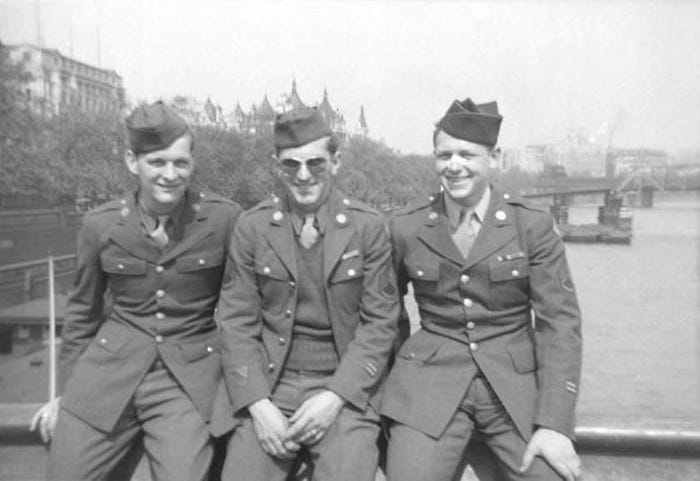
The Carpetbaggers had a hiatus of ten nights between 11 April and 21 April 1944 when combat missions from Harrington, England to France resumed. Historical records show many crews, including Chuckie’s, went off base on personal leave starting on 18 April. No record exists of where in England Chuckie and his fellow Ambrose Crew traveled on their three days of leave.

This undated photo captures a few US Army Air Force personnel enjoying a day of leave in London. They are sitting on the Westminster Bridge with the Thames River behind them. A happy day in London like the one in this photo was, perhaps, how Chuckie spent his last days.


Photo Credit: ARGUNNERS Magazine

The Carpetbaggers were all ages, shapes and sizes.
They became close friends.

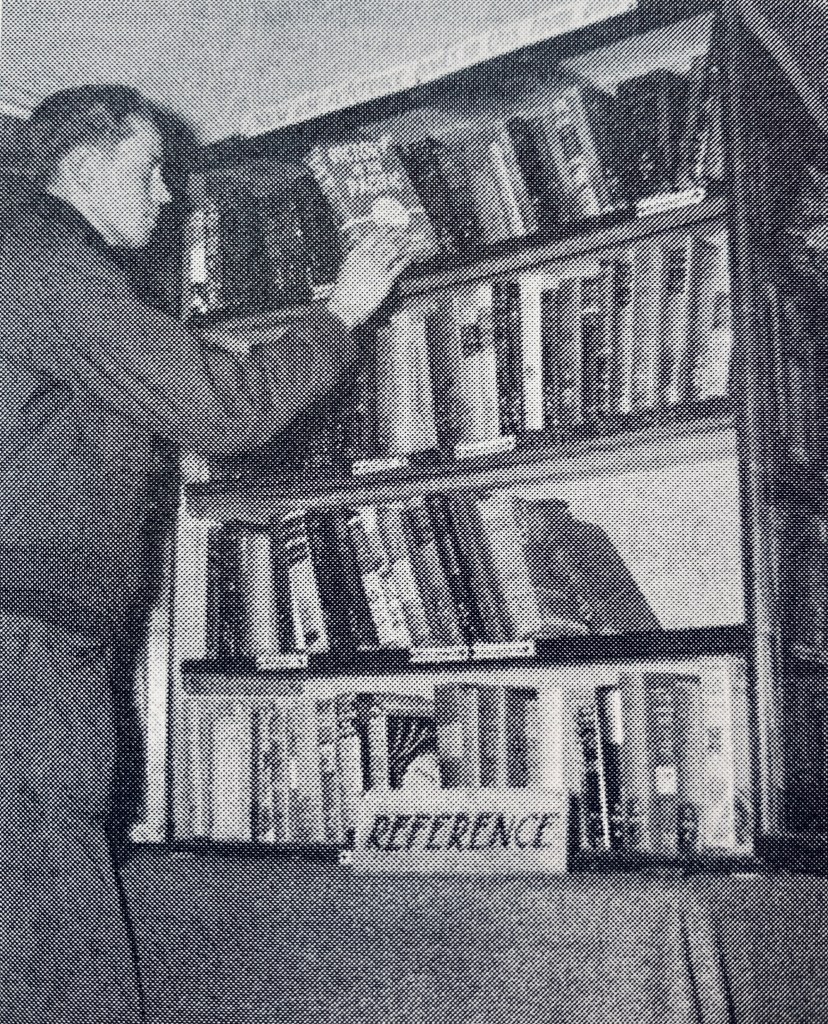
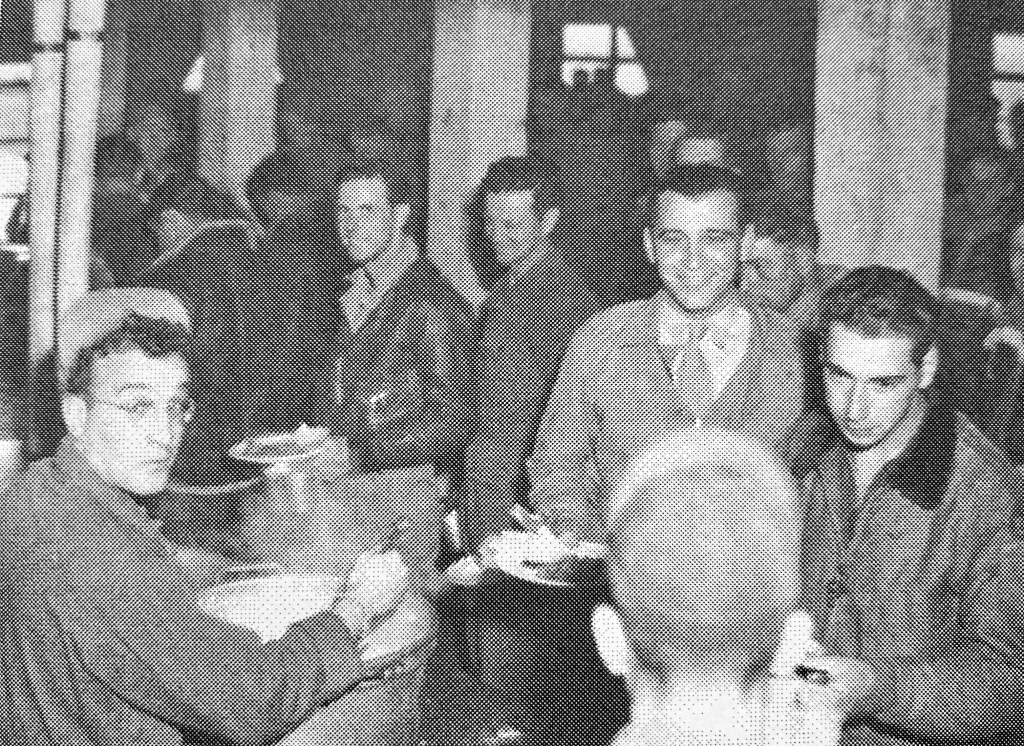
Photo Credits: The Carpetbagger Project – Secret Heroes

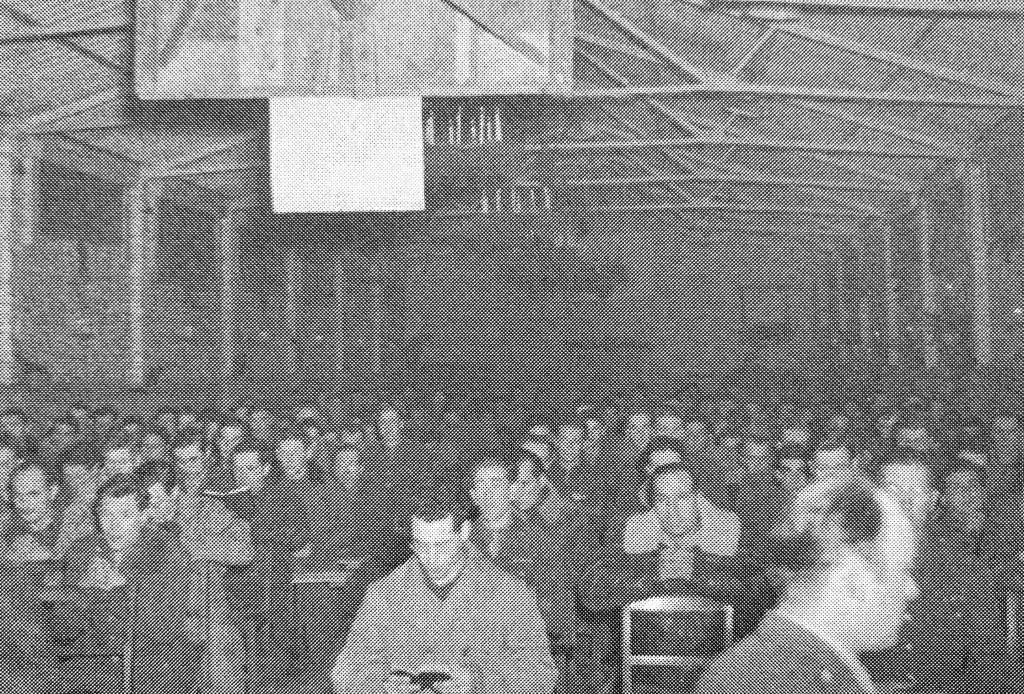
Off duty activities at Harrington included church services, eating at the mess hall, mail call, getting paid at the payroll ten, checking out the library, listening to music and raising puppies and pigs.

Historian Thomas L Ensminger’s book Spies, Supplies and Moonlit Skies, Volume II: The French Connection, April-June 1944, provides a wealth of illumniating and previously unknown facts related to Chuckie’s Carpetbagger missions based on historical records. Upon their return to active duty at Harrington, all remaining operational nights in April 1944 would be more dangerous dark flights – with no moonlight to help guide them. Whether this was necessity, or deemed as necessary for the buildup prior to D-Day and to be tested, is not recorded.

Chuckie would make just two more flights.

4-5 January 1944 – First Carpetbagger Mission from Harrington

For over fifty years, families of American servicemen Killed In Action on Operation Carpetbagger like Chuckie knew very little about their loved ones’ dangerous, top-secret mission or the circumstances of their death. It was classified, top-secret. During World War II, Operation Carpetbagger was a general term used for the aerial resupply of weapons, ammunition, food, medical supplies, and sometimes even spies to resistance fighters in France, Italy, and other European countries by the U.S. Army Air Forces.

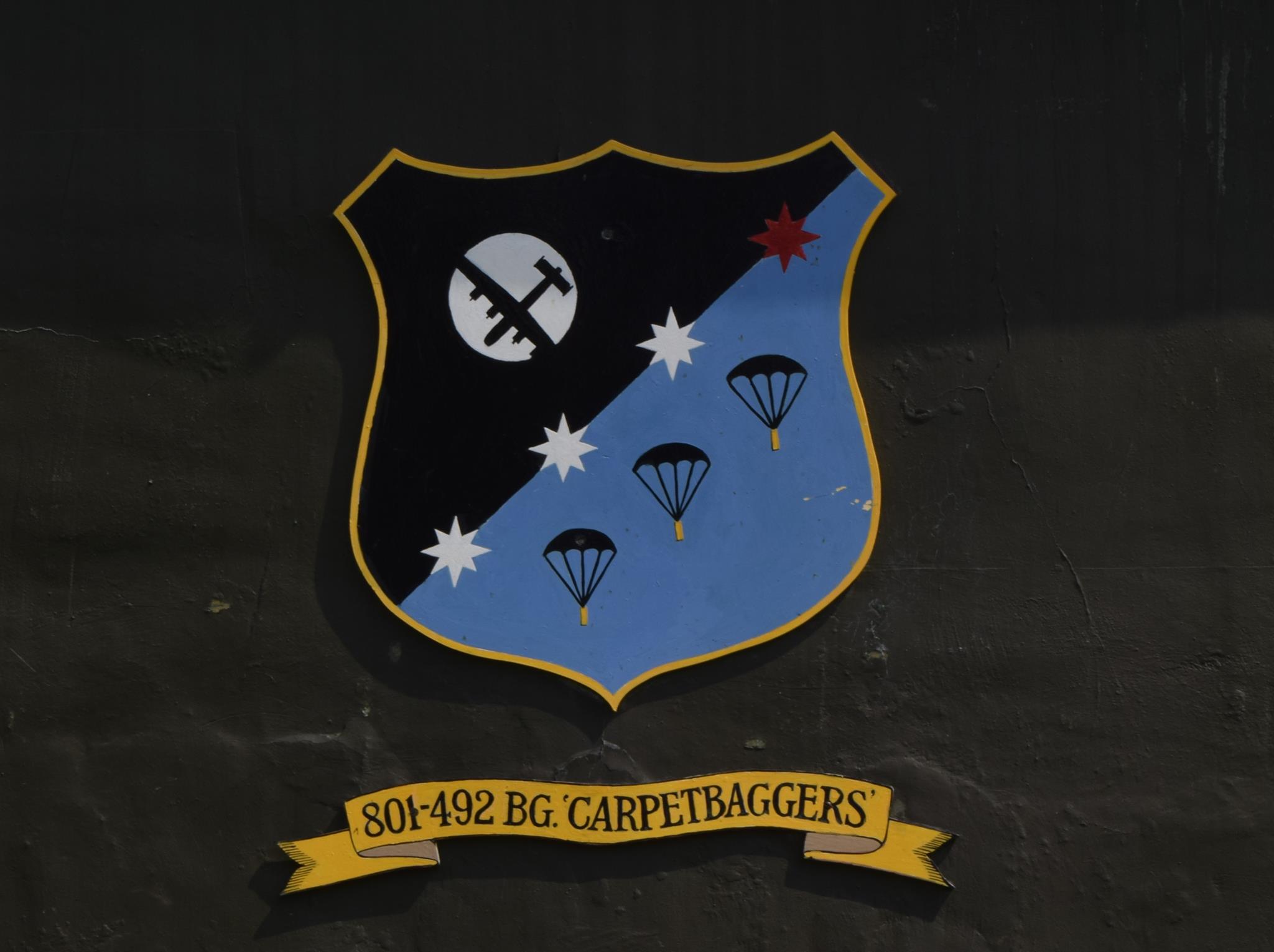
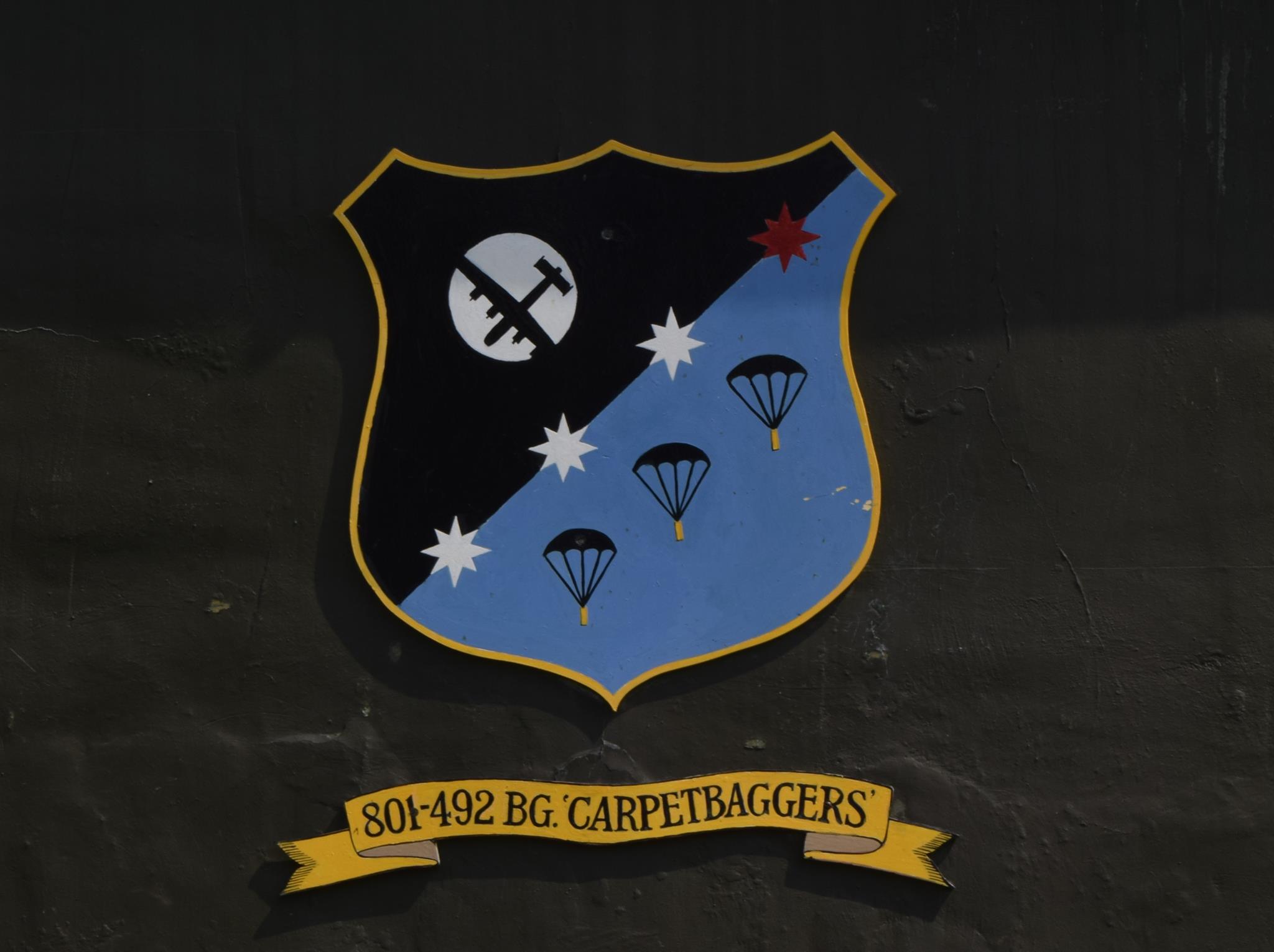
Carpetbaggers Insignia

Today, thanks to declassification of Army Air Force and OSS records beginning in the 1980s, and many years of effort by a handful of researchers, there is considerable information on Operation Carpetbagger now available. It can easily be found in national archives, history books, museums, news articles, movies, websites and YouTube videos. (Don’t worry reader, the entire history won’t be covered on this blog. Just what’s relevant to complete Chuckie’s story.)

Operating under the cover of night darkness and often in weather considered impossible for flying, they flew Consolidated B-24 Liberators to supply French partisan groups north of the Loire River in support of the upcoming D-Day invasion.  Chuckie and his air crew joined the Carpetbaggers at Harrington on 25 March 1944 and flew five successful missions to France and back again over the following weeks of April 1944.

They dropped canisters of supplies to resistance fighters: radios, batteries for radios, weapons, ammunition, first aid supplies, food, clothing, and many other daily necessities. They also delivered items used in the world of espionage agents. A parachute attached to one end of a canister, and the other end had a shock-absorbing cap to protect the contents. Once on the ground, resistance forces quickly gathered the canisters before German forces could arrive.

I found on YouTube a fascinating 15-minute Central Intelligence agency archival film hat’s been digitally restored of the actual Carpetbaggers at Harrington. At minute 12:40, watch for the aviator checking his watch on the farthest left. When he lifts his head up and looks at the camera, is it possible we catch a glimpse of Chuckie for a brief moment? Some in Chuckie’s family think so.

In addition to the dangers from German night fighters and flak, the Carpetbaggers always ran the risk of crashing into hillsides as they made low-level parachute deliveries to the resistance forces waiting below. I found out that is exactly what happened to Chuckie and his fellow airman of “The Worry Bird” that fateful night. Stay tuned.

Carpetbaggers were among those who received the Congressional Gold Medal in DC last year. The group has been generally recognized as the ancestor of today’s Air Force Special Operations. The National Air Force Museum in Dayton, Ohio has one of the few surviving Consolidated B-24 Liberators like Chuckie flew on display.

I hope to see it one day.

1 April 1944 – 801st Bomb Group Established

Chuckie’s 36th Bombardment Squadron and the 406th Bombardment Squadron formed the 482nd Bomb Group at the beginning of 1944. It was the only U.S. 8th Army Air Force Bomb Group formed outside of the United States during WWII. 

On 1 April 1944 they were placed under the provisional 801st Bomb Group at RAF Harrington. Twenty four of the fat B-24s arrived and were soon squatting on the hardstandings round the perimeter of the airbase.ย  More than a thousand troops would move into Harrington during April of 1944. The first “Carpetbagger” missions were carried out by this unit under the control of General “Wild Bill” Donovan’s Office of Strategic Services (OSS). The group has been generally recognized as the ancestor of today’s Air Force Special Operations.

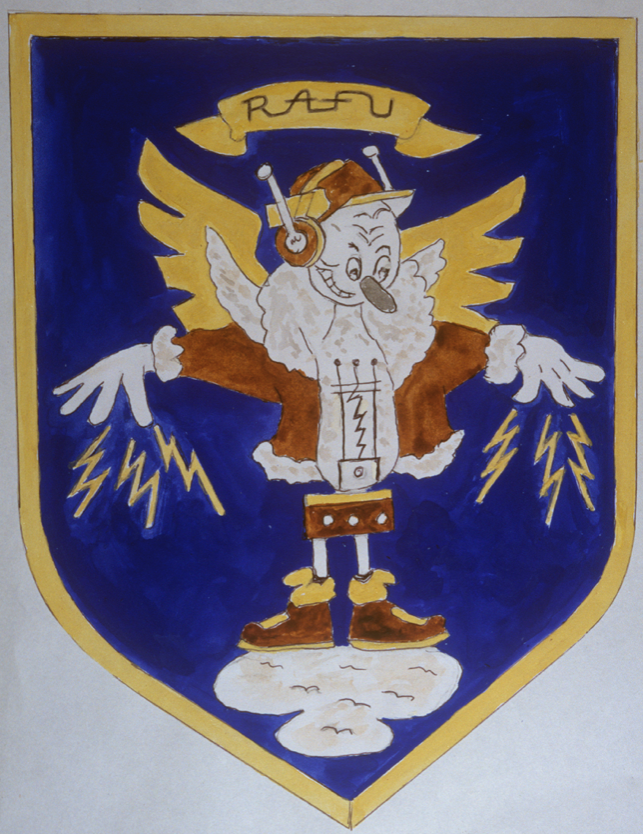
The insignia of the 36th Bomb Squadron (Radar Counter Measures)
from The American Air Museum in Britain

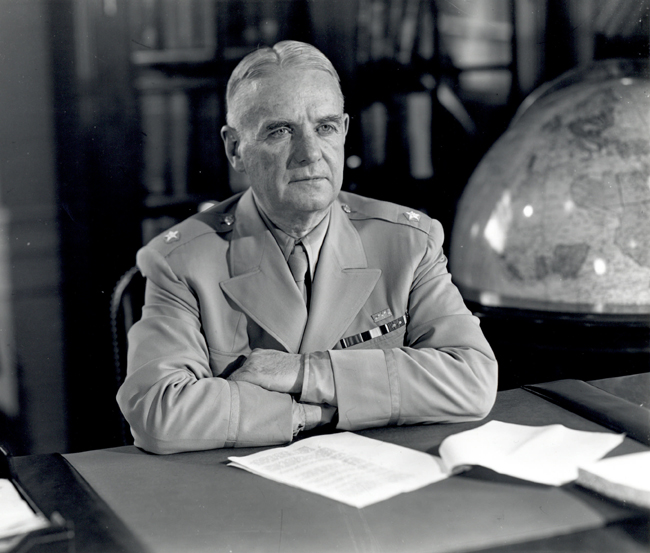
Gen. William J. Donovan Heads Office of Strategic Services

The Office of Strategic Services (OSS) was a wartime intelligence agency of the U.S. during World War II, and a predecessor to the Central Intelligence Agency (CIA).

The OSS consisted of men and women from many areas and backgrounds โ€” lawyers, historians, bankers, baseball players, actors, and businessmen. Their assignment was to conduct espionage, sabotage, and morale operations against the Axis powers, and conduct in-depth research and analysis on the nationโ€™s enemies and their capabilities.

The OSS was instrumental in many of the successes during World War II, including providing the U.S. government with advance information about German efforts to develop atomic weapons and the plot to assassinate Hitler.

Donovan became known as the โ€œFather of American Intelligence.  More information on him and the OSS can be found on the CIA website


Gen. William J. Donovan, also known as โ€œWild Billโ€ Donovan.
Source: https://www.archives.gov/files/research/military/ww2/oss/images/img7.jpg

25 March – Move to RAF Harrington airbase for Operation Carpetbagger

Chuckie’s 36th Bombardment Squadron moved into a more secluded, more secure airbase Royal Air Force Station (RAF) Harrington on 25 March 1944. It was built for heavy bomber use, the main runway length being about a mile. Approximately 860,000 square yards of concrete were laid, with one and three quarter million bricks being used, 210,000 cubic yards of soil being moved and 6 miles of roadway formed.

Chuckie was part of the initial operational squadron at Harrington. When they moved there, his 36th Bombardment Squadron was assigned to the 801st Bombardment Group.

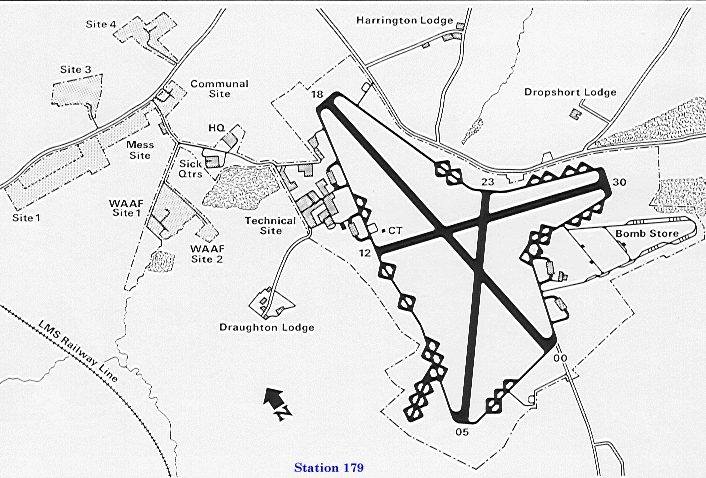
A plan of the Harrington airfield (station 179) which had been built by
US Army Engineers and local contractors.

The Group had already adopted the nickname of “Carpetbaggers” from its original operational codename. A Carpetbagger Aviation Museum at the site of the former airfield has on its website interesting photos and other historical information that provided me with additional details about the last weeks of Chuckie’s life.

It was loud, busy and always noisy, by all accounts. Yet looking at this 1944 B&W photo, even today, one can almost smell the fresh cut grass of the airfield and clearly see the beauty of a green English countryside that Chuckie and his crew would have experienced every day.


Afternoon lineup (photo taken looking south) at the airfield
where Chuckie’s plane took off from at RAF Harrington
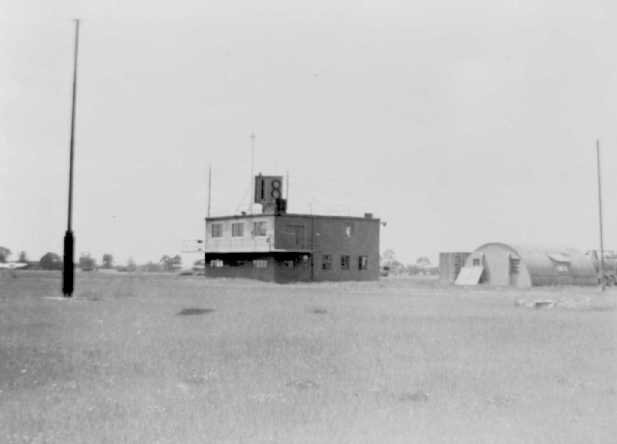
The Control Tower at RAF Harrington which guided Chuckie’s plane’s take off that night.
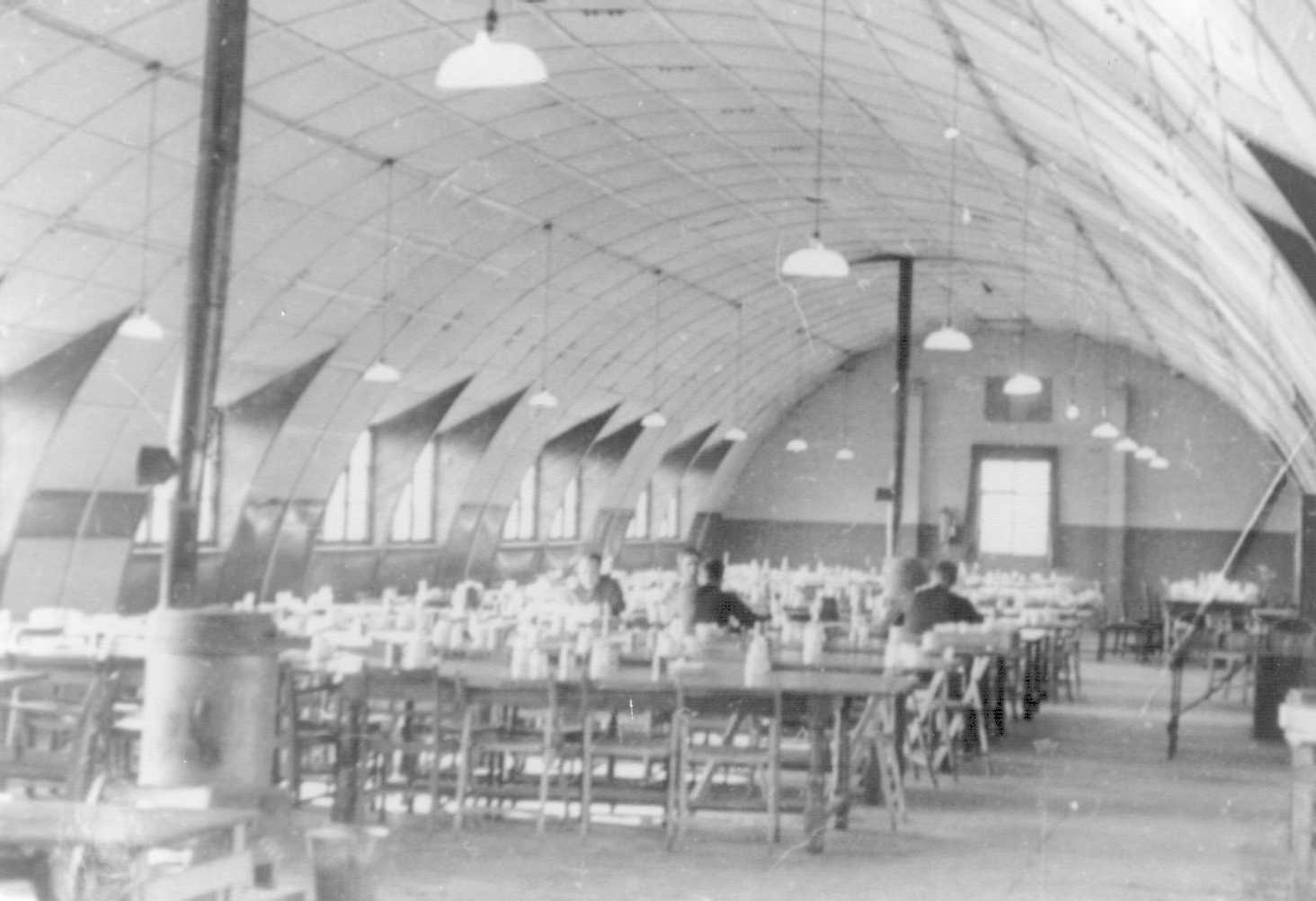
The Mess Hall at RAF Harrington where Chuckie likely had his last meal.

Sadly, Chuckie was Killed in Action in the first month of Carpetbagger’s six months of operations at Harrington in 1944. Its operations peaked in June and July 1944 and on 13 August 1944, the Carpetbaggers at Harrington were re-designated as the 492nd Bomb Group (BG). Carpetbagger operations came to a practical end on the night of 16/17th September 1944.

The 492nd BG at Harrington continued supply dropping, bombing and missions until 7 May 1945 when Germany finally surrendered. They then left Harrington for Kirtland Field, Albuquerque, New Mexico where they later joined up with the ground echelon who had travelled back to America by the ocean liner Queen Elizabeth. The Group deactivated on the 17th October 1945.

Following the withdrawal of the Americans, Harrington airfield fell into a period of disuse and returned to farmland. It received a new lease of life when it was selected to become one of the RAFโ€™s Thor missile sites in the late 1950โ€™s.  The site was again abandoned in 1965 and the buildings, runways and most of the roads and taxiways were demolished.

Today, the foundations of some WWII buildings can still be seen around the site of the airfield, the only remaining original substantial WWII buildings left standing are where The Carpetbagger Aviation Museum is now housed in part of the original Operations Building at the airfieldโ€™s administration site. 

I hope to get there one day to take in the English countryside view Chuckie saw the last day he saw daylight – 27 April 1944.

15 Feb 1944 – “The Ambrose Crew” arrive to Great Britain

By 1944, US forces reached their greatest numbers in preparation for the Normandy Invasion.  After training in the US for two years, Chuckie arrived to Royal Air Force (RAF) Alconbury in England some time in the Jan-Feb 1944 period. He was part of the 36th Bombardment Squadron enhancement forces for the planned Allied Invasion in June.

Chuckie’s unit was formed in November 1943 to clandestinely deliver agents and supplies into Nazi-occupied Europe for the Office of Strategic Services (O.S.S.). To address this mission, specially modified B-24 Liberators were formed and activated at RAF Alconbury, England. This was the very beginning of Operation Carpetbagger.

Chuckie was part of pilot George W. Ambrose’s crew on “The Worry Bird” a specially modified B-24D Liberator aircraft. Carpetbagger aircraft flew spies called “Joes” and commando groups prior to the Allied invasion of Europe on D-Day and afterward and retrieved over 5,000 officers and enlisted men who had escaped capture after being shot down. The low-altitude, nighttime operation was extremely dangerous and took its toll on these airmen. The first aircrews chosen for this operation came from the anti-submarine bomb groups because of their special training in low altitude flying and pinpoint navigation skills.

My research uncovered that Chuckie and his fellow “Ambrose” crew successfully completed five classified Carpetbagger missions in the month of April 1944 before its fiery crash in France behind enemy lines.


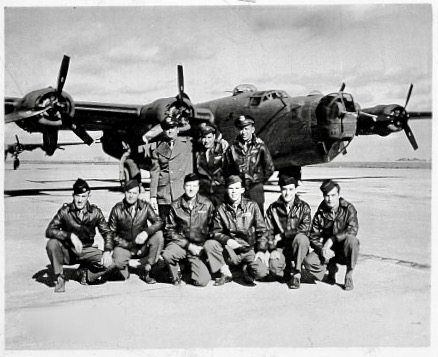
B-24 Liberator “The Worry Bird” Picture Date: December 1943
Back Row Left to Right:
1st Lieut. George W. Ambrose (Pilot); 2nd Lieut. Peter Roccia; 2nd Lieut. Robert H. Redhair 
Front Row, Left to Right: Sgt. Eddy Dwyer;  Staff Sgt. George Henderson; Sgt.Wilford Bollinger;
Staff Sgt. Charles M. Wilson; Sgt. Donald Dubois; Sgt. James Heddelson

Attending “Pathfinder” School

Although Great Britain is a small nation, for many young American pilots newly arrived from the Midwest and used to training over the blue skies over Texas, it was easy to get lost.  England was a patchwork of fields, towns, and villages.  Pilots have written that it all looked remarkably similar from the air.  There were more than 140 airfields in the UK.

Getting around on the ground wasnโ€™t any easier as the British had removed practically all the road signs and mile markers as a German invasion was always a threat. Navigation became such a problem that a special โ€œPathfinderโ€ school was established at the RAF Alconbury (AAF-102) in Huntingfonshire, which today was amalgamated into Cambridgeshire.  Chuckie and his crew were likely there on orders to learn the mysteries of navigation from the experts of the 482 Bombardment Group.

A new airfield under construction in the depths of rural NorthamptonshireRAF Harrington (Station 179) would be the Ambrose Crew’s next destination. It proved ideal for Carpetbagger operations and the heavy equipment and aircraft.

Soon the Ambrose Crew would move there.


4-5 January 1944 – First Carpetbagger Mission from Harrington

For over fifty years, families of American servicemen Killed In Action on Operation Carpetbagger like Chuckie knew very little about their loved ones’ dangerous, top-secret mission or the circumstances of their death. It was classified, top-secret. During World War II, Operation Carpetbagger was a general term used for the aerial resupply of weapons, ammunition, food, medical supplies, and sometimes even spies to resistance fighters in France, Italy, and other European countries by the U.S. Army Air Forces.

Carpetbaggers Insignia

Today, thanks to declassification of Army Air Force and OSS records beginning in the 1980s, and many years of effort by a handful of researchers, there is considerable information on Operation Carpetbagger now available. It can easily be found in national archives, history books, museums, news articles, movies, websites and YouTube videos. (Don’t worry reader, the entire history won’t be covered on this blog. Just what’s relevant to complete Chuckie’s story.)

Operating under the cover of night darkness and often in weather considered impossible for flying, they flew Consolidated B-24 Liberators to supply French partisan groups north of the Loire River in support of the upcoming D-Day invasion.  Chuckie and his air crew joined the Carpetbaggers at Harrington on 25 March 1944 and flew five successful missions to France and back again over the following weeks of April 1944.

They dropped canisters of supplies to resistance fighters: radios, batteries for radios, weapons, ammunition, first aid supplies, food, clothing, and many other daily necessities. They also delivered items used in the world of espionage agents. A parachute attached to one end of a canister, and the other end had a shock-absorbing cap to protect the contents. Once on the ground, resistance forces quickly gathered the canisters before German forces could arrive.

I found on YouTube a fascinating 15-minute Central Intelligence agency archival film hat’s been digitally restored of the actual Carpetbaggers at Harrington. At minute 12:40, watch for the aviator checking his watch on the farthest left. When he lifts his head up and looks at the camera, is it possible we catch a glimpse of Chuckie for a brief moment? Some in Chuckie’s family think so.

In addition to the dangers from German night fighters and flak, the Carpetbaggers always ran the risk of crashing into hillsides as they made low-level parachute deliveries to the resistance forces waiting below. I found out that is exactly what happened to Chuckie and his fellow airman of “The Worry Bird” that fateful night. Stay tuned.

Carpetbaggers were among those who received the Congressional Gold Medal in DC last year. The group has been generally recognized as the ancestor of today’s Air Force Special Operations. The National Air Force Museum in Dayton, Ohio has one of the few surviving Consolidated B-24 Liberators like Chuckie flew on display.

I hope to see it one day.