Sometime shortly after 14 April 1944, Chuckie received news that his brother and his wife had a baby girl, his first niece. It was most likely sent by V-Mail.
During WWII many babies were born while their fathers, brothers, cousins and uncles were away at the battlefront. Letters served as a vital link between loved ones and friends. V-Mail became extremely popular. It was a quick way to deliver a lot of mail to troops, boost moral and for the troops to get caught up on what was going on at home.
The emotional power of letters was heightened by the fear of loss and the need for communication during times of separation. The Post Office, War, and Navy Departments worked together to ensure V-Mail for civilians and service members around the world. The Postal Museum has an interesting and informative Victory Mail online exhibit.
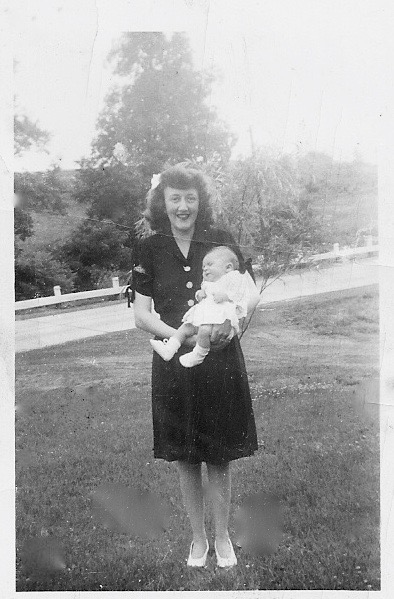
“Here’s a photo of your new niece.”
Because V-Mail stationery served as a letter and envelope in one, enclosed objects and photographs were prohibited. In 1943 the War Department amended the restriction on sending photographs allow photos of “infants born after a soldier departed for overseas or those under 1 year of age” and it could include the mother. The photographs were transposed onto the regulation forms “without altering, treating, or sensitizing the form in any manner.”
Here is the regulation standard photo taken by Chuckie’s brother to be sent V-Mail to Chuckie on the battlefront – his newborn infant niece, born after Chuckie departed for overseas, held by her mother. It is unlikely that Chuckie ever saw this photo.
Chuckie would never meet his neice. He never came home.
Chuckie’s sister-in-law holding his newborn niece
Chuckie's niece is the Unforgotten Glory blog author.
Nearly 16 million Americans served in uniform in WWII. I cannot imagine what feelings and emotions families felt as they said ‘good-bye’ to their sons and daughters leaving their small towns and communities in America to fight in a terrible world war far away in countries most had never been. For the Wilson family, it was a sad day. It was the last time they ever saw Chuckie – their son and brother.
Chuckie’s family was always proud of him, what he did for his country and the ultimate sacrifice made for freedom. Over the years since his death, each drew strength and comfort from the knowledge that he’d played a small part in protecting the freedom of others and winning the war. The pain of their loss was ever present for the rest of their days.
Chuckie’s parents Evie and “J.B.” were both in their early 50s when he left.
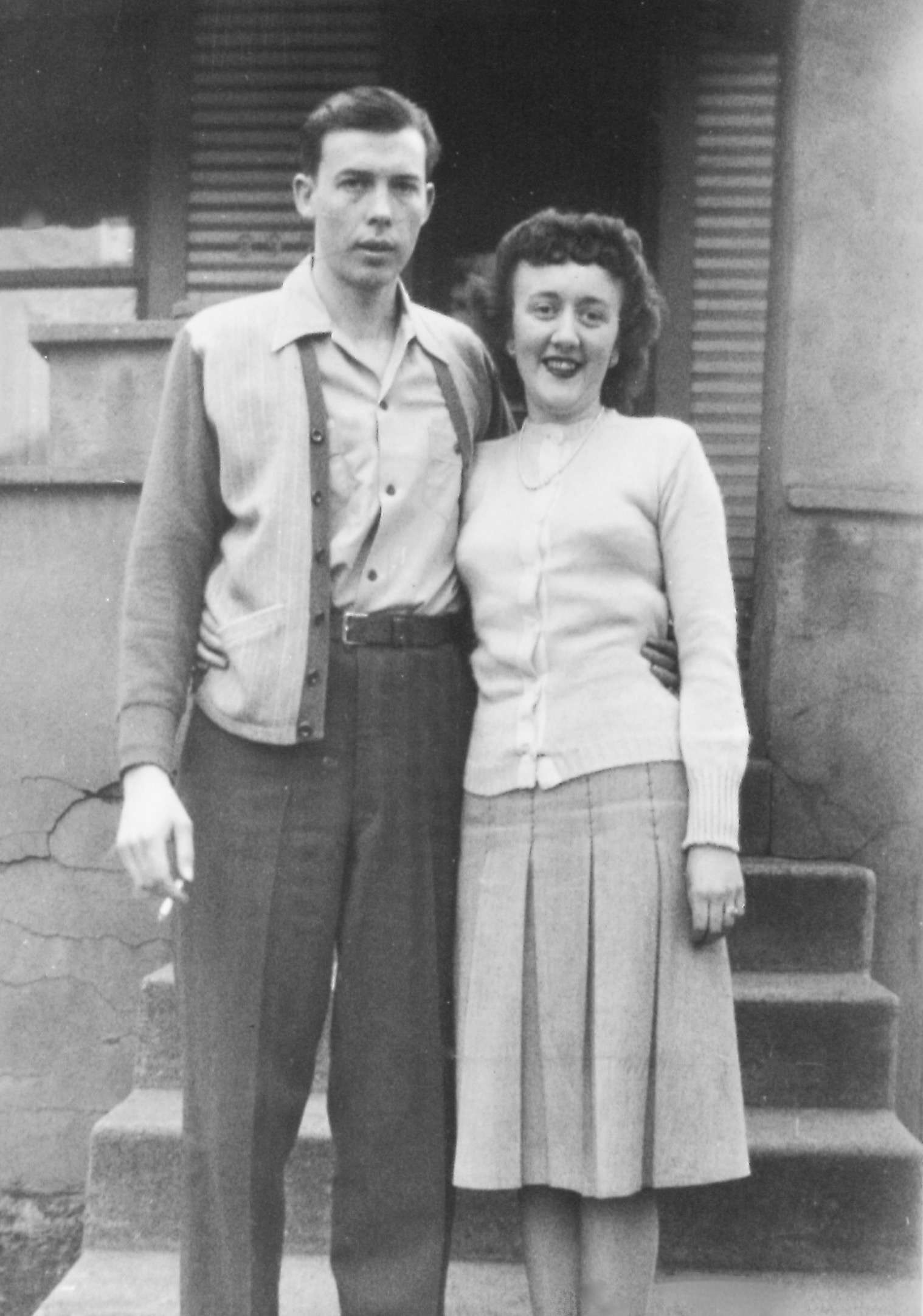
Chuckie’s brother Jack was newly married to Geraldine (and maternal grandparents of this author).
His sister Mary was 18 years old and had just graduated from high school.
Much agonizingly painful time passed between 28 April 1944 when Chuckie was first reported as Missing in Action behind enemy lines to years later when his mother finally received the letter confirming he was Killed in Action and buried in France. The Wilson family never received many more facts surrounding his death. But there was so much more.
Today, there is considerable documentation among many different series of records in the National Archives relating to the casualties of the war. Individual casualty files exist for all service members who died while on active duty, such as Chuckie. Beginning in June 1943, such individual aircraft losses were documented by a “missing aircrew report” (MACR) prepared by the unit to which the individual was assigned. Thankfully, that record exists for Chuckie.All of these records helped me to compile many of the details you will see in future posts.
However, for many families there is no record. At least 30 percent of all operational losses are not documented by a MACR. Also a MACR documents only losses on combat missions when the plane came down in non-friendly territory.
The Second World War also became the first U.S. conflict to be documented visually through the use of film and photography on a large scale. I found so much more of that too that will be shared in future posts. I’m sorry that my great- grandparents and the rest of my family who knew him went through the rest of their entire lives never knowing the facts of Chuckie’s heroism and bravery that we know today.
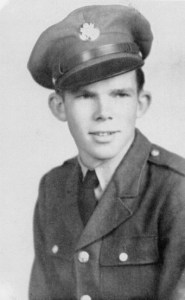
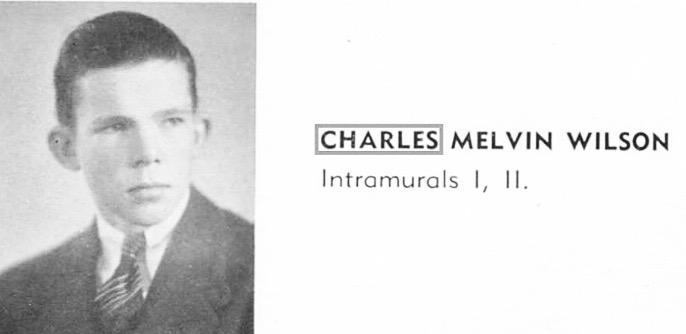
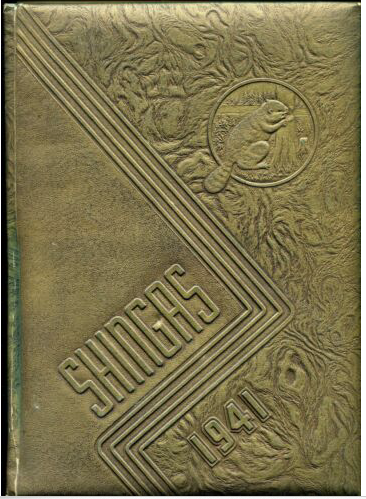
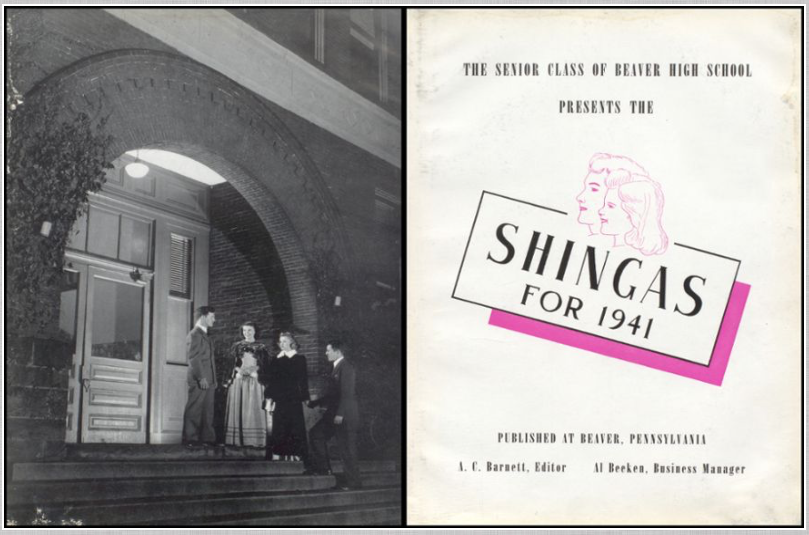
Chuckie graduated from Beaver High School in Beaver, Pennsylvania in June 1941 when he was 18 years old. Finding his high school yearbook photo was easy. Did you know there is an online searchable database of high school yearbooks? Yeo. And get this – an actual copy of the 1941 yearbook can be purchased right now on Ebay. I know because I looked.
Chuckie’s senior 1941 yearbook picure
SHINGAS Beaver High School Yearbook 1941
“Shingas”, the name of the Beaver Area High School yearbook, was a Delaware Indian warrior who was the brother of King Beaver, the Indian chief after whom the town was named. Western Pennsylvania has many streets, towns, and roads named after the many famous native Pennsylvania Indian woodland tribes tribes who played a part in the history of what is today the state of Pennsylvania
The indigenous people had occupied the land thousands of years before the first European explorers arrived. The climate, environment, land and natural resources that were available to the Indian tribes in this area resulted in the adoption of the culture shared by the Woodland Indians.
The names of the native Pennsylvania Indian tribes included the Lenapi Delaware, Erie, Honniasont, Iroquois, Saponi, Shawnee, Susquehanna, Tuscarora, Tutelo and Wenrohronon.
We learn in school that the Europeans brought epidemic diseases such as tuberculosis, cholera, influenza, measles and smallpox. The Native Indians of Pennsylvania had not developed immunities against these diseases resulting in huge losses in population.
Chuckie’s parents had spent over half their lives in the deep south of Mississippi before sometime in 1929 picking up and moving with their three adolescent children up north to Western Pennsylvania. What had changed for the Wilson family?
There are just three known images of Chuckie’s immediate family in the late 1920s that survive. The first is a group photo in an earlier post of a happy family picnic, a celebration of some sort outside the family farmhouse. Or, more likely perhaps, a going away party for the Wilson family moving up North for opportunity and a new life. The two other images have always haunted me because they are so strikingly different.
Darkness and cold – faces of grief
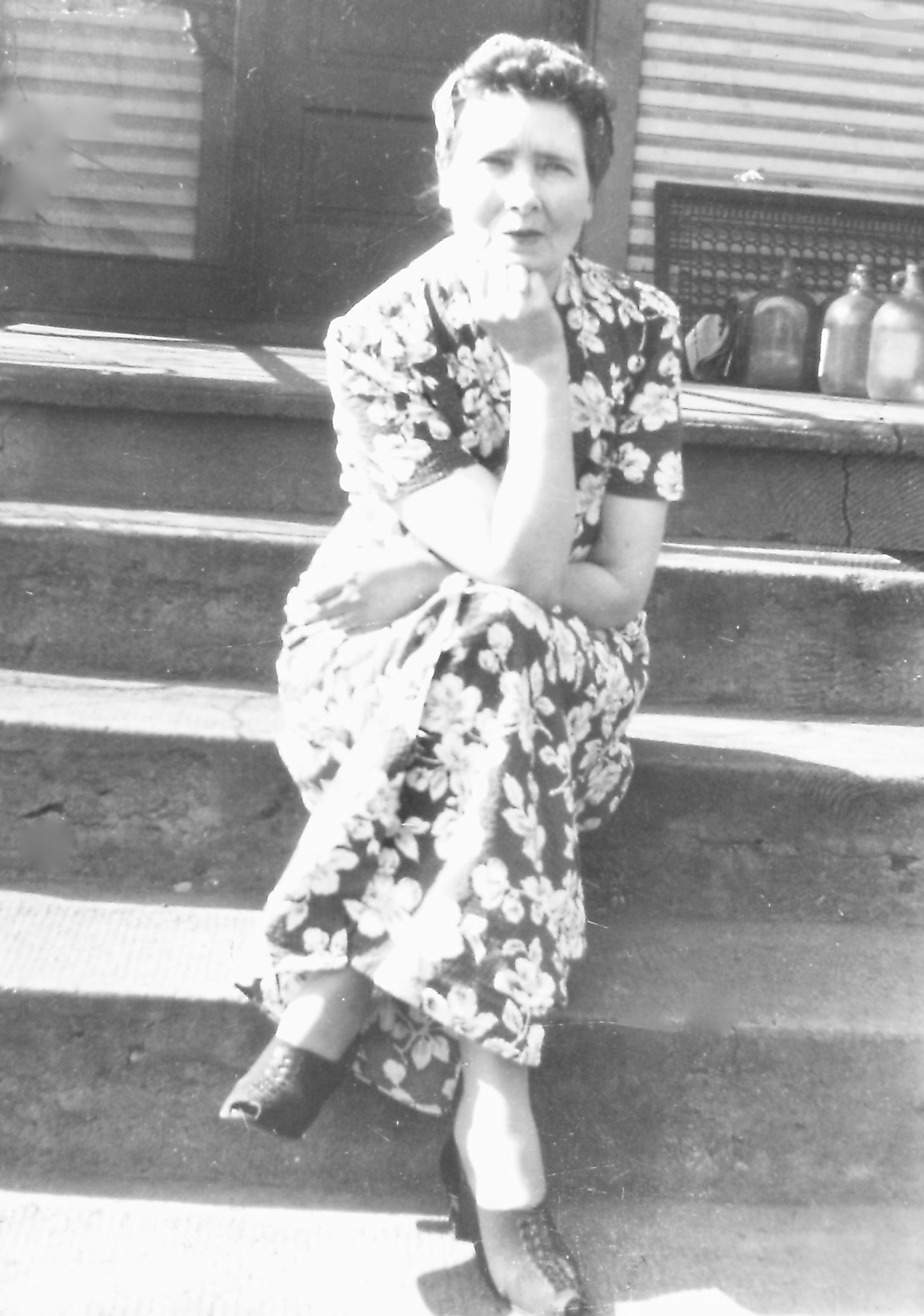
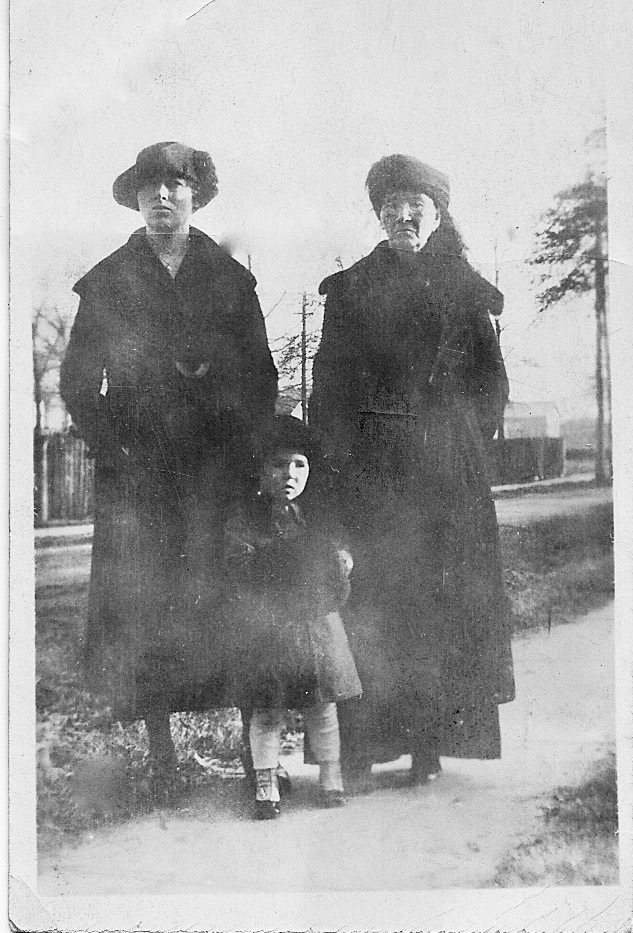
The first image is Chuckie’s mother Evie standing next to her mother Mary (Chuckie’s grandmother) with his little sister (also Mary, named after grandmother, of course) with her little hands in a muff. All three are dressed in black. No one is touching. From the background we can see it’s late Fall or early winter. What had happened that day to bring such great sadness to the Wilson family? They were not wealthy farmers or landowners, as far as we know, so the stock market crash of October 1929 was unlikely the reason. The Great Depression was yet to come.
Curiosity gave me some clues. A bit of research filled in some gaps. And soon it was not hard to arrive at an explanation. The unmistakable picture of a mother‘s grief for the loss of a child, and a sister for the loss of a sibling.
Chuckie’s mother had a very big family. She often told me about her “ten brothers and sisters” and how close they were. I went back to revisit our family tree. It was there I found an explanation for this photo. Two of her adult sisters, the daughters of Mary, died just one month apart. First Lucy in Dec 1928 and then Minnie in January 1929. Almost certainly this photo was taken on the day of one of those funerals.
That year, Chuckie’s grandmother Mary also left her home and moved up North at the age of 74 and lived with Chuckie’s family. She never returned again until years later when her body was returned to Mississippi in 1938 after her death.
Chuckie’s grandmother Mary, his mother Evie and sister Mary around 1929
Lightness and air – faces of warmth
The second image is taken obviously some months later that year and it is summer – up North. Chuckie’s mother and sister are bathed in sunlight washing over them from behind them on a breezy porch. They’re wearing cool, bright clothing and showing warmth, love and affection.
Chuckie’s father was, by all accounts, a good mechanic and legendary handyman who could fix anything. Up North, he quickly got a job applying those talents in a bread bakery operation that supplied fresh bread to the grocery stores feeding the families in the region’s large and growing population of factory workers, steel workers and manufacturing plant workers.
Chuckie’s mother Evie and his little sister Mary. Around the time of the family move up north to Western Pennsylvania in 1929.
Evie would years later herself experience what is captured on her mothers face so vividly, starkly on that cold dark day in 1929 – the enormous, unbearable grief felt by a parent who loses a child. In 1944, her son Chuckie would pay the ultimate price for freedom in a country far, far away from her, his father, his siblings and Wilson family roots in the deep American south.
Charles Melvin Wilson was born in Meridian, Mississippi on 19 January 1922. His father, Jack, was 31 and his mother, Evie, was 30. He had one brother, John, my grandfather, who was 2 years older. His sister, Mary, was born when Chuckie was two.
Both of his parents came from very large Southern farming families, each had many brothers and sisters. They were always surrounded by family. They were living in Mississippi around the time the Great Mississippi River flooded in 1927 and forced hundreds of thousands to flee.
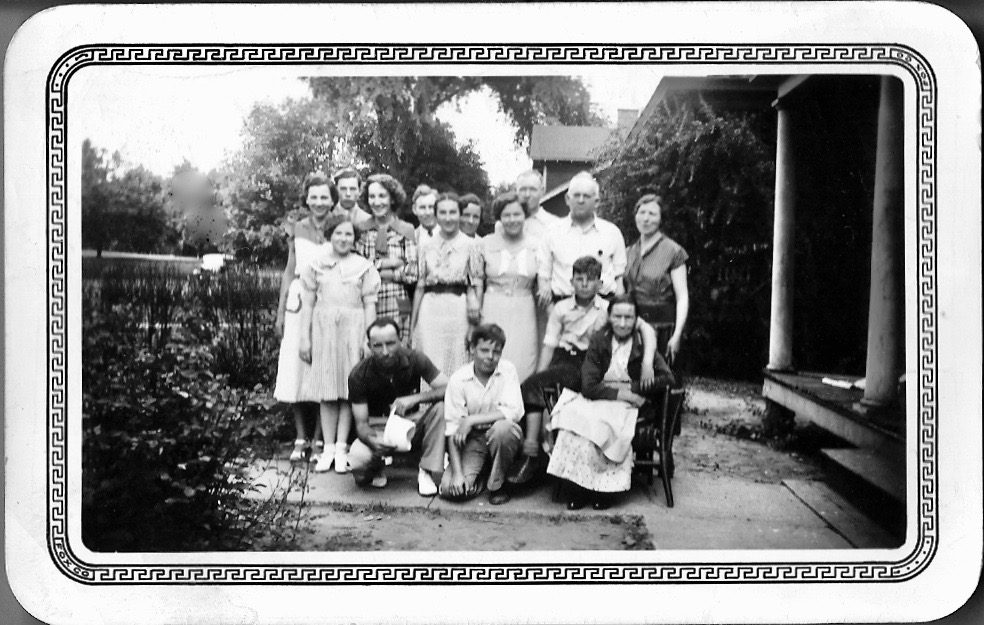
Wilson family gathering at their farm in Tupelo, Mississippi around 1933. Chuckie on the right front row seated with his arm around his grandmother Mary. His parents are behind him and his brother John is standing second from left in the top row.
While we don’t know with any certainty, the U.S. government programs started by the first “New Deal” in 1933 may have assisted Chuckie and his family to travel up North for new opportunities. They eventually settled in Beaver, Pennsylvania. US Census data show him residing there with his family by the age of 13.
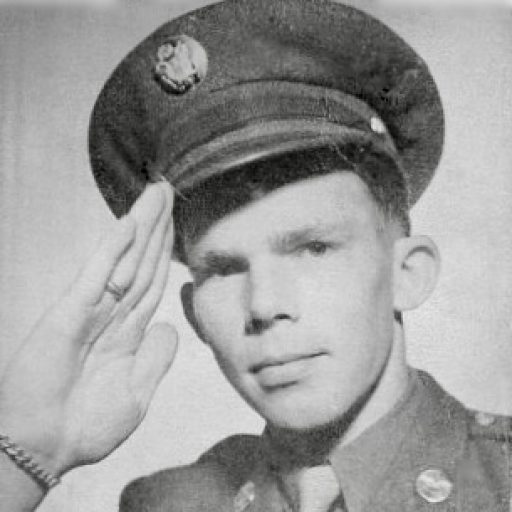
US Army Staff Sergeant Charles “Chuckie” Melvin Wilson, 36thBomb Squad, 801stBomb Group, was killed in action on 28 April 1944 along with four other American aviators when his B-24 ‘Liberator’ Bomber crashed in the French village of Saint-Cyr-de-Valorges. He is permanently interred in the military war grave cemetery Rhone American Cemetery and Memorial located in Draguignan, France.
US Army Staff Sergeant Charles “Chuckie” Melvin Wilson Born: January 19, 1922 – Died: April 28, 1944
These few details are all his family had about the fate of their son, their brother, their nephew, their cousin or the uncle they never knew. The ‘good guys won’; Chuckie was ‘killed in action’ and he’s ‘buried over there’ were the only memories spoken of or shared as the years went on. Little information was known. No one from his family had visited his grave. They never had passports, knew anyone French or traveled abroad.
The journey begins.
I had always been curious to know more about Chuckie, other family members too. Surely there was more to know about Chuckie now available on the internet? The lives of those in the Allied Forces who fought and died in WWII are recorded in hundreds of thousands of films, photographs, letters and history books. Monuments recognize the victory they achieved to restore freedom and end tyranny around the globe. These offer us a lasting record of their hopes, dreams, talents and ambitions, the countless lives they impacted, and the loved ones they left behind. But that record is incomplete and quickly disappearing for many.
One of those is US Army Staff Sergeant Charles “Chuckie” M. Wilson. When his mother (my great grandmother) died in the late 1970s, my family found a shoe box with a purple heart, a few undated photographs and just six official letters she received from the War Department over a 15 year period from the date of his death. These were all the memories that remained of Chuckie.
As the world commemorates the 75thanniversary of D-DAY this year, I felt a new sense of urgency and family duty to create a more complete digital record of Chuckie’s life so that his memory and contribution to freedom will not be forgotten. With only a basic timeline of key events known from those six letters, I dove into the internet to see what more I could find. The internet has made it possible for anyone with a computer and curiosity to search hundreds of thousands of websites, indexed data bases and social media to uncover a wealth of facts, images and uncover the truth of personal human stories.
The ultimate sacrifice, the unforgotten glory of their deeds.
What quickly emerged in my searches is a fascinating and remarkable story of heroism and bravery of a 22 year old man who enlisted in the Army to do his part in the fight for freedom for people in countries oceans away from his small town in Western Pennsylvania who soon found himself in England as part of the build up to the Allied invasion in France, details of his top secret air mission on that fateful day in advance of D-Day to supply the French resistance behind enemy lines, images of Chuckie and his fellow airman with their-24 ‘Liberator’ Bomber, a first-hand account of human tragedy as he and four fellow American airmen gave the ultimate sacrifice of their life for the liberation of France and the restoration of freedom, and a previously unknown monument to them erected with gratitude by the French villagers on the spot where they found his body under the plane wreckage after their fiery crash in Saint-Cyr-de-Valorges, France and the compassion they showed him as they quickly buried him in gratitude in a temporary grave so that his remains would be safe and could be returned with honor and dignity.
It is my hope that by sharing some history, personal family stories and facts of Chuckie and his mission on this blog over the coming months, readers will gain an interesting snapshot into an important period in history. Together we honor those like Chuckie who fought and died for freedom. In late May, I will be the first family member to visit Chuckie’s grave in France and I will share that experience here too. When I write my last post on this blog in a few months time there will finally be a more complete record of the life of Charles M. Wilson so that future generations can remember him, better understand the price of freedom and be inspired by what they learn.
Thank you for your interest. You can follow by signing up or liking UnforgottenGlory Facebook page.
For all of us, may it evoke a small comfort to know that once we are gone, we will not be erased from the memories of others.
Tim B.
Processing…
Success! You're on the list.
Whoops! There was an error and we couldn't process your subscription. Please reload the page and try again.


 Unforgotten Glory