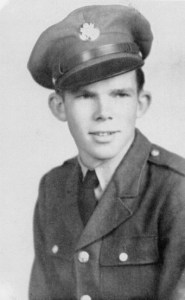
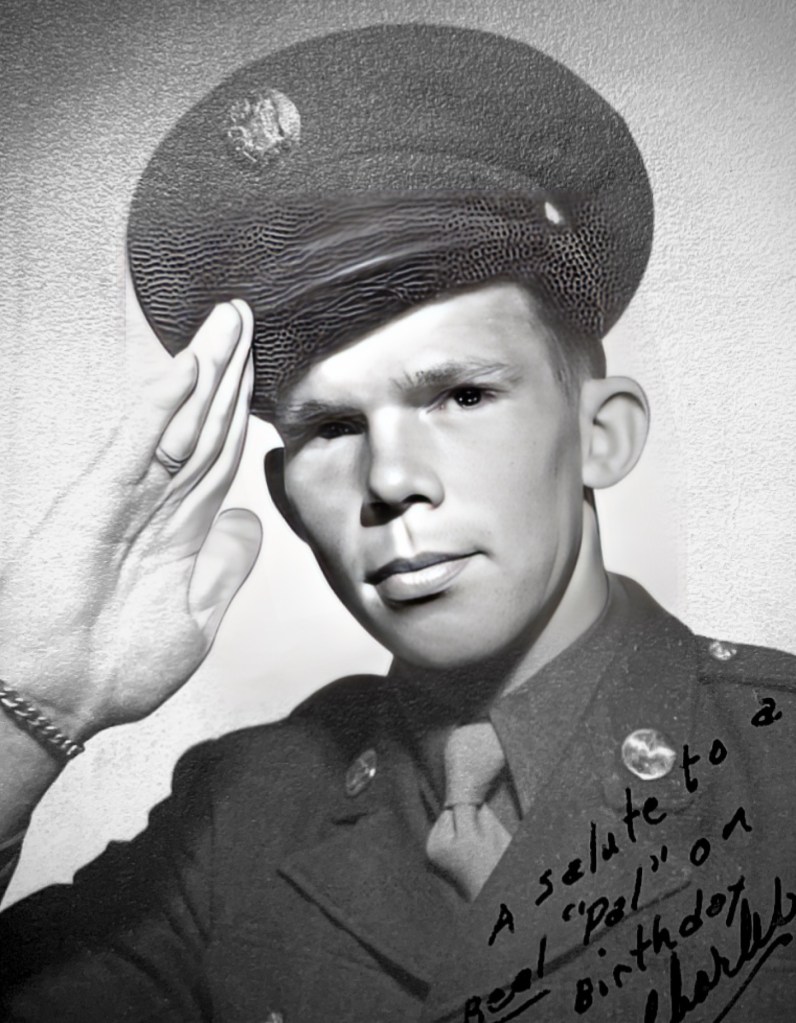
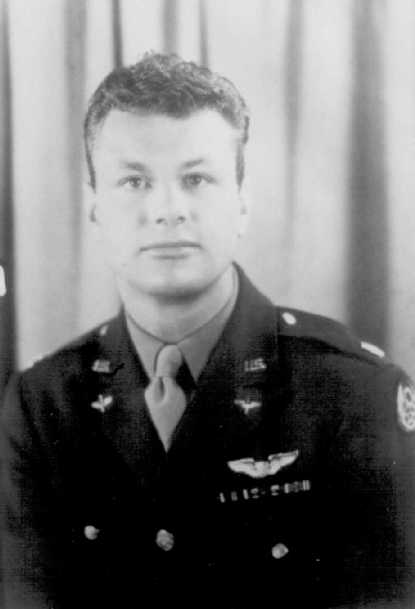
For his fathers’ birthday on 24 May 1944 Chuckie sent this photo of himself to his family back home in Pennsylvania.
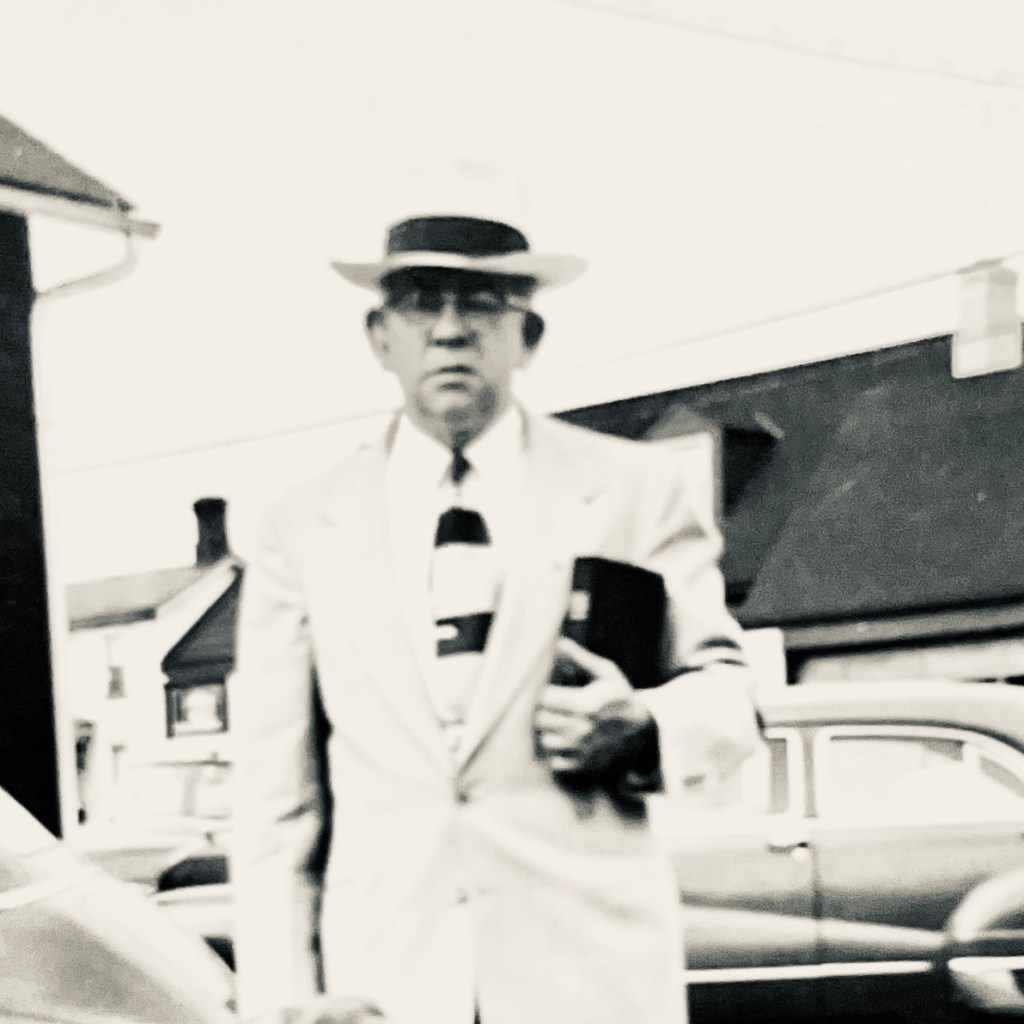
Charles Melvin Wilson Chuckle’s father in 1944
In his Army uniform, his handwritten note reads:
“A salute to a ‘real pal’ on his birthday.”
Everyone always called him Chuckie. It’s likely he chose to sign formally as “Charles” to show respect for his 54 year old father who was from the Deep South where manners were taught and expected.
One month later Chuckie was killed when his B-24 clipped the side of a small hill inside enemy lines in France and crashed landed while on a top secret mission to drop supplies and ammunition to the French resistance in advance of D-Day. These missions were credited with shortening the war.
One sad truth Unforgotten Glory uncovered in research for this In Memoriam project is that many families were deliberately not ever told the full truth about the circumstances related to their loved ones’ death or contribution to Freedom – to protect the Carpetbagger secrets for over 50 years. Chuckie’s family waited for two long years – and nearly one year after the war ended – with the uncertainty that their son, their brother, their cousin, their uncle, their friend was “Missing In Action” and hope he might soon return home safely. Yet all that time the War Department knew he was killed in action from confirmation they received just ten days after Chuckie’s plane crashed from the French Resistance who retrieved his body from the wreckage and buried him.
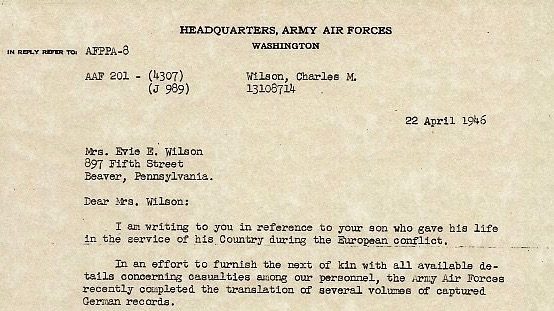
When the news his family feared finally came to the Wilsons the letter contained many facts but also some fabrication and omissions likely put forward by the War Department as a plausible cover story so that the Carpetbagger Project would remain ‘S E C R E T‘ and to explain the delay.
“Dear Mrs. Wilson:
In am writing to you in reference to your son who lost his life in the service of his Country during the European conflict.
In an effort to furnish the next of kin with all available details concerning casualties among our personnel, the Army Air Forces recently completed the translation of several volumes of captured German records.[Untrue]
Captured German records? ~ This couldn’t have been true.
“In regard to Staff Sergeant Charles M, Wilson, these records indicate that he was killed 28 April 1944 , when his B-24 (Liberator) bomber crash landed at Sr. Cry de Valorges, near Lyon, France. These records further state that his body was interred in the new cemetery of Lyon, row #3, grave #1. The Quartermaster General, in his capacity as Chief, American Grave Registration Service, is charged with the responsibility of notifying the legal next of kin concerning grave locations of members of the military forces who are killed or die outside the continental limits of the United States. If the report of your son’s burial has not been confirmed and you have not been notified by the quartermaster General, that official will furnish you definite information immediately upon receipt of the official report of interment from the Commanding General to the theater concerned. May the knowledge of your son’s valuable contribution to our cause sustain you in your bereavement. Very sincerely,“
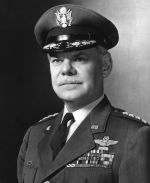
The letter was signed by Brigadier General Leon W John
Leon W. Johnson Brigadier General, USA Chief, Personnel Services Division
During World War II, Johnson was one of the first four flying officers of the Eighth Air Force, and served on it staff during its formative period at Savannah, Georgia. In 1943, he assumed command of the 44th Bombardment Group, which flew the Consolidated B-24 Liberator. After V-E Day, he was Chief of Personnel Services at Headquarters, Army Air Forces, in Washington, DC, from 28 June 1945 to 15 May 1946.
The need to protect top secret missions in wartime to advance war objectives and prevent further harm and loss of life is certainly understandable. Yet, a consequence of protecting the Carpetbagger secrets were the parents, brothers, sisters, and other families such as Chuckie’s who lived the rest of their entire lives not ever knowing the facts of these brave men and the glory of their deeds that we know today.
In gratitude this project has reclaimed a more complete story of Charles M Wilson story which has now been widely shared with with others today and into the future In Memoriam. A bit more of the story to come ~ Unforgotten Glory
A copy of the actual letter from the Headquarters, Army Air Forces
This was a difficult post to write. On 22 April 1945, hundreds of people, including Chuckie’s squadron commander, from two villages in France paid tribute to Chuckie that day in a public memorial. Yet sadly, due to the need to keep the secrets of the Carpetbagger Project, Chuckie’s parents sat in a small apartment in a small American town unaware with hope still alive that he would return home safely. All they still knew from the US Government was that he was still Missing in Action. It would be another year before they knew what what everyone else involved in the public memorial knew that day – Chuckie was killed in action one year before.
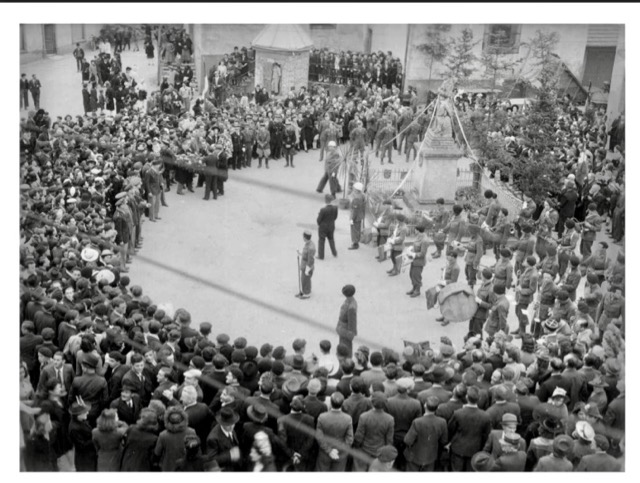
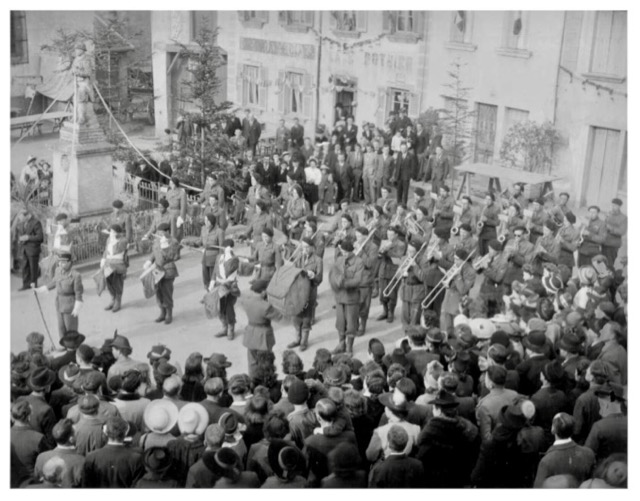
The villagers of St. Cyr de Valorge and Tarare built a monument to honor these men. The held a public memorial to the five American airmen who died there in a crash one year before in a very large public ceremony that included Chuckie’s squadron commander. It was to be the first of a series of memorials to honor Allied Forces airmen who had died delivering supplied and agents to the French resistance forces.
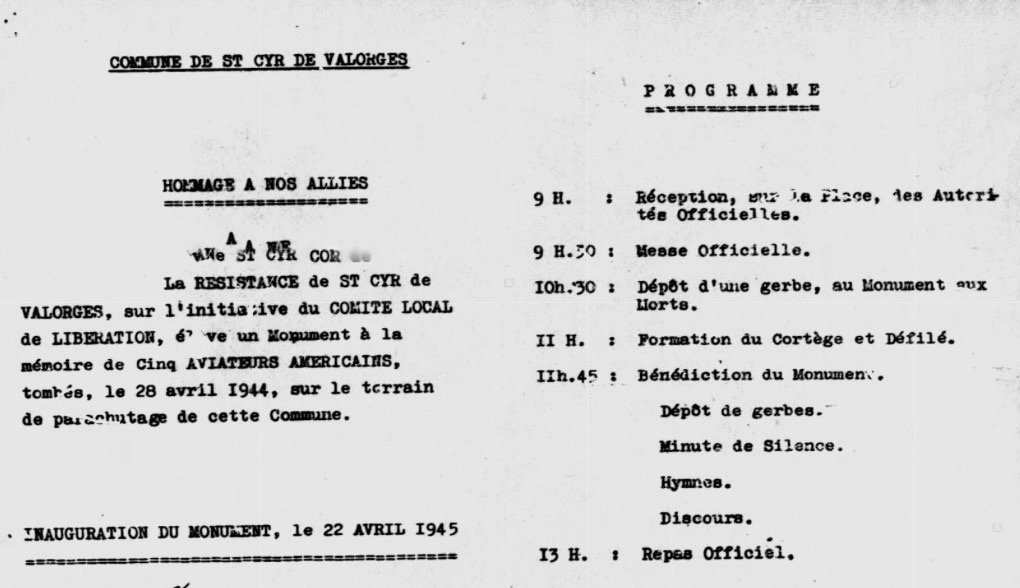
An actual copy of the official Memorial Program from that day.
Translation – Left side: 28 April 1944 “Five American aviators were killed in the process of air-dropping weapons.“ Right Side:: 22 April 1945 “Tribute from the French resistance to th five victims” The Official Program from the Memorial
English Translation
Left Hand side – Title: Tribute to our allies Main text: The Resistance of St Cyr de Valorges, upon the initiative of the local committee of Liberation, dedicates a memorial to the five American aviators fallen on 28thApril 1944 on the air-dropping field of this municipality. Bottom left: Unveiling of the memorial on 22ndApril 1945
Right-hand side – Title: Program Main text: 9:00 am: Welcome of the official public authorities on the square 9:30 am: Official mass 10:30 am: First wreath laying at the memorial 11:30 am: Cortege preparation to march 11:45 am: Blessing of the memorial Further wreath laying A minute of silence Anthem Speeches 1:00 pm: Official meal
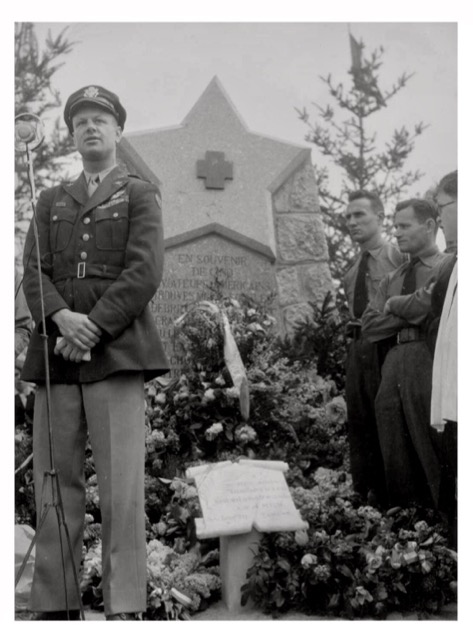
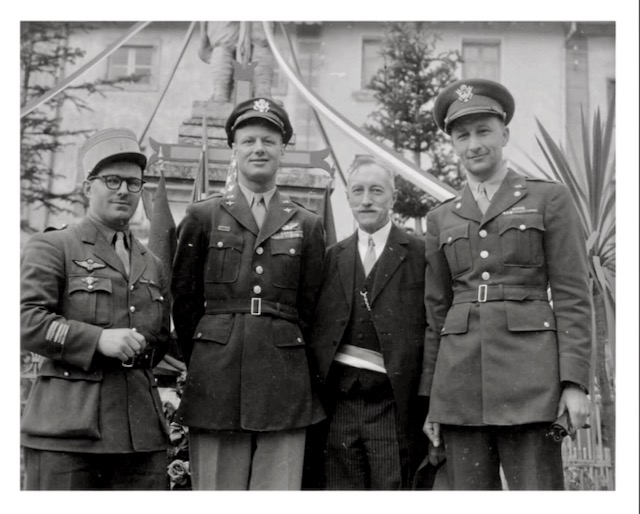
Lt. Col Robert Boone was invited to be present at the days celebration and memorial dedication as a representative of the American Carpetbagger units.
Lt. Col Robert Boone
Boone was one of Chuckie’s squadron commanders at Harrington and in command of the 801st Bomb Group. He was responsible for the working up of the air and ground echelons in preparation for the first Carpetbagger missions. On 13 August 1944 the Carpetbaggers at Harrington were redesignated to the 492nd Bomb Group (H) and the four squadrons became the 856th, 857th, 858th and 859th Bomb Squadrons under Col Clifford Heflin, the first commander of the 801st/492nd Bombardment Group, nicknamed the Carpetbaggers.
Public Memorial Program
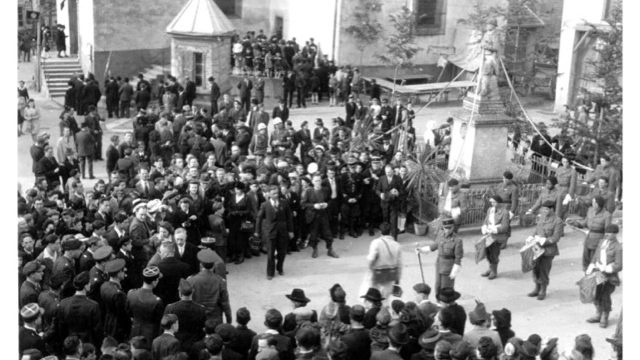
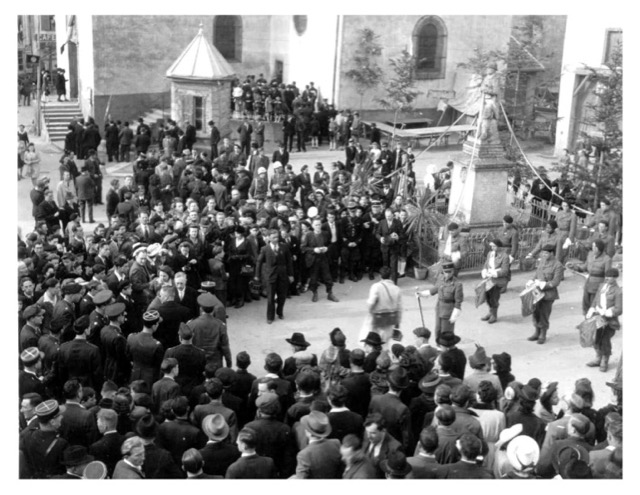
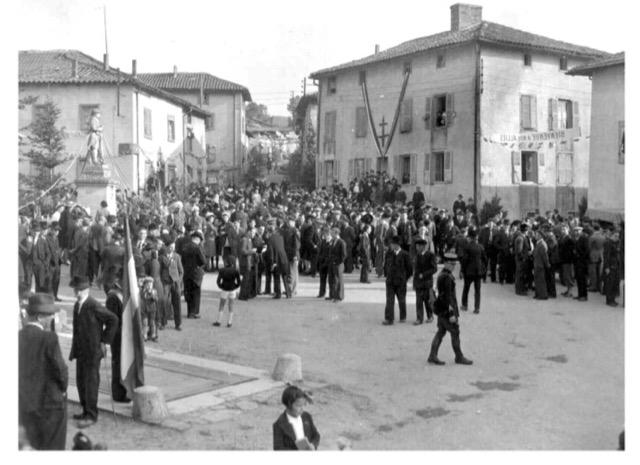
9AM Welcome – The public square at St. Cyr de Valorge, near where the crash had occurred, was packed with people from the two villages. Flags of France, the United Stated, and Great Britain were flying, while bands played the national anthems of the three countries. There was much cheering, and hundreds were in tears as speakers told of the stirring days of the resistance.
The village square at St. Cyr de Valorge, France
9:30 Official Mass – The official party and the villagers gathered in the village church, where a priest spoke, eulogizing Chuckie and the fliers. After the mass, the villagers moved to the monument for dedication.
This picture shows the village church in the background.
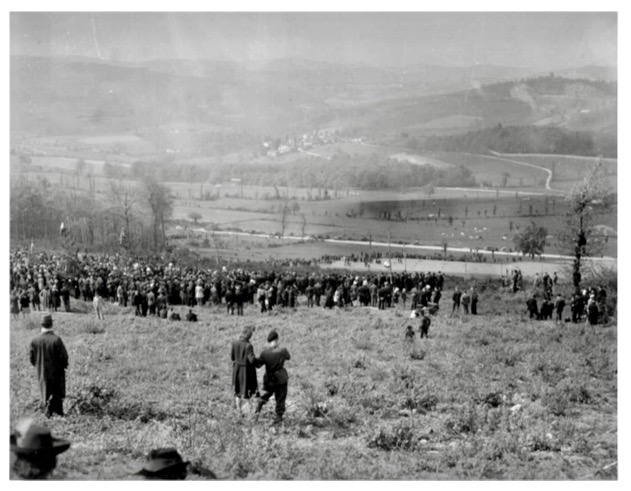
This is the hill and site where Chuckie’s plane crashed. The memorial still stands today.
11:45 AM Memorial Dedication Boone gave his address, which was translated into French by an interpreter, He said that he was happy to be on the ground in daytime to see the beauty of the country – something that was impossible to see at night – and to feel the warmth of the French people – impossible to feel in a Liberator airplane. He said that the men in his outfit remembered the dead men well, and to him the ceremony was evidence that the men fought not only for, but with, France in the war of Liberation.
Boone and French officials
Photos Above: The memorial from 22 April 1945 above.
1:00 PM Official Meal – After the ceremony, the party moved to a banquet hall for lunch. Colonel Boone was given Lieutenant Ambrose’s identification tags and part of his bracelet, which he promised to send to the lieutenant’s relatives in the United States.
The villagers walk back down the hill to an Official luncheon.
Sadly, Chuckie’s parents, brother and sister went to their graves thirty and forty years later never knowing any of this.
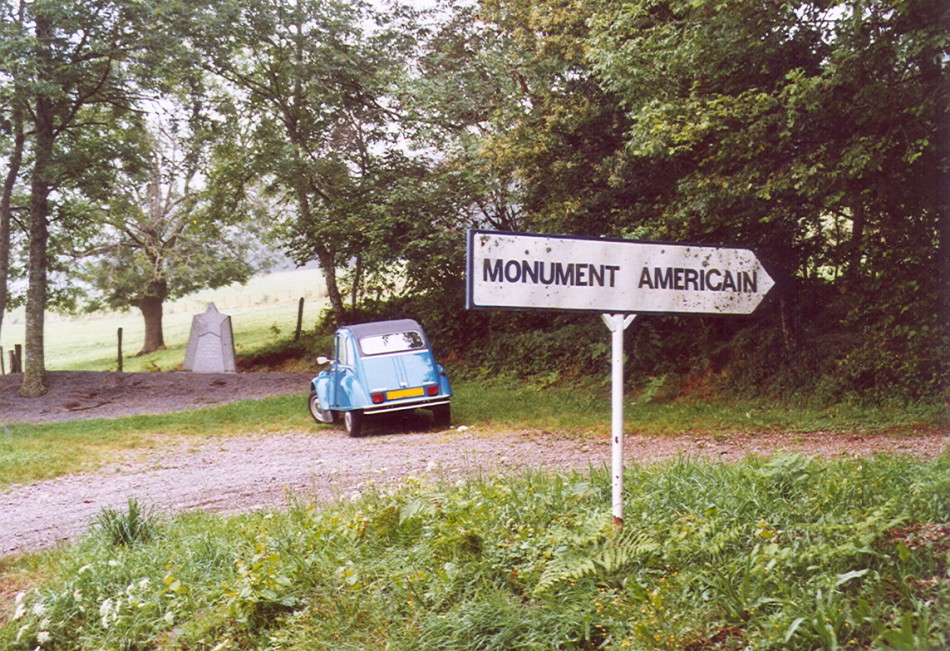
Here is that monument as it stands today, 74 years later.
The memorial as it stands today.
TRANSLATION: “In memory of five American aviators found dead in their plane debris, that crashed into flames in this place on 28th April 1944; whose mission was to airdrop weapons to our secret army for the liberation of France and the restoration of our ideals.” Lieutenant C.W. Ambrose Charles M. Wilson Robert H. Redhair A.B. Pope Lieutenant Peter Roccia”
Left hand side little black stone: “Frenchy to his friends”
It speaks to the service and sacrifices of all the Carpetbaggers.
Pilot 1st Lt George W Ambrose; is buried at Long Island National Cemetery, Farmingdale, New York, USA
Co-pilot, 2nd Lt. Robert Harry Redhair; is buried in Akhard Cemetery, Polk Co, Missouri
Navigator, 2nd Lt. Arthur Bozeman Pope; is buried in National Cemetery Marietta, GA
Bombardier, 2nd Lt. Peter Roccia; is buried in Arlington National Cemetery
Flight Engineer, Staff Sargeant Charles M Wilson; is buried at Rhone American Cemetery, Draguignan, France
Right hand side white stone: “Loved comrade-in-arms on 28 April 1944 James Heddleson”
There were three crash survivors, their stories told in previous posts.
James Joseph Heddelman
George Willam Henderson
James Cryl Mooney
A small clearing on the way to the monument. Photo credit.
A simple line of text, one sentence, is all that was noted in the official record of Mission 324 for 27 April 1944:
“21 B-24s are dispatched on CARPETBAGGER operations; 1 B-24 is lost”
Chuckie and his fellow crewman took off from Harrington at 22:26 hours on their 5th mission assigned to the 801st. They flew on a secret course to the South West France on an Operational Mission code named Operation Lackey 3A for drop site Timdale. They were one of the 1st crews to fly at night without benefit of the full moon.
The plane never returned to home base.
Specially modified B-24Ds were used in classified missions. In a joint venture between the Army Air Forces and the Office of Strategic Services (OSS) code named Operation Carpetbagger. Pilots and crews flew specially modified B-24Ds painted with a glossy black anti-searchlight paint to supply friendly underground forces throughout German occupied Europe. Being some 500 ft above sea level and located not too far away from the supply bases of Cheddington and Holme as well as the British SOE based at Tempsford, Harrington was chosen for the Carpetbagger Operations by the Eighth Air Force’s Special Operation Group in which Chuckie served.
Like all Allied forces who operated behind Nazi lines, Chuckie and the Carpetbaggers were subject to torture and execution in the event of capture, under Hitler‘s notorious Commando Order. Because the teams normally operated in uniform, to apply this order to them was a war crime.
Report 262 noted the result of the Operation as MIA. The Air Forces Organization was required to file a Missing Air Crew Report (MACR) within 48 hours.
Chuckie’s B-24 Liberator made its slow progress to the runway. On receiving a green “Go” signal light from the tower, Pilot Ambrose and The Worry Bird crew roared down the runway and took off into the dark night sky at 10:29 PM beginning their two and a half hour flight to the drop zone in German occupied France.
The majority of Carpetbagger flights were made during the moon period, or on those nights when the moon was out, making the ground visible to the navigator and bombardier who visually identified the target and made the drops.
On this night, The Worry Bird crew were one of the first Carpetbaggers to fly out at night without benefit of the full moon, according to the first person account of crash survivor James Heddelson.
The aviators of the 801st Bomb Group of the 36th Bomb Squadron on the B-24 Liberator, The Worry Bird, on Operation Lackey 3A that fateful night:
Lieut. George W Ambrose, Pilot; of Springdale, PA
Lieut. Robert H Redhair , Co-Pilot; of Bartlesville, OKC
S Sgt. Charles M Wilson, Engineer; of Beaver, PA
Lieut. Arthur B Pope, Navigator; of Fulton, GA
Lieut. Peter Roccia, Bombardier; of Washington, D.C.
Sgt. James J Heddleson, Radio Operator; of Louisville, OH
Sgt. George W Henderson, Tail Gunner; of Santa Monica, CA
Sgt. James C Mooney, Dispatcher; of Englewood, NJ – He volunteered for this mission (his first) – the rest of the crew only met him shortly before take-off, as regular crew member Sgt. W. Bollinger had reported off sick that day.
Operations Log – Station 179 Harrington U.K.
I was able to locate an image of the actual handwritten Harrington flight log from that night. Chuckie’s take off time of “22:29” is noted beside an empty white box where the return home time was to have been written, then a chilling “MIA” written.
Handwritten Flight Log, for Station 170, Harrington, U.K. Entrie Dated Chuckie’s plane – the Ambrose Crew
Low altitude flying
To avoid action with the enemy, flights were also at low level, usually 2,000 feet. A low altitude made it more difficult for the enemy to detect the aircraft either by sound or by radar detection devices. Obstacles on the ground distort the sound of a low flying aircraft far more than they do the noise of a high flying one, because of the sharper angles of sound reflection. Radar and sound detection devices had less time in which to focus on a low flying aeroplane, and the range of effective detection was shorter at low altitudes.
After take off, radio operator James Heddelson was soon busy with his signals. The Intelligence Office at Harrington contacted Special Operations in London notifying them of the target and the route The Worry Bird was taking.
A “crack code” was then broadcast over the BBC radio that notified the resistance on the ground in France that the delivery was on its way.
Once the enemy coast was reached, the bombardier Peter Roccia and navigator Arthur Pope began preparations for the drop. The pilot usually flew at a height of 1,500 – 2,000 feet, giving known airfields and flak areas a wide berth; night fighters were always a hazard, but by flying at low altitudes, this threat was minimized. Chuckie and George Henderseon would have kept a constant lookout for German enemy predators, their guns were fitted with large anti flash discs to lessen the loss of night vision if they were fired.
As they neared the drop zone near Lyon in central France, the reception party on the farmland below heard the throb of engines and established contact by ‘S’ Phone.
Chuckie and crew reach the drop site at 1:00 AM, as planned, seeing the target lights on the ground on the first confirming fly over pass.
Unforgotten Glory readership continues to grow. Here, indexed in chronological order read the story from the beginning.
Thanks everyone for joining in commemorating the 75th anniversary of D-DAY by following this storytelling of the life of US Army Staff Sergeant Charles “Chuckie” Melvin Wilson and his fellow Operation Carpetbagger crew of the 36thBomb Squad, 801st Bomb Group so that their contribution to freedom will not be forgotten.
Unforgotten Glory readership and ‘likes’ to our Facebook page continues to grow. New readers have asked for a quick, easy way to catch up and read the story from the beginning. Here, indexed in chronological order, you will find current and previously published WordPress blog posts.
Thanks everyone for joining in commemorating the 75th anniversary of D-DAY by following this storytelling of the life of US Army Staff Sergeant Charles “Chuckie” Melvin Wilson and his fellow Operation Carpetbagger crew of the 36thBomb Squad, 801st Bomb Group so that their contribution to freedom will not be forgotten.









 Unforgotten Glory
